
Table of Contents
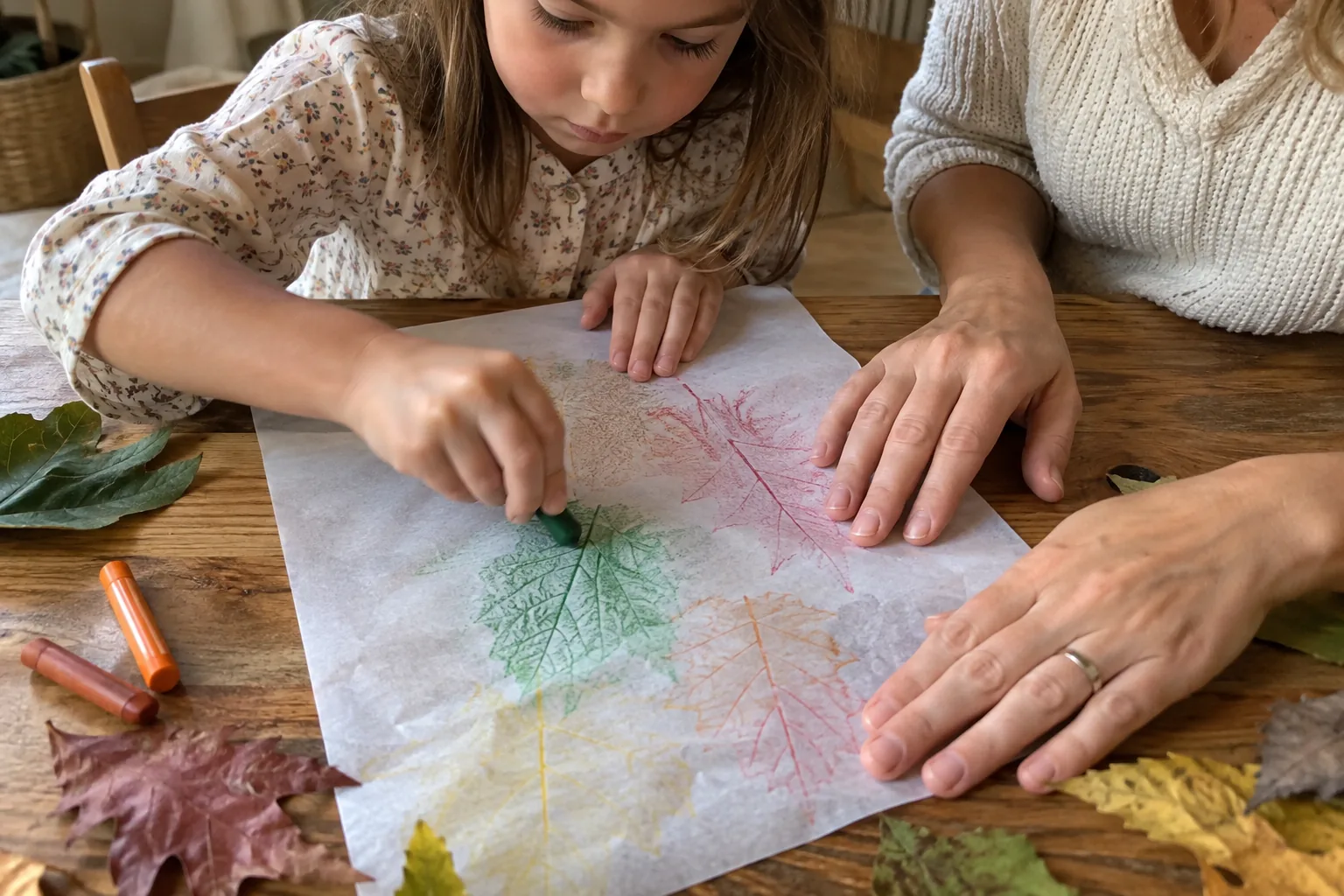
To make a leaf rubbing, place a tree leaf beneath paper on a stable table. Keep both layers still, then gently rub the side of a crayon across the paper. Raised details may appear in color. Compare trials without expecting a perfect copy or treating the rubbing as a certain plant identification.
What materials work for a first try?
Prepare ordinary paper, a crayon suitable for your child, and a tree leaf selected by an adult. Choose a clean, familiar fallen leaf where collecting is permitted. Avoid sharp or dirty objects and unknown plants; nothing is tasted. Clean textured cardboard can replace the plant if you prefer an indoor activity. Work at a table rather than drawing while walking.
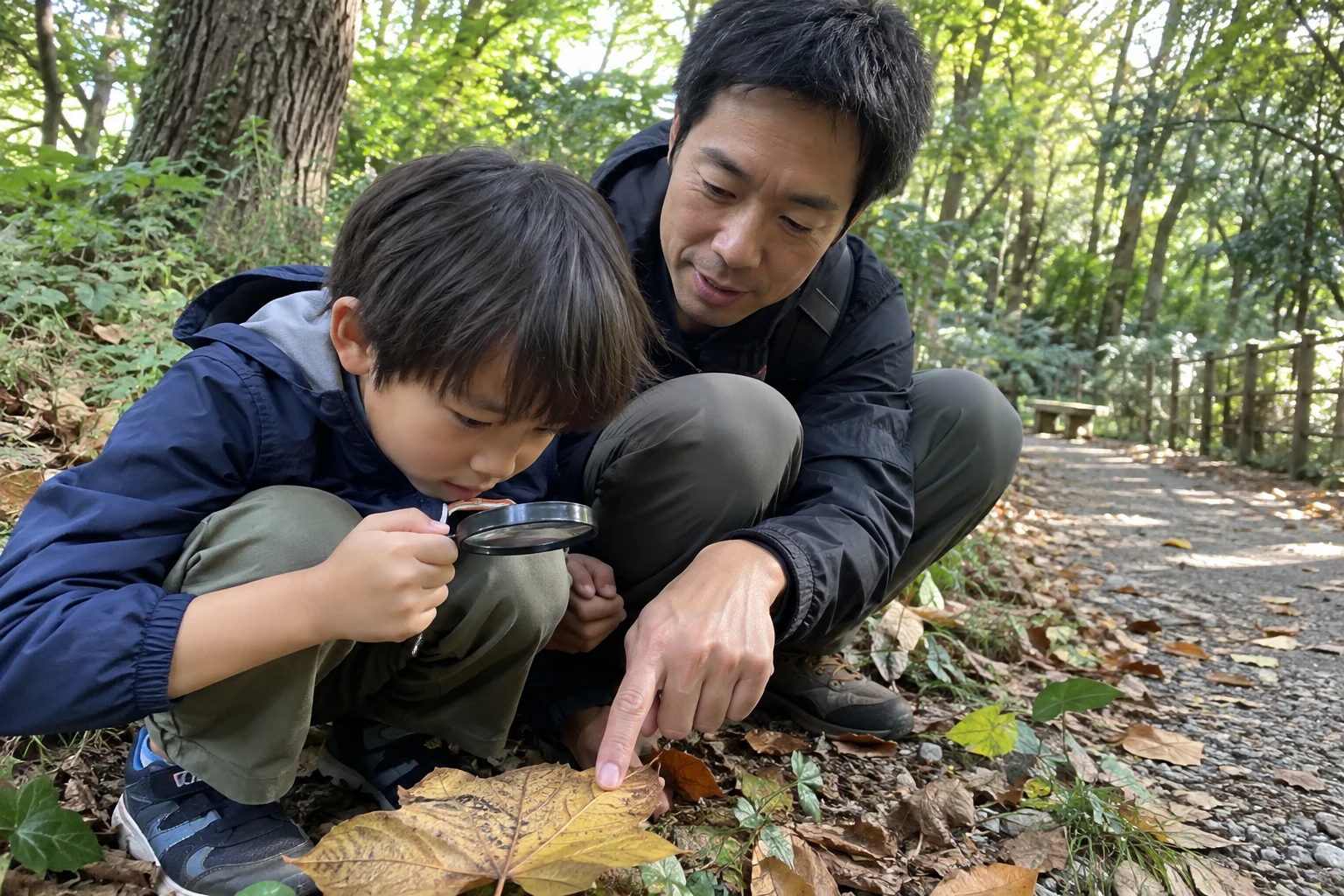
Choose a reasonably flat leaf with some raised veins. A parent can gently show both sides before starting. Thick paper may hide the texture, so first try materials you already own. An observation walk is separate from the table activity. You need not organize another trip to obtain a perfect specimen.
| Approximate age | Suggestion | Possible support |
|---|---|---|
| 4–6 years | One small rubbing | Adult holds the paper |
| 7–10 years | Two trials with one change | Name the changed condition |
How can we keep both layers still?
Put the leaf on the support and cover it with paper. Choose the side whose relief is easier to feel without expecting every leaf to behave alike. One hand can hold the paper while the other rubs. If that is difficult, an adult can hold an edge or help stabilize the layers. Avoid asking for speed, precision, and complete independence at once.
Start in a small area with the crayon on its side. Light pressure lets you see what appears before pressing harder. Stop and reposition the layers if the leaf slips rather than continuing in hopes of recovering its outline. Écolothèque’s Arts et Sens activity emphasizes holding the paper still. Our version allows parent and child to share that task; receiving help is not a failure.
Three trial markers
Keep both layers still
An adult can hold an edge while the child rubs.
Start gently
Observe the mark before changing pressure.
Compare one change
Keep the same leaf and paper for two trials.
How can we compare two trials fairly?
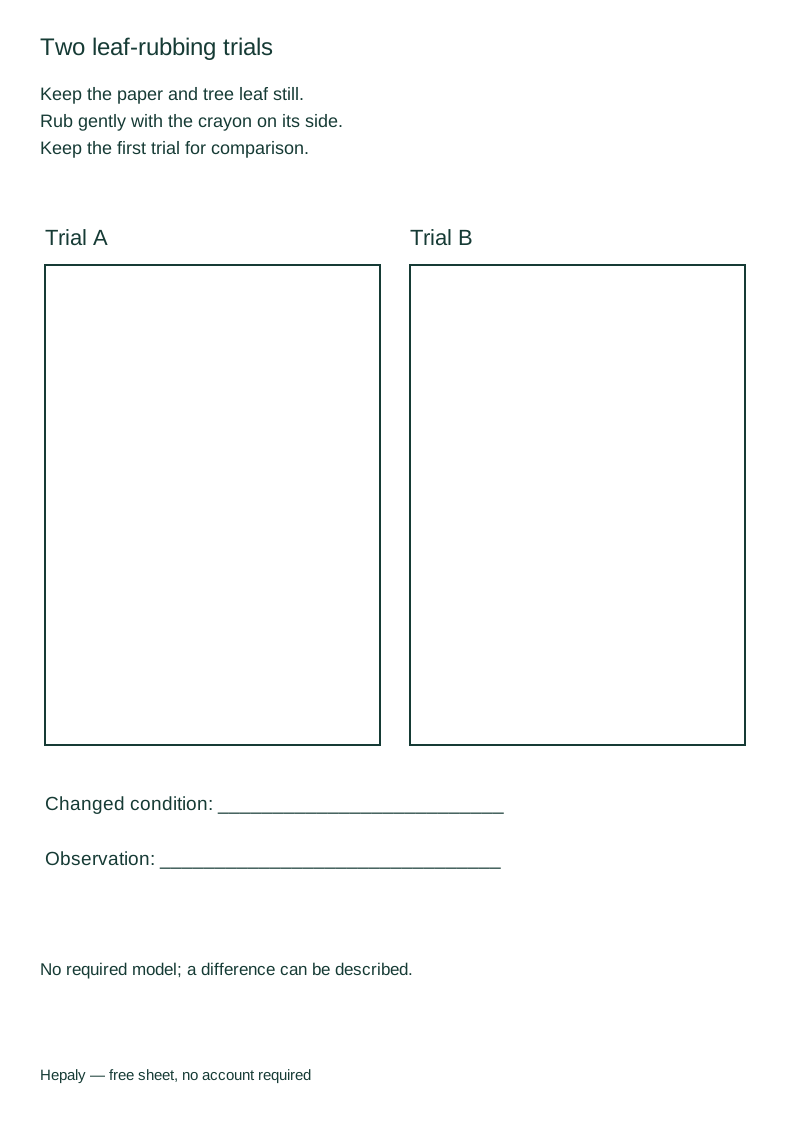
Keep the same tree leaf and paper, then change just one condition, such as pressure or the crayon’s angle. Save the first trial. Describe what you see: a darker area, doubled outline, or clearer lines. Do not immediately conclude that your child held the tool incorrectly; the paper or leaf may have moved.
Our free sheet provides two trial spaces and a line for recording the changed condition. The second sheet offers one comparison method, not a picture your child must copy. When discussing a home experiment, separate the question, changed condition, and observed result. A difference in one rubbing does not establish a rule for every leaf. You can keep an unclear attempt as useful evidence of what happened rather than hiding it.
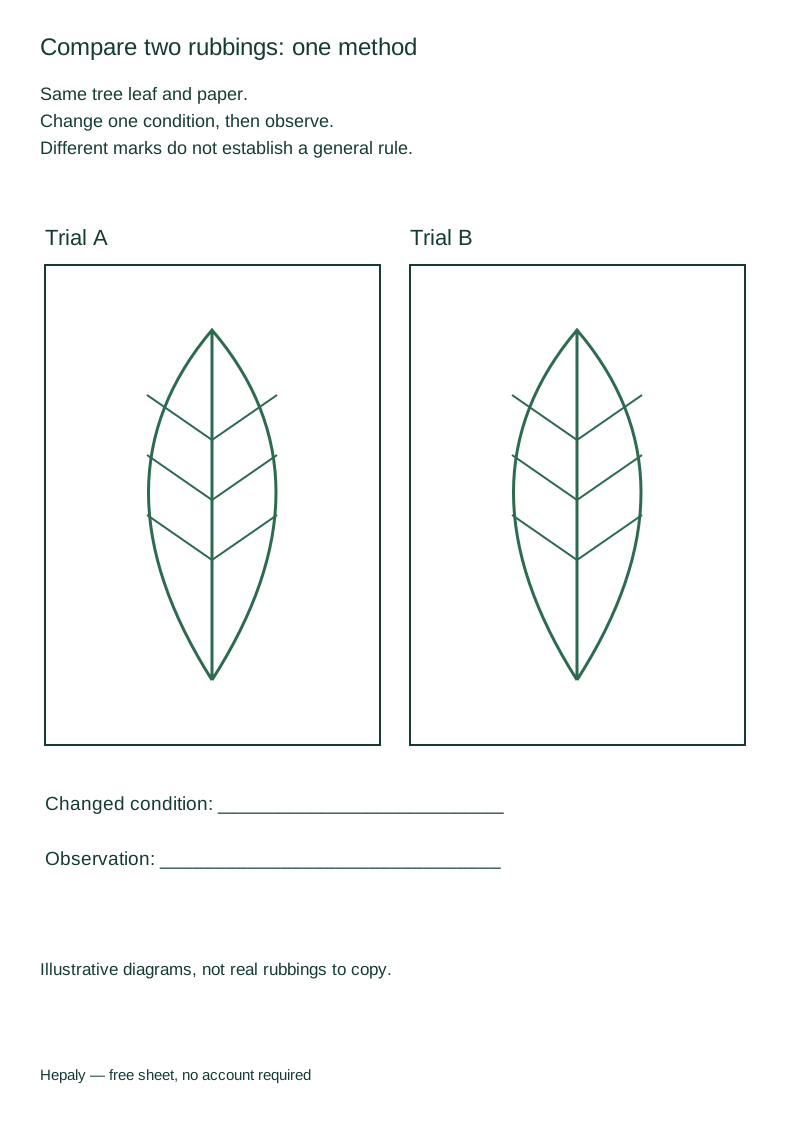
What if the rubbing does not show the whole leaf?
First check whether the paper stayed still and the crayon reached the selected area. Try another part of the leaf or thinner paper if useful, but name the change. A dry, brittle leaf behaves differently from a flexible one. If your child wants to stop, keep the attempt or move to another clean texture rather than requiring success before leaving the table.
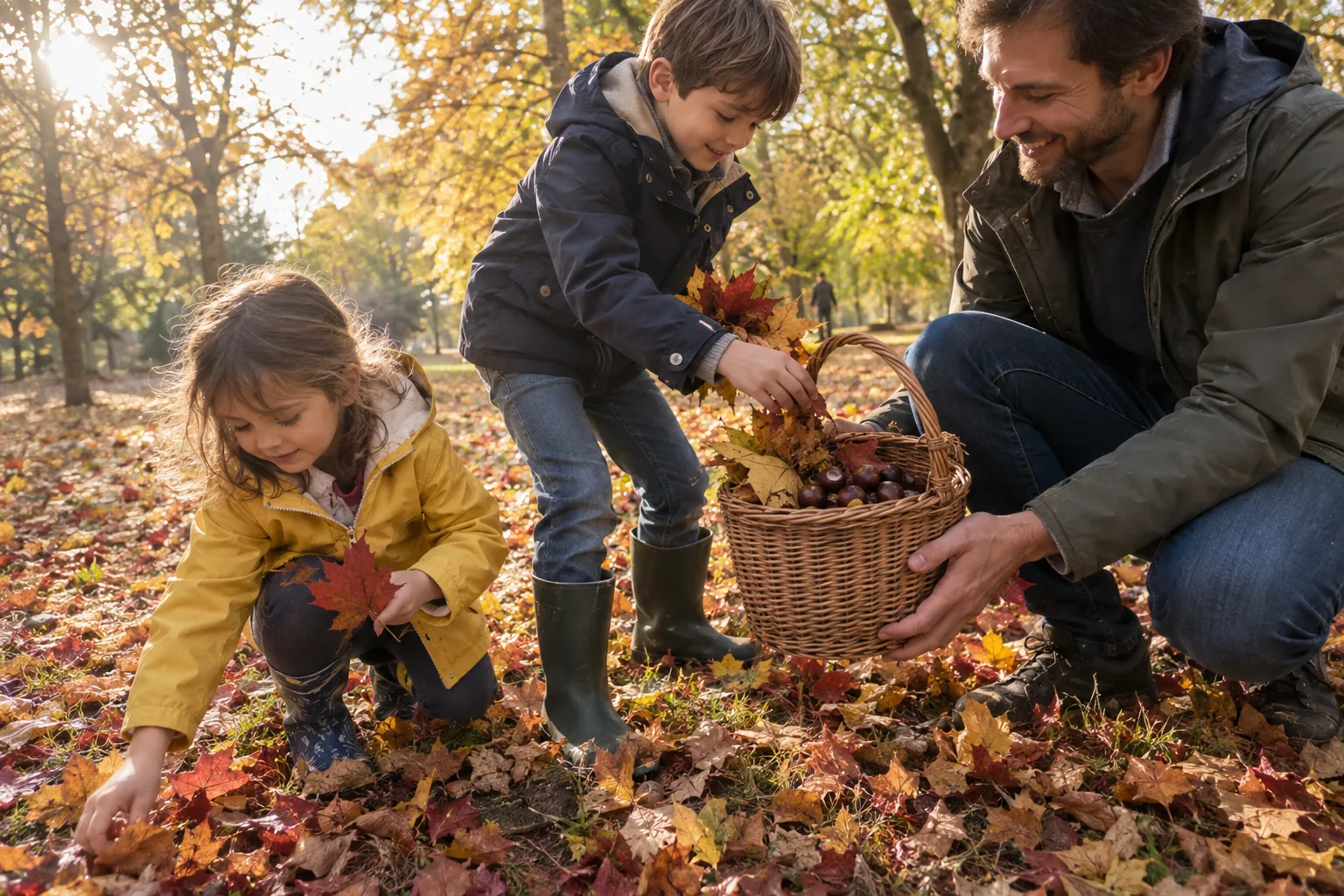
A rubbing reveals some raised details; it is not a photograph and may leave the outline incomplete. Crayon color belongs to the artwork: it does not reveal the plant’s natural color or health. Fall activities can extend a conversation about colors without confusing that subject with the rubbing technique. Ask what your child notices before offering an explanation for every mark.
Check the comparison
The paper moved: what next?
Stop and reposition the layers.
Does a purple crayon show natural color?
No. It is a color chosen for the image.
Does one drawing identify the tree?
No. Leave the name unknown if needed.
How can we extend the activity without a fixed model?
Your child can choose another color, add a line, or collect trials on one page. Separate rubbed textures from shapes drawn afterward. Notice similarities without identifying a species from one result. The French video discusses fall colors; the English and Spanish versions show rubbing techniques. These are complementary topics rather than identical demonstrations.
For another session, creative games and free tools offer other starting points. Hepaly collections are commercial PDFs in French, separate from the two free sheets offered here in each language. No purchase is needed for this activity. Put supplies away together and wash hands after handling natural materials. A finished display is optional: you can keep one small trial and let the rest of the session end without assembling a larger project.
Prepare together
No data is stored.
Frequently asked questions
Must the leaf be fresh?
No. Choose a clean suitable leaf with an adult; brittle leaves may produce different marks.
Can we use ordinary paper?
Yes. Try a small area before preparing several pages.
Should we press hard?
Start gently and observe before changing pressure.
Must the outline be complete?
No. Describe what appears without requiring a perfect copy.
Can the rubbing identify a tree?
Not certainly from this activity alone. Leave the name unknown if needed.
Do we need a printer?
No. Two spaces on ordinary paper are enough for comparison.