
Table of Contents
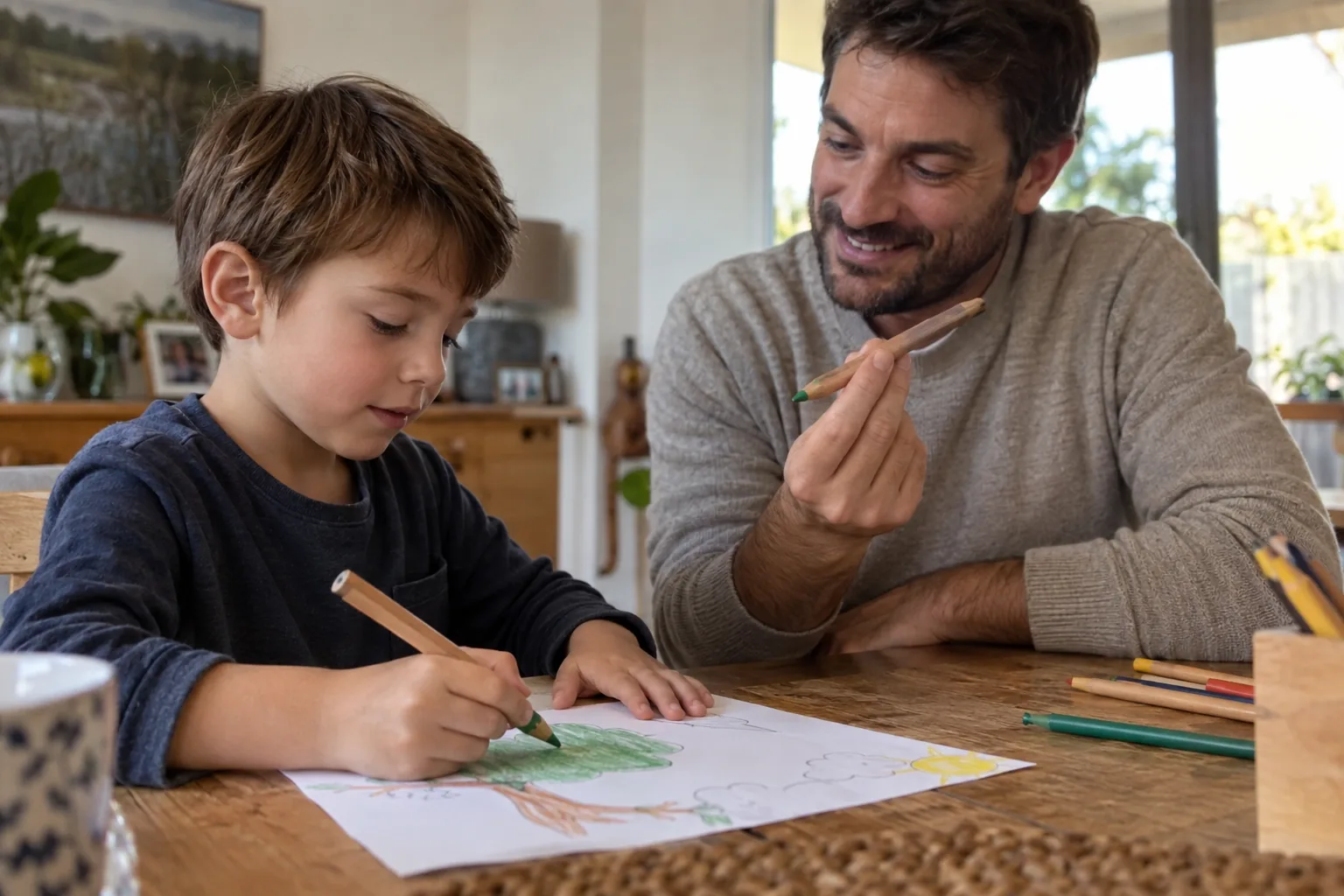
The pencil clutched in a fist, fingers wrapped around, thumb folded over... Many parents worry when watching their child draw. The good news: pencil grip develops gradually over several years, and most "unusual" holds in young kids are simply normal developmental steps. Between ages 4 and 7, the hand adopts a finer grip, with the fingers guiding the pencil. Here are the stages by age, a diagram of the three-finger pincer grip, six simple tips, and games that prepare the hand for writing.
Why pencil grip matters
An efficient grip lets children write for long periods without getting tired, producing precise and fluid lines. On the other hand, clutching a pencil in a tight fist engages the whole arm, tenses the shoulder, and causes fatigue quickly. The French preschool curriculum makes it an explicit goal: starting at age 5, children learn to hold their pencil with a finger pincer grip and use four joints together in a coordinated way: shoulder, elbow, wrist, and fingers.
However, perfection shouldn't be forced at all costs. According to occupational therapists, a grip is satisfactory if the child completes their work pain-free, meets age-appropriate expectations, and uses mainly their fingers for writing movements.
The stages, from fist grip to pincer grip
Pencil grip progression is well documented by pediatric occupational therapists. The ages below are guidelines: some children move through a stage faster, while others take their time.
Source: Centre Grandissons, pediatric occupational therapy, based on research by Schneck and Henderson
View chart data
| Step | Minimum | Maximum |
|---|---|---|
| Palmar grasp | 1 year old | 1.5 years old |
| Digital pronate grasp | 2 years old | 3 years old |
| Static tripod / quadrupod grasp | 3.5 years old | 4 years old |
| Dynamic tripod or quadrupod pincer grip | 4 years old | 7 years old |
In the palmar grasp, around 1 year old, the child holds the pencil with their whole fist. In the digital pronate grasp, around ages 2–3, they hold it with their fingertips, palm facing down toward the table. Around age 3.5, a transitional grasp begins to look closer to a mature hold, but movement still originates from the shoulder and elbow. Finally, between ages 4 and 7, a dynamic tripod or quadrupod grip develops: the fingers do the moving, while the wrist and arm stay steady.
The three-finger pincer grip in practice
In the tripod grip, the pencil is pinched between the pads of the thumb and index finger, resting on the side of the middle finger. The ring finger and pinky are tucked away, relaxed, supporting the hand on the table. You can see a small open circle formed between the thumb and index finger.
The quadrupod grip, where the pencil rests on the ring finger in addition to the middle finger, is also considered fully functional. There's no need to correct a child using this hold if they write neatly and painlessly.

Six tips for a good pencil grip
Short pencils
Break wax crayons in half, sharpen colored pencils down until they are short: a small pencil naturally encourages children to use their fingertips.
Triangular or thick pencils
Their shape guides the three fingers to the right place and prevents squeezing too hard. They are especially useful between ages 3 and 5.
The alligator snap
The thumb and index finger make an alligator's jaws that "snaps" onto the pencil; the middle finger forms the "bed" it lies on. A fun story helps younger kids remember.
The treasure in the hand
Tuck a small piece of playdough or a rolled-up tissue under the ring finger and pinky: these two fingers stay tucked in while the other three do the work.
Drawing vertically
A piece of paper taped to the wall or a chalkboard naturally places the wrist in a good position and strengthens the shoulder. Ideal for ages 3–5.
Pressing less hard
If your child presses down very hard, suggest drawing on paper placed over corrugated cardboard or using a soft graphite pencil: they will learn to adjust their pressure.
Preparing the hand through play
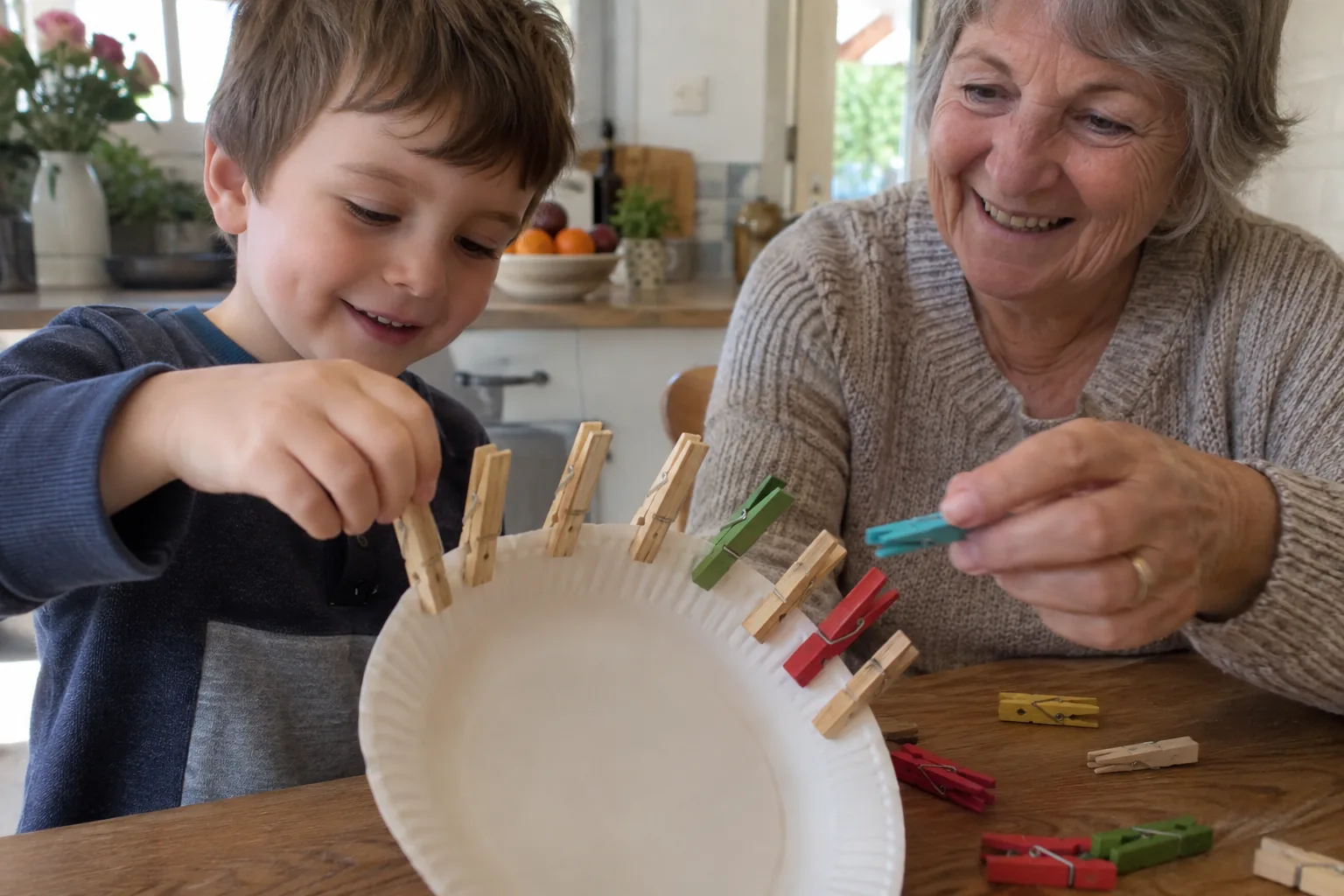
Pencil grip depends on the strength and agility of the small muscles in the hand. Many games develop them naturally without feeling like effort: clipping clothespins, stringing beads, shaping playdough, tearing paper into small pieces, transferring objects with sugar tongs, screwing and unscrewing caps. Our article on fine motor skills mini-games offers a whole series of ideas.
The right posture
A good pencil grip is built with good seating setup: feet flat on the floor or on a footrest, straight back, table at elbow height, paper slightly tilted. The non-writing hand holds the paper. For a left-handed child, the paper tilts in the opposite direction: our tips for left-handed children explain these adjustments in detail.
When to ask for help
According to occupational therapists, grip should only be modified if it causes a real issue: hand pain or fatigue, difficulty forming letters to the point of hurting readability, speed significantly below age expectations, or excessive pressure on the paper. If this is the case after age 6, speak with the teacher and your doctor, who can refer you to an occupational therapist or a pediatric motor therapist. Before that age, patience and hand play remain your best allies.
Frequently asked questions
At what age should a child hold their pencil correctly?
A mature tripod grip, with the thumb, index, and middle finger guiding the pencil, usually develops between ages 4 and 7. Before that, fist grips or fingertip holds are normal developmental stages.
My child holds their pencil in an unusual way but writes well; should I correct it?
Not necessarily. If they write without pain, legibly, and at an appropriate pace, their grip is functional. Occupational therapists recommend correcting it only if it causes real discomfort or impairment.
Are silicone pencil grips useful?
They can help some children find the right finger placement, especially in the beginning. Triangular or short pencils often achieve the same result more simply. If difficulty persists, seek advice from a professional.
Should I stop a 2-year-old from holding a pencil with a full fist?
No, it is completely normal at this age. Offer large sheets of paper, thick crayons, and manipulative play: the pincer grip will come naturally as hand maturity develops.
To go further
Preview before choosing
Les Petits Explorateurs · Ages 4–6
For preschool and early elementary children discovering shapes, numbers, and the fun of drawing lines. An adult reads the instructions.