
Table of Contents
Establish a predictable start to the session
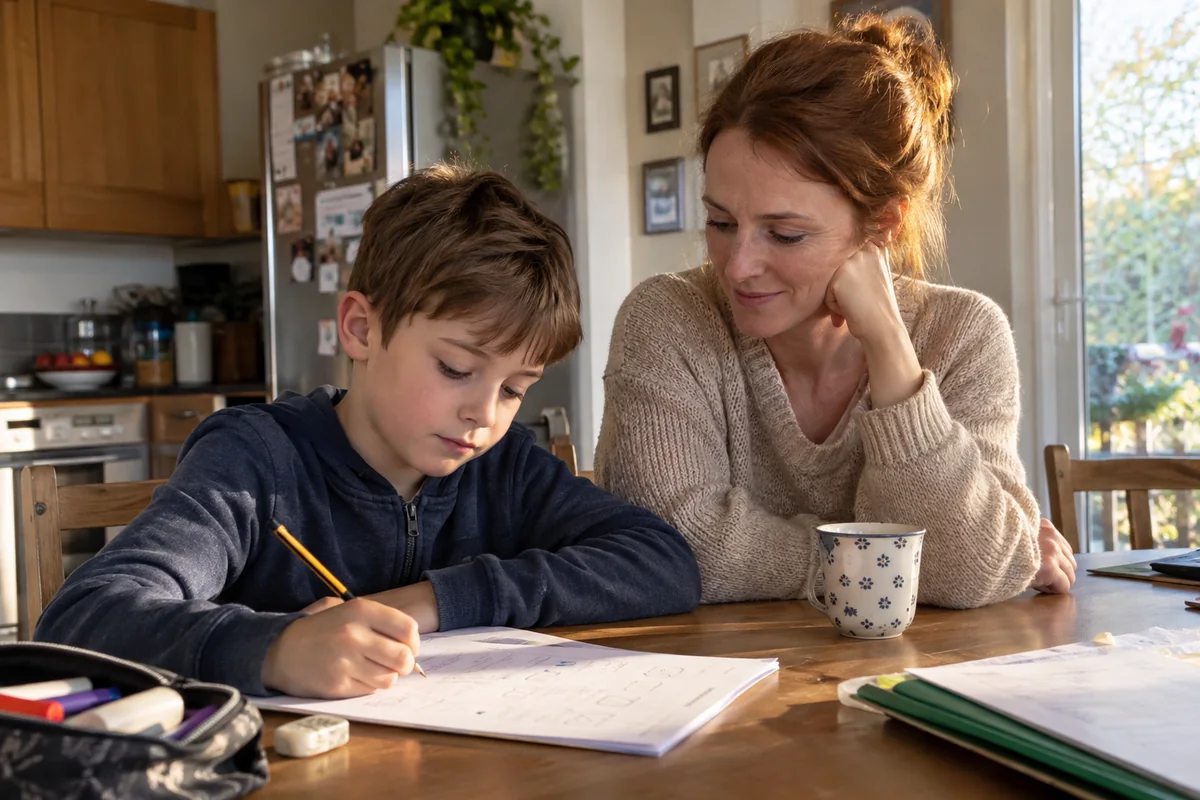
Homework often happens after a full school day. Before opening the notebook, plan a transition time that suits your child: a snack, a quiet moment, or a bit of time outdoors. There is no single perfect time for all families. Instead, notice when your child is ready to settle down and when your own availability allows you to assist.
Choose a clear work area and prepare the necessary supplies. A pencil, an eraser, and the notebook are often enough; the rest can wait. If the table is shared, clear away unused items together. Setting up shouldn't take long: it serves to signal that you are starting and avoids searching for items in the middle of an exercise.
Clarify the task before talking about focus
A child sometimes seems distracted because they don't understand what is being asked. Read the instructions with them or ask them to summarize them in a few words. They can circle the action word, such as calculate, copy, or compare. If they don't know a word, explain it without doing the entire exercise.
Then ask what they plan to do first. A clearly defined step makes starting feel less daunting: read the statement, underline the key data, or try the first question. Avoid presenting the entire page as one big task. Once the first step is complete, look together at what comes next.
Offer a presence that doesn't interrupt
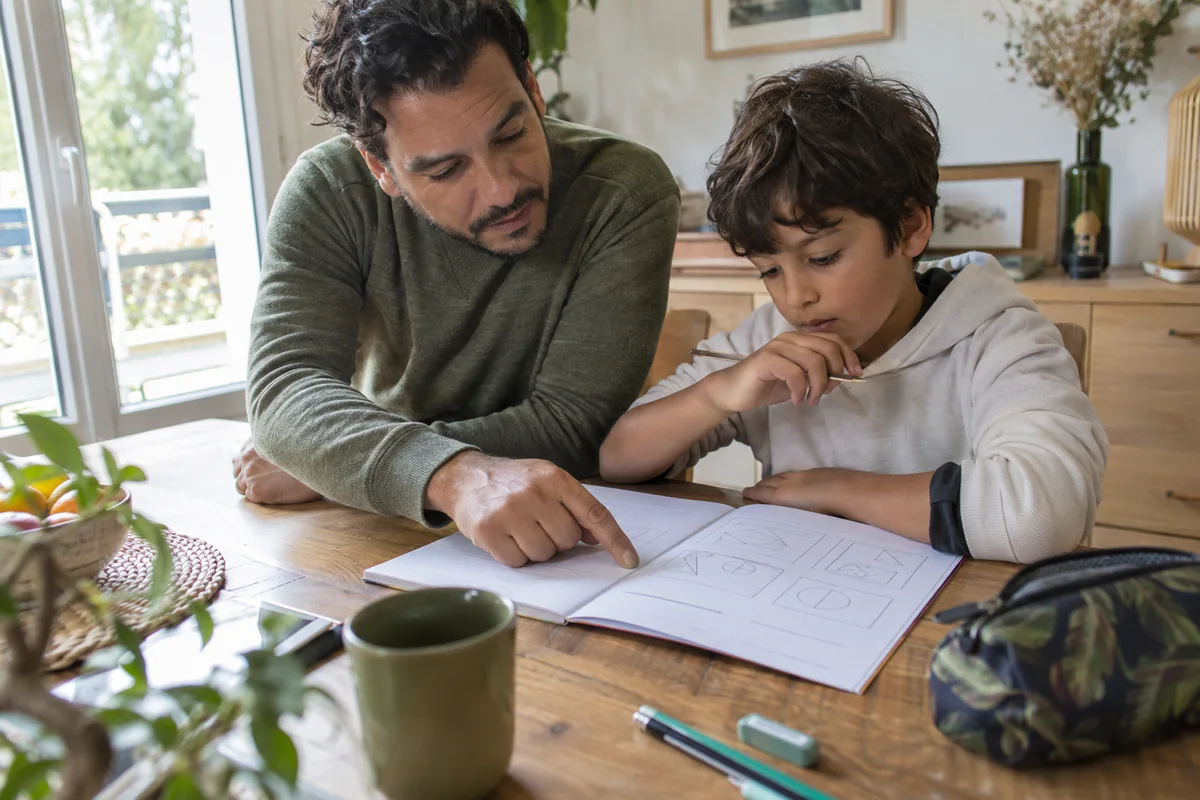
Staying near your child doesn't mean commenting on every answer. You can read the instructions, then let them work for a few minutes while you take care of a task nearby. If you notice them hesitating, ask if they would like a hint. The child keeps their own pace and knows they can call for help.
Some children like to say out loud what they are doing; others need silence. Ask what helps them rather than enforcing a single method. If a break is needed, it can be short and clear: get up, drink a glass of water, and come back to the next question. A break doesn't need to turn into a negotiation.
To go further: Helping your child become independent without leaving them alone when facing difficulties.
Help them figure it out without giving the answer
When your child gets stuck, avoid immediately solving it for them. A simple question can provide a prompt: "What do we already know?", "Where have you seen a similar exercise?", or "Which piece of information could be useful?" In math, a drawing or a few physical objects can make a situation more concrete. For reading instructions, re-reading a passage may be enough.
If they try a different answer than yours, ask how they arrived at it. Mistakes offer an opportunity to review a specific step. Keep a record of the attempt, then choose together what to double-check. When an exercise remains too difficult, write down the question to discuss with the teacher rather than turning the evening into a private tutoring session.
Maintain a positive relationship with the school
Parents have an important role in supporting schooling, but they do not replace the teacher. If homework frequently causes conflicts or if an assignment remains unclear, reach out to the school to clarify expectations. You can explain what you've tried and ask what support would be helpful at home.
Follow the teacher's guidelines regarding assigned work and expected time. If your child regularly seems exhausted, overwhelmed, or anxious, speak with an adult at the school. A constructive conversation helps those supporting your child better understand what is going on.
A two-minute active break
Between two exercises, everyone can stand up, stretch their arms, get a glass of water, and sit back down. If your child likes to move, ask them to walk to a door and come back while counting their steps. The break stays short and isn't meant to grade their attention.
See a problem-solving method explained
The video by Maître Lucas shared here is aimed at Cycle 2 (approx. 1st–2nd grade / ages 6–8 in France) and explains the steps to solve math problems. You can watch a segment together, then return to your child's exercise and ask which first step seems helpful. The video is optional and only loads if you click the button.
To finish up, check what is actually required without trying to fill extra pages in the notebook. Les Grands Curieux offers logic games for ages 7–10, but they do not replace homework or communication with the school. They can simply provide a chosen activity at another time of day.
To go further
Preview before choosing
Les Grands Curieux · Ages 7–10
For children who are beginning to read instructions on their own and enjoy playing with words, numbers, and riddles. An adult can help with reading.