
Table of Contents
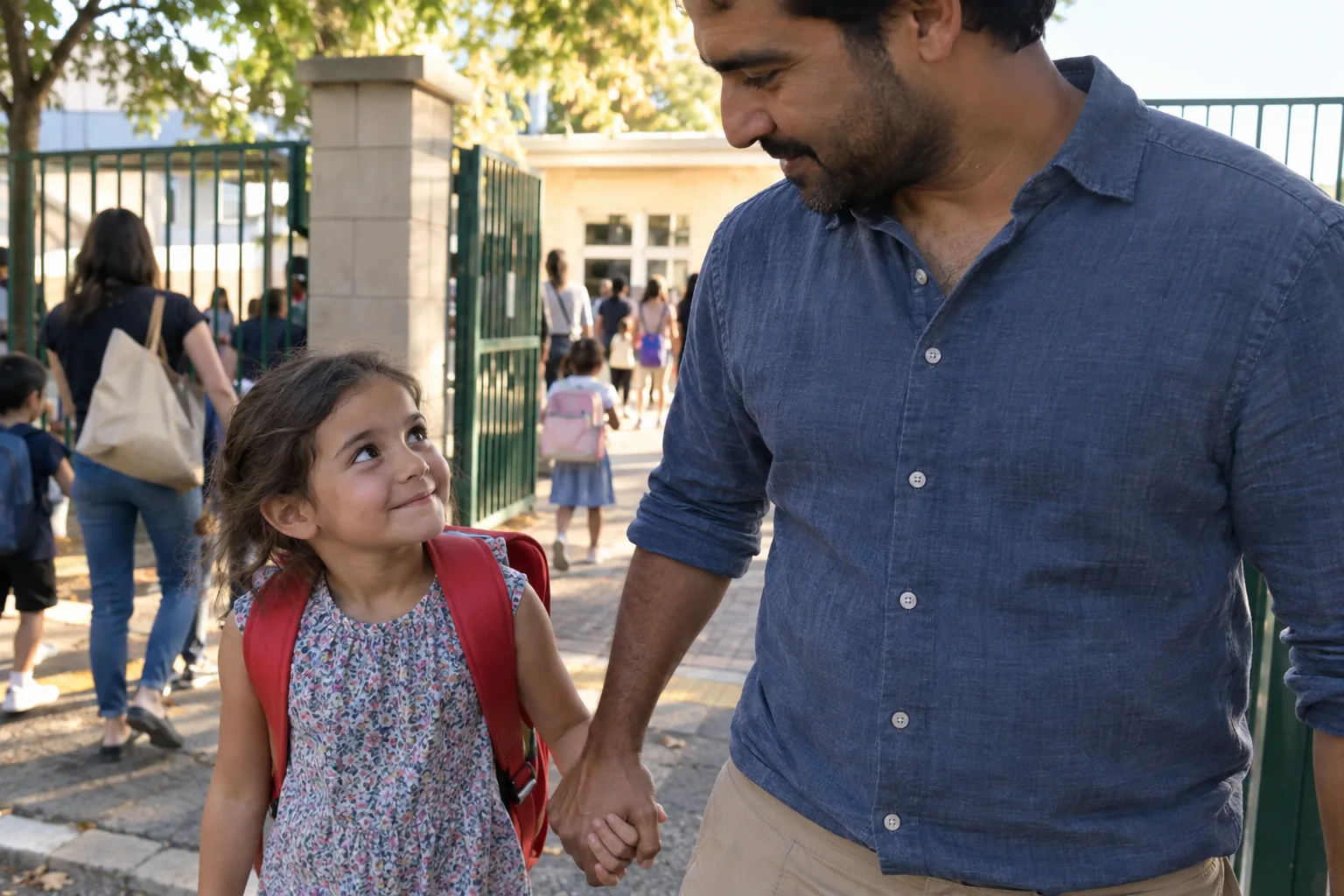
The transition from kindergarten (Grande Section) to 1st grade (CP) is one of childhood's major milestones. A new playground, a new routine, new vocabulary: people talk about “big school,” reading, workbooks… Many parents ask themselves if they should get a head start over the summer. The answer is reassuring: what truly helps a child succeed in 1st grade is not already knowing how to read, but being independent, well-rested, and confident. Here are the key factors, a checklist to complete with your child, and our advice for the first few weeks.
What really changes in 1st grade (CP)
In kindergarten, children learn a lot through play, hands-on activities, and movement. In 1st grade (CP), sitting times get longer and learning becomes more formal: learning to read and write is the core goal of the year, along with numbers and math. The days are full, and many children are very tired during the first few weeks.
Kindergarten prepared them for this transition: the child knows letter names, knows how to write their first name, and plays with language sounds. 1st grade (CP) builds on these foundations to systematically teach letter-sound correspondences, followed by reading words, sentences, and texts.
No need to teach reading over the summer
This is the most widespread myth: that a child should know how to read upon entering 1st grade (CP). That is not the case. Learning to read is structured throughout the year by the teacher using a precise sequence. Trying to get ahead with a different method can even confuse your child, who risks getting bored or mixing up two different ways of learning.
What truly prepares a child for reading are read-aloud stories, conversations, and playing with sounds and rhymes. Our ideas for playing with syllables and rhymes and for fostering a love of reading are perfect for the summer. As for writing, knowing how to write their first name is a great milestone: we explain the steps in our article on learning to write one's first name.
The skills that truly help
A child who gets dressed on their own, puts away their things, and knows how to ask for help feels capable, devoting their energy to learning rather than small frustrations. Take advantage of the last weeks of kindergarten or the holidays to check in with them, without pressure. The checklist below can be completed at their own pace: every checked box is a small victory.
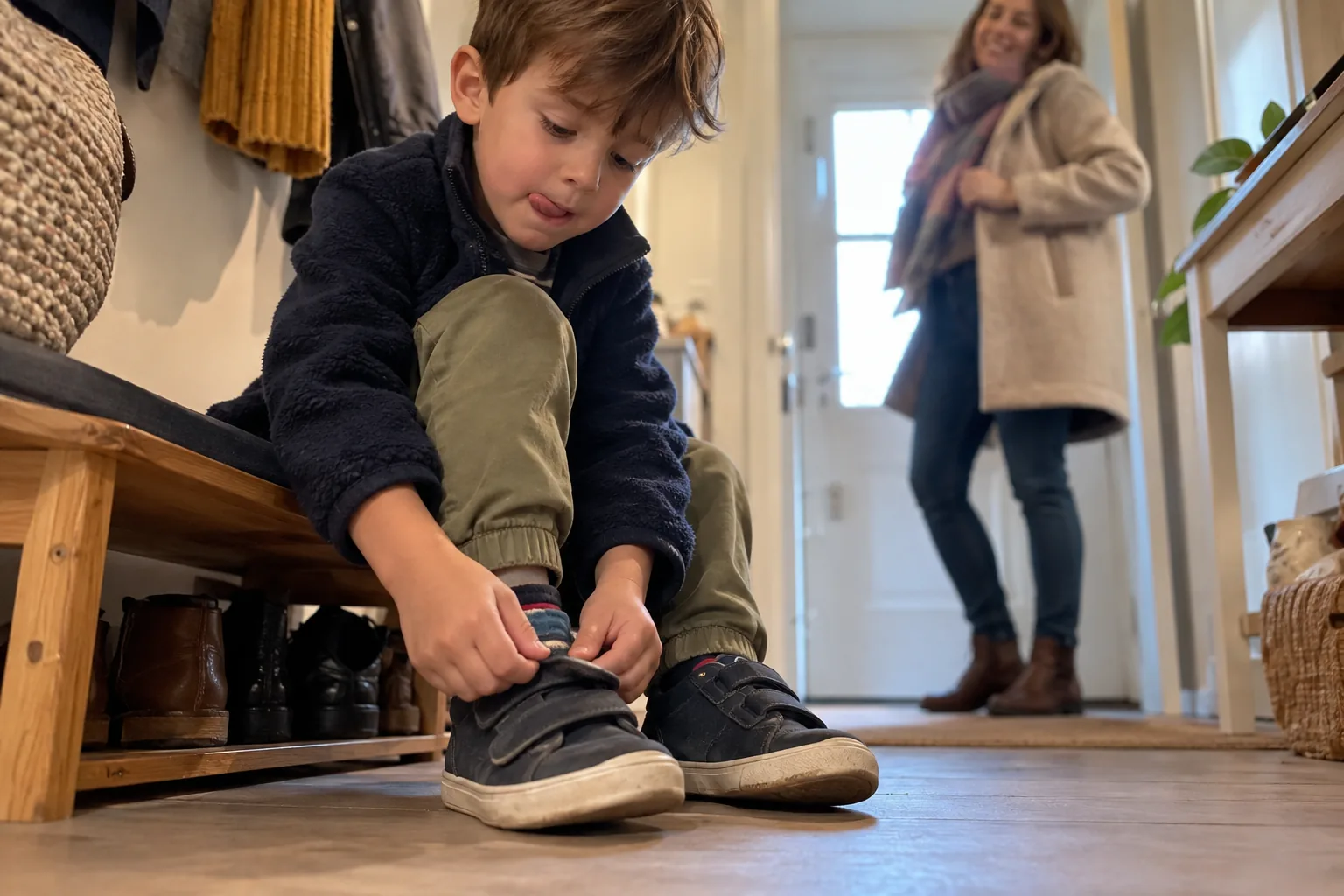
Fine motor skills count too: cutting out paper, coloring, stringing beads, and manipulating play dough prepare the hand for writing. There is nothing strictly academic here, just fun activities. Our fine motor skill games offer plenty of ideas.
Talking about school using positive language
Phrases like “No more playing around in 1st grade!” or “You'll see, the teacher will be stricter” often start as jokes, but they cause anxiety. Choose reassuring, concrete messages instead: “You are going to learn how to read stories all by yourself,” “There will be recess in the morning and afternoon.” If possible, walk past the school over the summer and show them where the playground and entrance will be.
Share your own memories of 1st grade as well, especially the happy ones: children feel reassured knowing that their parents went through the exact same thing.
Getting the backpack ready together
Choosing their backpack, pencil case, and pencils together involves your child in the return to school. Choose a lightweight backpack that is easy to open, with straps adjusted so that it sits properly on their back. Label their belongings with their name and do a practice run: opening the pencil case, taking out a pencil, putting a notebook away. These simple actions will prevent them from feeling lost on the first day.

Daily routine: sleep and fatigue
A day in 1st grade (CP) is long. The schedule below shows an example organization: each school has its own schedule, but it clearly illustrates the balance between learning time and break time.
To keep up with this routine, sleep is essential. International recommendations suggest between 9 and 12 hours of sleep per night for children aged 6 to 12. Return to a regular schedule a week before school starts, and keep evenings calm. Our article on how many hours of sleep a child needs features a bedtime calculator.
The first few weeks
During the first few weeks, your child may be cranky, tired, or even cry in the evening over minor things: this is the natural reaction to a major change, and it usually passes. Plan for quiet evenings, a snack, and time for free play.
To find out how their day went, overly general questions (“Was it good?”) often get a simple “yes” or “nothing.” Instead, try asking: “What made you laugh today?”, “Who did you play with at recess?”, “What new thing did you learn?”. And attend the back-to-school parent meeting: it is a great opportunity to understand how the teacher organizes the year and how you can support learning at home.
Frequently asked questions
Does my child need to know how to read before starting 1st grade (CP)?
No. Learning to read is the primary goal of 1st grade (CP), and the teacher follows a clear, structured sequence. On the other hand, knowing letter names, writing their first name, and enjoying stories are wonderful building blocks.
Do they need to know how to write in cursive?
The French kindergarten curriculum introduces cursive writing in Grande Section (pre-K/K equivalent), with the goal of writing one's first name in cursive without a sample. Writing mechanics continue to be practiced in 1st grade (CP): perfection is not expected on day one.
My child was born late in the year, are they at a disadvantage?
Children born late in the year sometimes find the beginning a bit more challenging simply because they are younger. The gap narrows over time. Keep an eye on their tiredness and talk with the teacher if difficulties persist.
What should I do if they cry when leaving for school?
Keep goodbyes short and affectionate, using a consistent routine, and leave without sneaking away. If the crying continues past the first few weeks, discuss it with the teacher to understand what is happening in the classroom.
To go further
Preview before choosing
Les Petits Explorateurs · Ages 4–6
For preschool and early elementary children discovering shapes, numbers, and the fun of drawing lines. An adult reads the instructions.