
Table of Contents
Fingers learn through varied movements
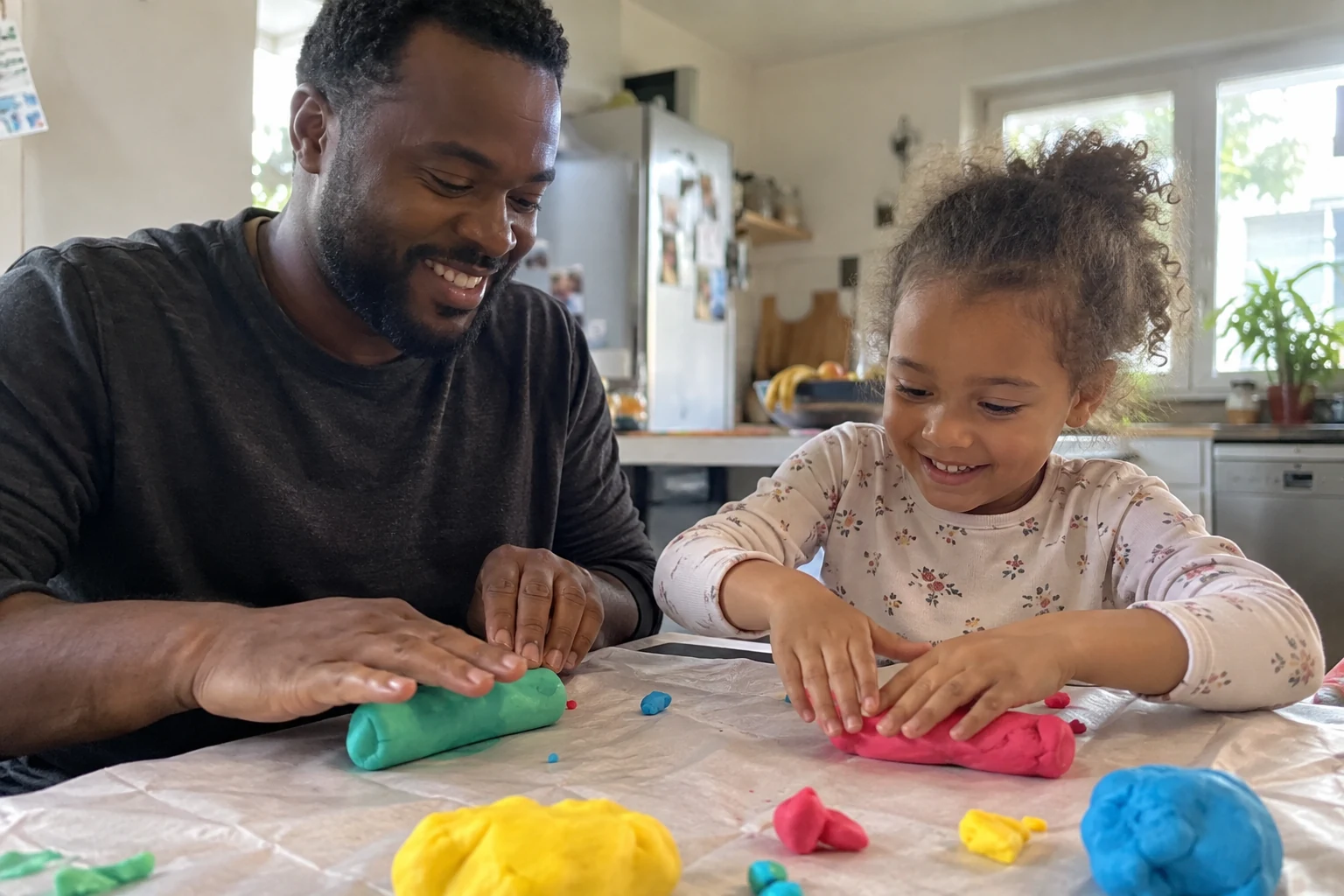
Grabbing a sock, turning a page, opening a jar of dough, or holding a crayon engages hands in different ways. Fine motor skills refer to these precise movements of the hands and fingers, but an activity doesn't need to carry that label to offer a hands-on learning opportunity. Children learn by trying, and their skills don't all develop on the exact same timeline.
You can offer a simple activity and see what your child does with it. If they change the rules, move the objects around, or prefer to look before touching, give them space to participate in their own way. Avoid comparing their movements to those of a sibling or child of the same age. The goal is to share an experience, not to measure speed or precision.
Five ideas using things you already have
1. Roll, flatten, and pinch soft play dough. 2. Peel and re-stick large stickers. 3. Fold a sheet of paper in half to make a card. 4. Match socks into pairs. 5. Turn the pages of a book while looking for a specific color. Depending on their age, your child might do part of the movement on their own or need a demonstration and close supervision.
Two other games can easily fit into your day: opening and closing an empty container, or dropping large blocks into a basket and taking them out again. For 7–10 year-olds, suggest folding paper to make a fan or tying a wide ribbon around a box. Always keep materials age-appropriate and store any small items out of reach of children who might put them in their mouth.
Letting movement develop naturally
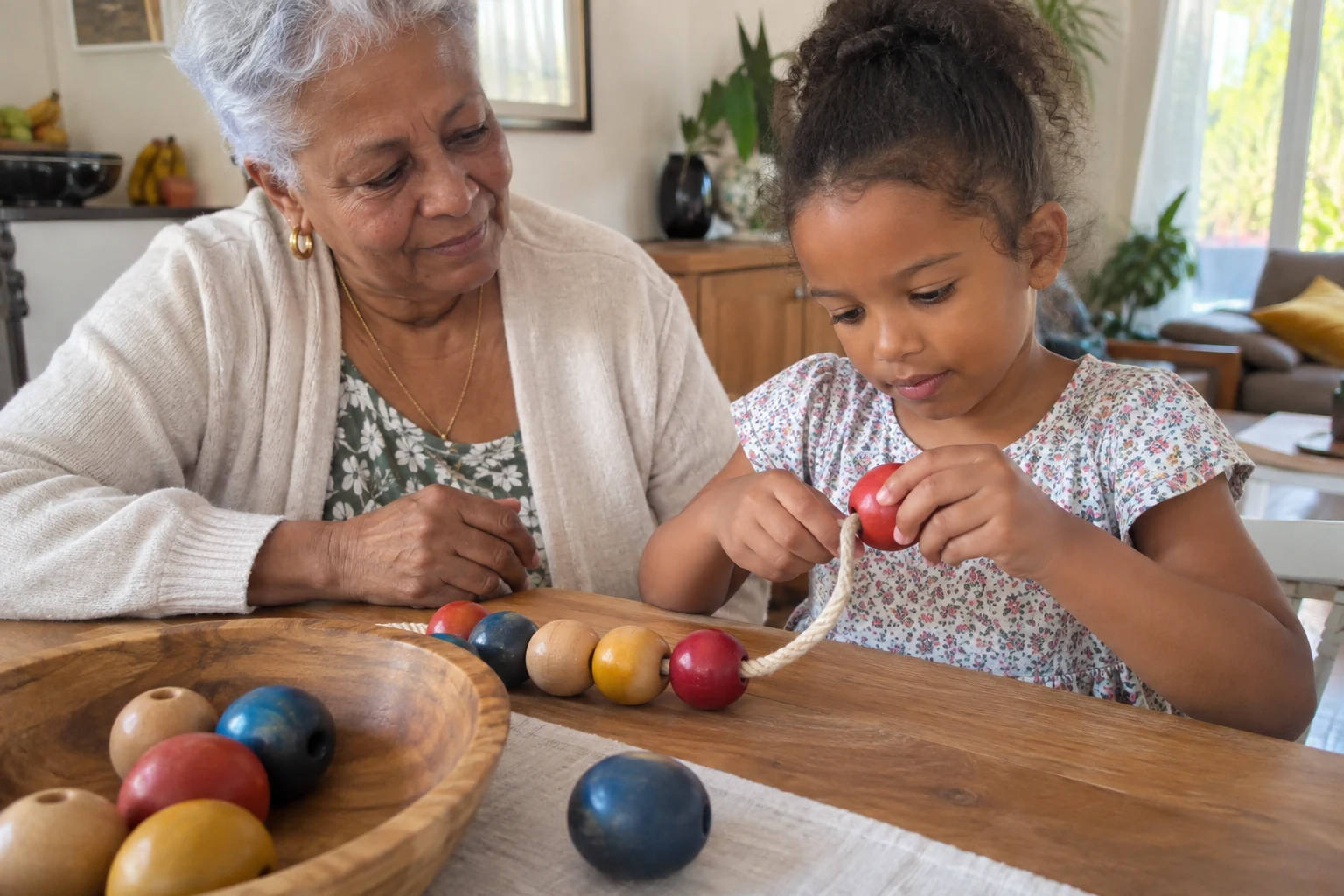
If your child draws in an unusual way or switches hands frequently, let them explore as long as they are comfortable. You can vary the surface: a large piece of paper on the table, an upright chalkboard, or sidewalk chalk outside. Offer a few easy-to-grip crayons and let them pick the one that feels best.
For activities with scissors, clips, or craft materials, adapt the tool and stay close by. A young child doesn't need to cut out a complex shape: cutting a strip of paper with safety scissors under adult supervision is plenty. If the activity gets frustrating, return to a simpler step or take a break.
To go further: Creative games for children: ideas without complicated supplies.
Small household chores count too
Setting cloth napkins on the table, closing a snack box, or stirring a cold dish with a big spoon are everyday tasks you can share. Give your child a clear task and allow time to complete it. They may ask for help or want to try again; you can guide them without taking over the movement entirely.
These actions have a clear, real-life purpose, which often appeals to children who prefer participating in family life over playing an adult-invented game. Pick safe tasks with no sharp, hot, or fragile objects. You can thank your child for helping out without grading how well it turned out.
The clothespin workshop
Set out a few large clothespins, a box, and a thick piece of fabric. Show how to clip the fabric to the edge of the box, then let your child discover other ways to play: making a fence, lining up the clothespins, or sorting them by color. Stay nearby, make sure the clothespins are safe for their age, and put them away together afterward.
To go further
Preview before choosing
Les Petits Explorateurs · Ages 4–6
For preschool and early elementary children discovering shapes, numbers, and the fun of drawing lines. An adult reads the instructions.