
Table of Contents
A first folded note tucked under a pillow, a hand-drawn map, and the whole house turns into a treasure island. A treasure hunt is one of the most magical games of childhood: kids read, think, run around, cooperate, and finish with the joy of discovery. It requires a bit of preparation, but far less than you might think. Here is how to adapt it to your child's age, plan the route in reverse so you do not forget anything, write clues with a generator ready to copy, and organize it for a birthday party.
Adapting the hunt to your child's age
For 4–6-year-olds, who do not read yet or are just starting, clues are drawings or photos: a picture of the refrigerator, a drawing of the bed. Four to six steps are enough, across two or three rooms. The adult reads aloud if needed and stays with the group.
For 7–10-year-olds, bring on the riddles, charades, and secret codes. The route can include six to ten steps, extend into the yard, and the adult simply provides a bonus hint if they get stuck. Older kids also love having a step that requires solving a real riddle or decoding a message: our riddles for kids and our secret codes are perfect for this.
Choosing the Treasure
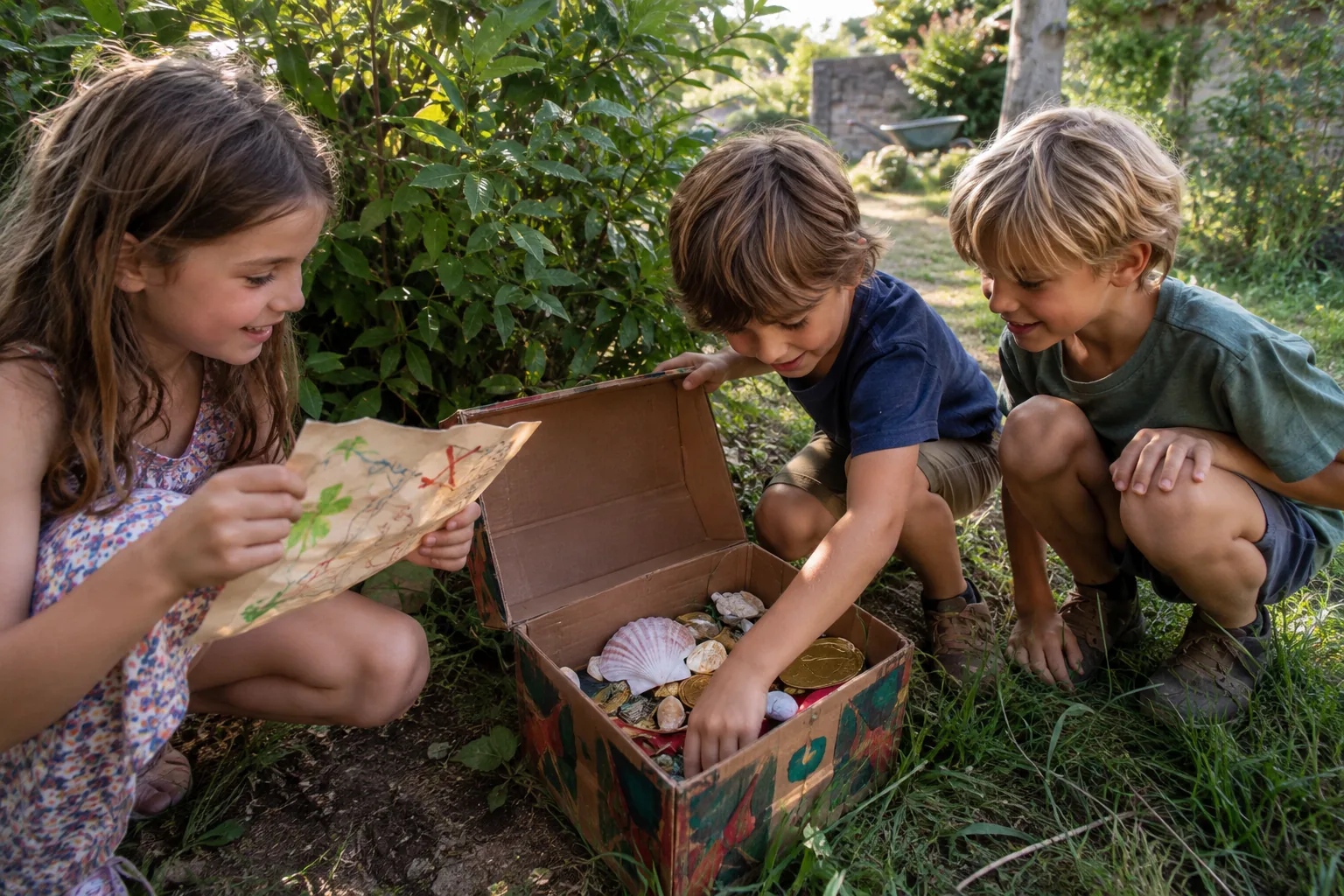
The treasure doesn't need to be big or expensive: the quest itself is what makes it fun. A few ideas: a cardboard chest filled with chocolate coins, a book, gold cardboard explorer medals, a "treasure hunter" certificate, the right to pick tonight's dessert or the weekend outing. For a group, plan a treasure that is easy to share.
Setting Up the Route Backwards
The tip that prevents missing anything: set up the route starting from the end. Hide the treasure first. Next, write the last clue—the one that leads to the treasure—and hide it. Then the second-to-last clue, which leads to the last one, and so on until you reach the first clue, which you hand deliver to start the game. Number the clues on the back: if you're ever in doubt, you'll know where the players are.
Drawing a floor plan of the house with your child, before or after the game, extends the fun: it's a great introduction to map reading, building on mazes for kids.
Writing the Clues
A good clue is just challenging enough: the child needs to think, but figure it out in a minute or two. Vary the formats: riddles, photos, rebuses, jigsaw puzzles to put together, coded messages. The generator below offers ready-to-copy clues for classic hiding spots around the house, for ages 4–6 or 7–10. It can also create a complete six-step route.
For little ones, the game of "hot or cold" can replace a difficult clue: "You're getting colder... warm... burning hot!" It unblocks the situation without ruining the discovery.
For Birthdays or Groups of Children
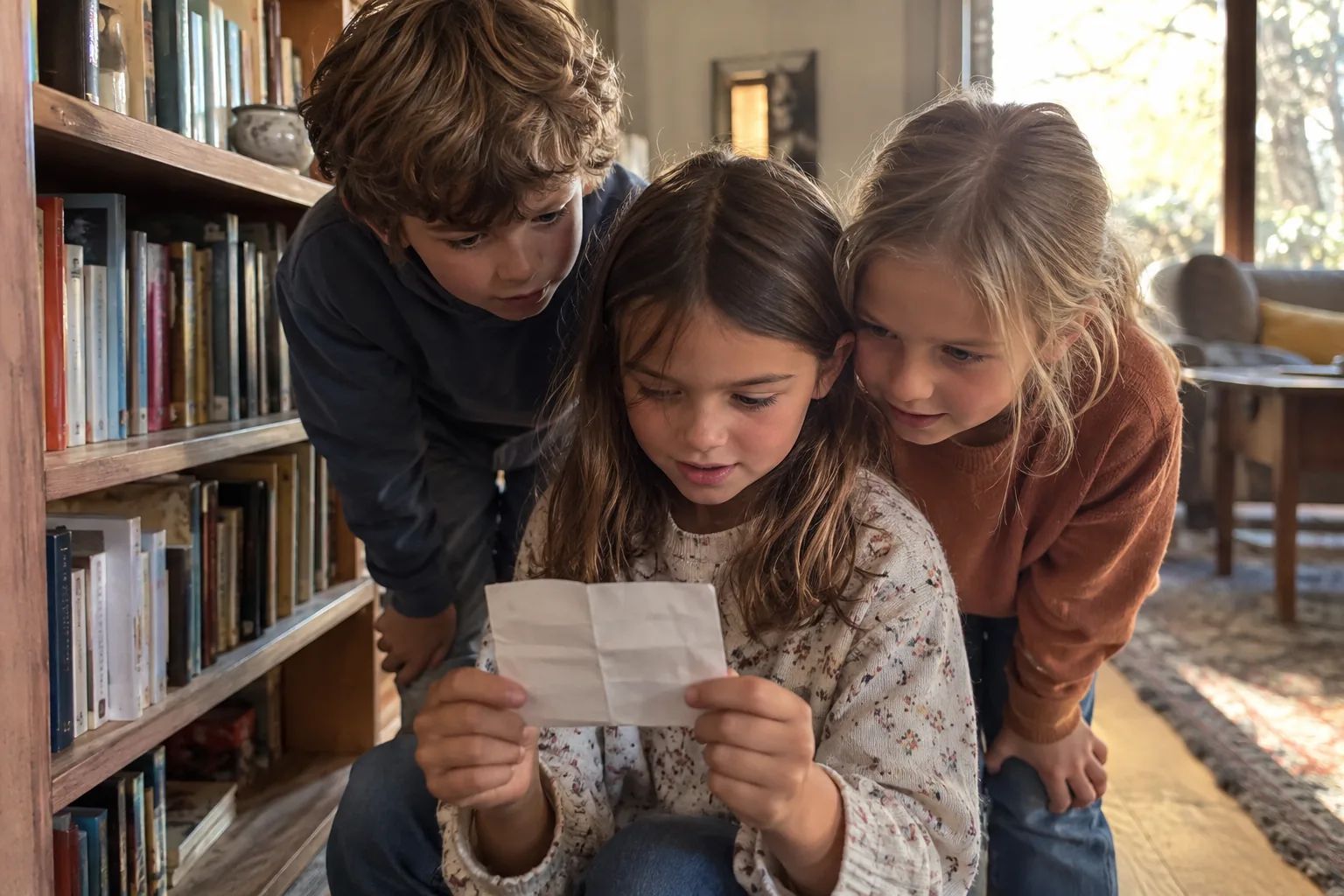
With a group, a treasure hunt becomes a wonderful cooperative game. Form mixed-age teams so that the older ones can read and the younger ones can search. Give everyone a role: the clue reader, the map keeper, the chief searcher. With two teams, set up two different-colored routes that meet at the final treasure, shared by all: nobody loses, everyone celebrates the discovery.
Working together, listening to each other, sharing roles: these are exactly the social skills that public health guidelines classify as psychosocial skills to develop from childhood. For siblings of different ages, our article on activities for two different age groups offers more role ideas.
The Adult's Role and Safety
The adult is the game master: keeping the list of hiding spots, giving a bonus clue if the group gets stuck for too long, and keeping up the good mood. Choose safe hiding spots: never in the oven, near cleaning products, windows, or up high. In the garden, clearly define the play area.

Variations to Play Again
- In the garden or park: clues hidden at the foot of trees, under a rock, near a flower.
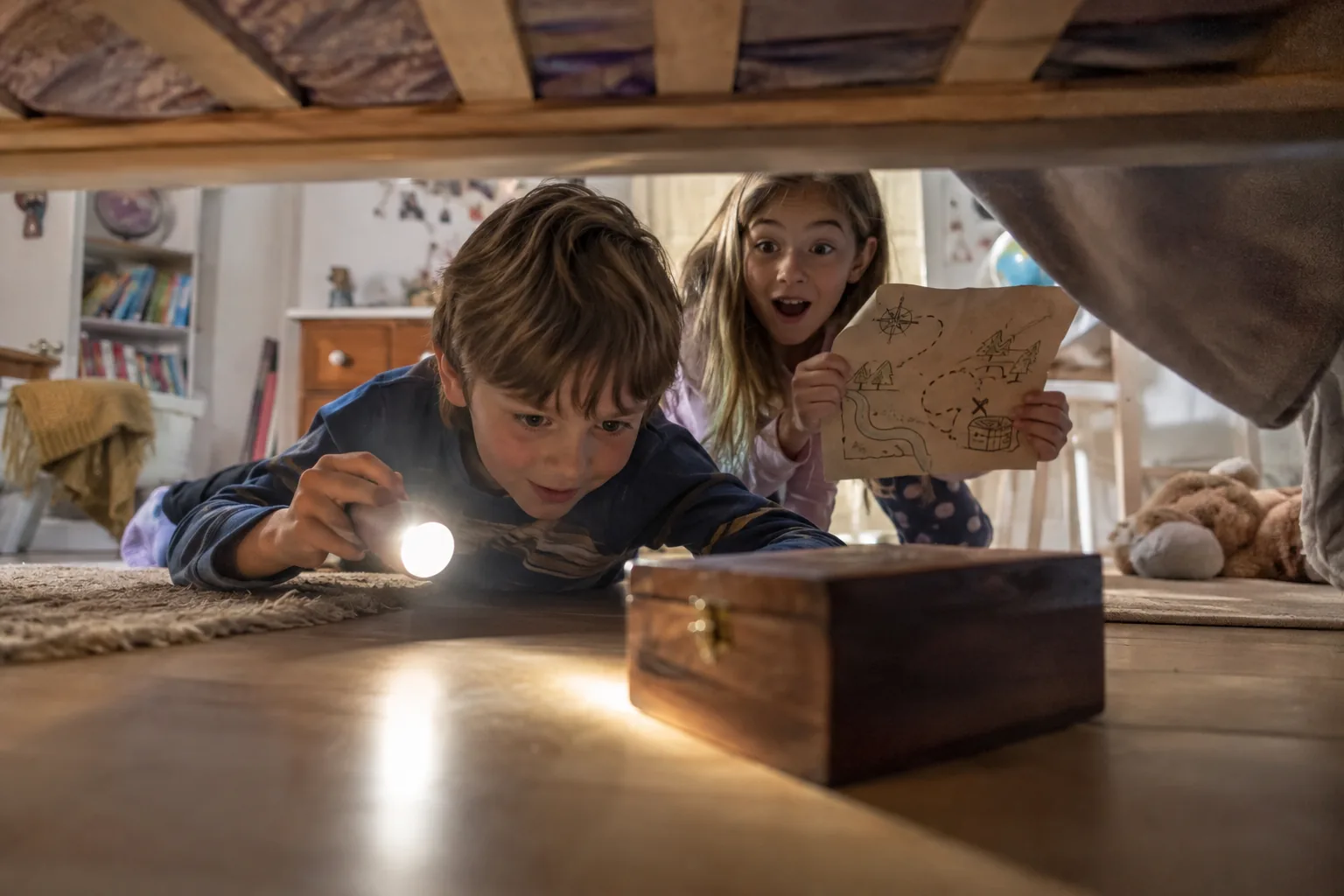
- With a flashlight: a treasure hunt at dusk, indoors with the lights off.
- Photo hunt: each clue is a close-up photo of an object in the house to recognize.
- Reverse hunt: the kids set up the route for the adults.
Frequently asked questions
At what age can you organize a treasure hunt?
Starting at age 4, using picture clues, few steps, and an adult guiding them. From age 7 up, children can read the clues, solve riddles, and move forward more independently.
How many clues should you plan?
Four to six for ages 4–6, six to ten for ages 7–10. A short, successful hunt is better than a route that's too long and tires out the players.
How long does a treasure hunt last?
Usually between twenty minutes and an hour depending on age and the number of steps. For a birthday party, plan about 45 minutes, followed by snacks.
What treasure can you offer if you want to avoid candy?
A book, explorer medals, a certificate, stickers, a small plant to grow, or a privilege, like picking Friday night's movie. What kids remember most is the adventure.
To go further
Preview before choosing
Les Grands Curieux · Ages 7–10
For children who are beginning to read instructions on their own and enjoy playing with words, numbers, and riddles. An adult can help with reading.