
Table of Contents
Free play starts with a genuine choice
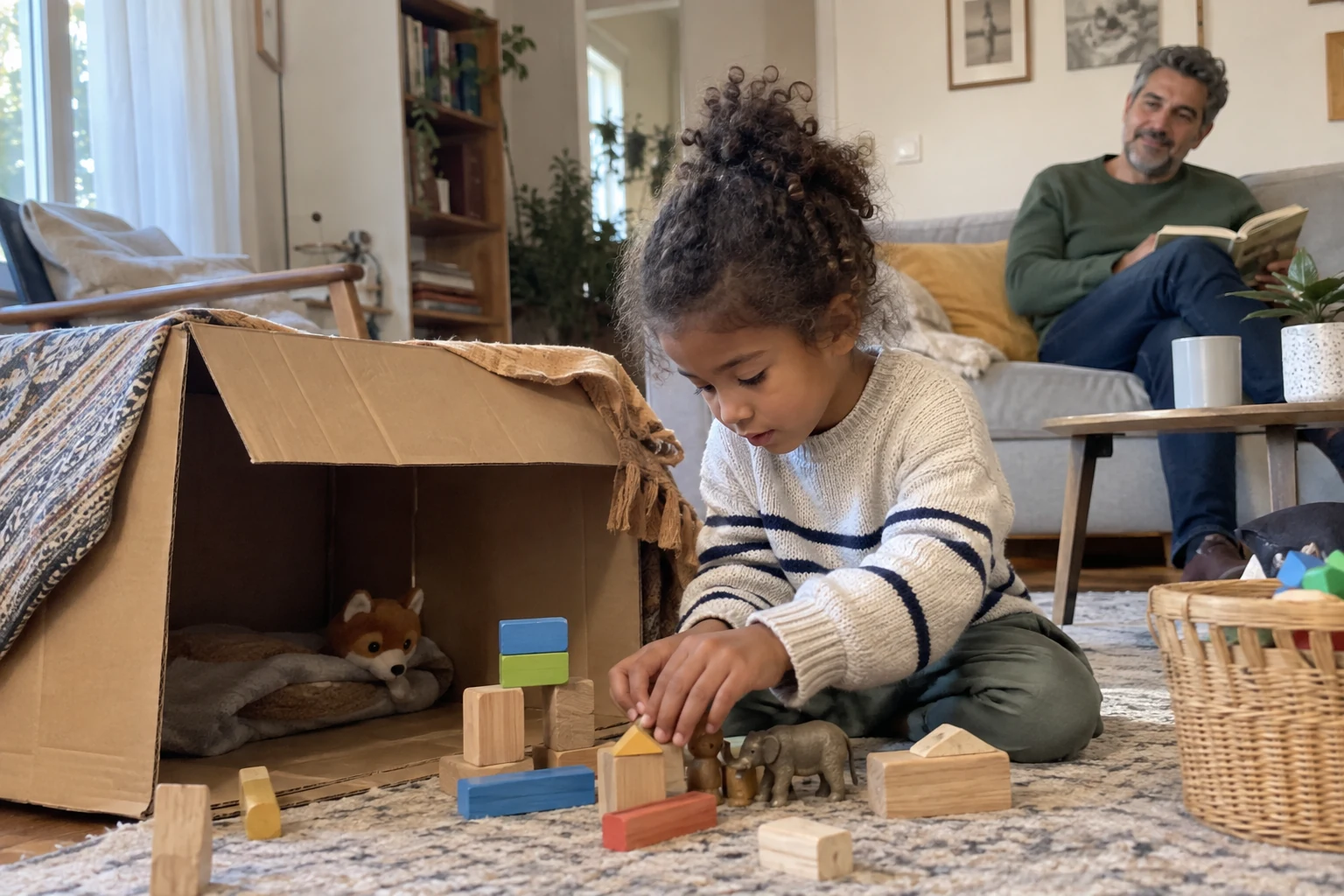
Children play freely when they can choose their activity, materials, and how to keep going. They might make two toy figures talk, turn a cushion into a mountain, or repeat the exact same movement over and over. You can set up a safe area and remain present, but you don't need to declare an objective or organize an activity to fill every single minute.
Independent play doesn't mean your child always has to play alone. They might invite you to hold a piece, ask for a word, or want to show you their idea. Respond to that invitation, then let them lead what comes next. It is also completely natural for a child to seek out your presence before settling into play.
Setting up a simple, comfortable space
Pick a spot where your child can reach a few objects without climbing or moving heavy furniture. A bin of building blocks, some paper, crayons, and two books are plenty. Bring out just a few items at a time: having too many choices can sometimes make getting started harder. Make sure no fragile, sharp, or very small items are within reach of young children.
Place the materials near where you are sitting if that helps your child get going. A small table in the kitchen or a corner of the living room works well. The space doesn't need to remain spotless. If space permits, you can agree on a spot where an unfinished building project can stay until tomorrow.
Pausing a few minutes before offering ideas
When your child says "I'm bored," you can listen without stepping in right away to fill the silence. Let them know you're available, then give them a moment to look at what's around. If they ask for a suggestion, offer two concrete choices: building a road or drawing a map, for instance. Your child is still free to pick something else entirely.
Some children need an adult to kick off play with them. You can place two blocks down, say the first sentence of a story, or play the first turn, then ask your child what they want to do next. Others prefer to observe before jumping in. Adapt your level of involvement to your child's interest and age.
To go further: Creative games for children: ideas without complicated supplies.
Being available without taking over
During play, describe what you see rather than correcting how it's done: saying "You lined up all the cushions one after another" sparks conversation without dictating what comes next. If your child gets stuck, ask what they'd like to try. A quick question or placing a helpful object within reach is often enough; you don't need to fix every obstacle for them.
If play gets loud or expands into a shared room, set clear boundaries about the space or available materials. You can designate an area where blocks stay on the floor and suggest setting fragile objects aside. Safety boundaries belong to the adult, while the story and ideas remain the child's.
The basket of open-ended objects
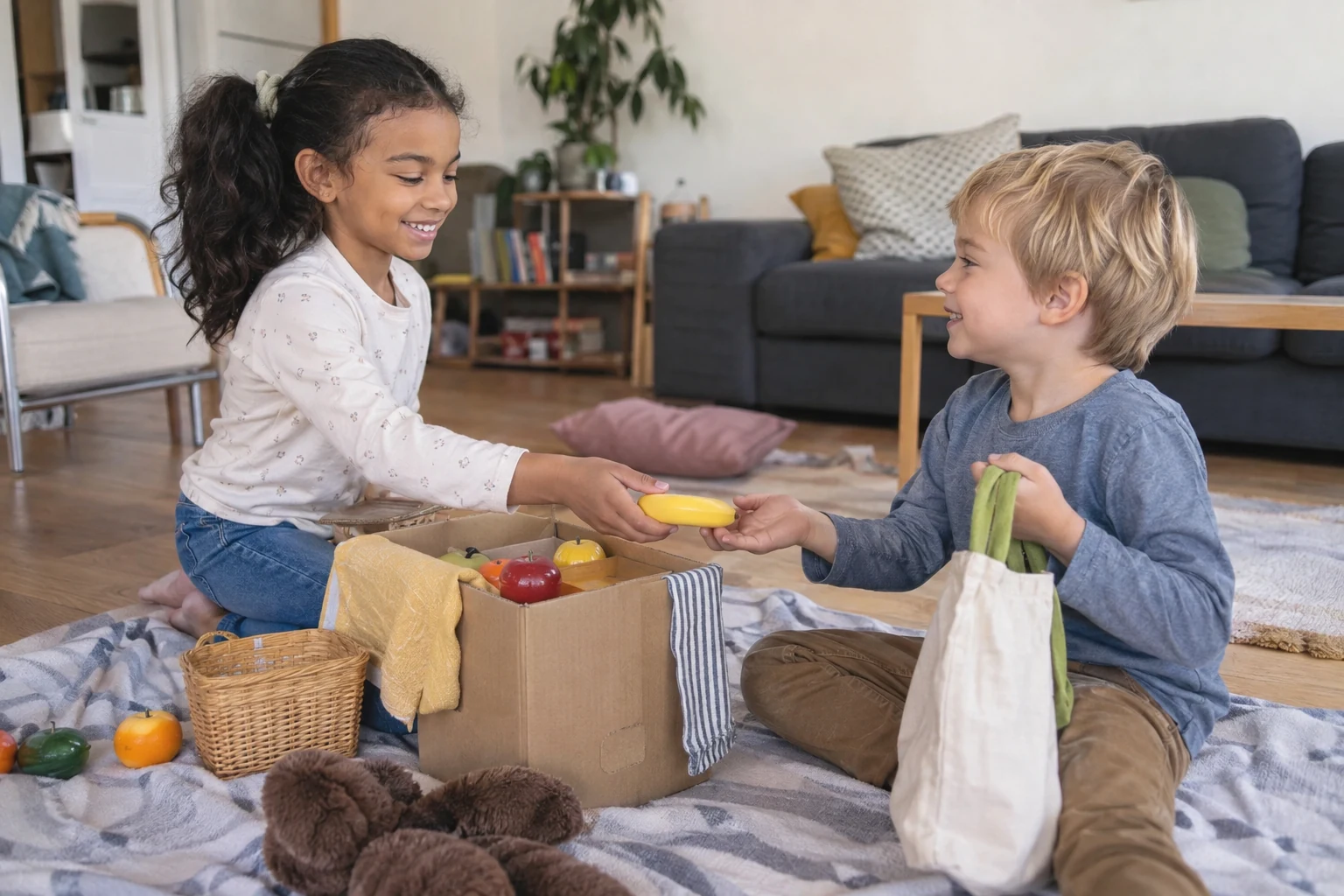
Gather a few safe household items: an empty box, a scarf, large building blocks, a piece of paper, and age-appropriate figures. Ask your child what these items could turn into. For older kids, suggest creating a scene and telling a story; for younger ones, simply follow along as they handle objects and share comments.