

Table of Contents
"I'm bored!" The phrase drops on a Wednesday afternoon, a rainy day, or the third day of vacation, and the reflex is often to offer an activity immediately, or even a screen. Yet boredom isn't an emergency to fix. These unscheduled moments are precious: that's when imagination kicks in, when kids discover what they truly love doing, and learn to occupy themselves. Here is why boredom is useful, how to get through the difficult first few minutes, and how to set up an idea jar for days when inspiration takes time to arrive.
Boredom: a signal rather than a problem
When a child says they're bored, they are signaling a lull: the previous activity is over, and nothing is demanding their attention. This lull can be uncomfortable, especially for kids used to packed schedules. But it doesn't necessarily call for an adult solution. Often, simply leaving a little time is enough for the child to figure out what to do on their own.
An article published by The Conversation, written by a professor-researcher from the University of Michigan, sums it up this way: boredom acts as a stimulant for the brain. It encourages independence, feeds curiosity and creativity, and learning to deal with it is an essential skill for the future.
What boredom makes possible
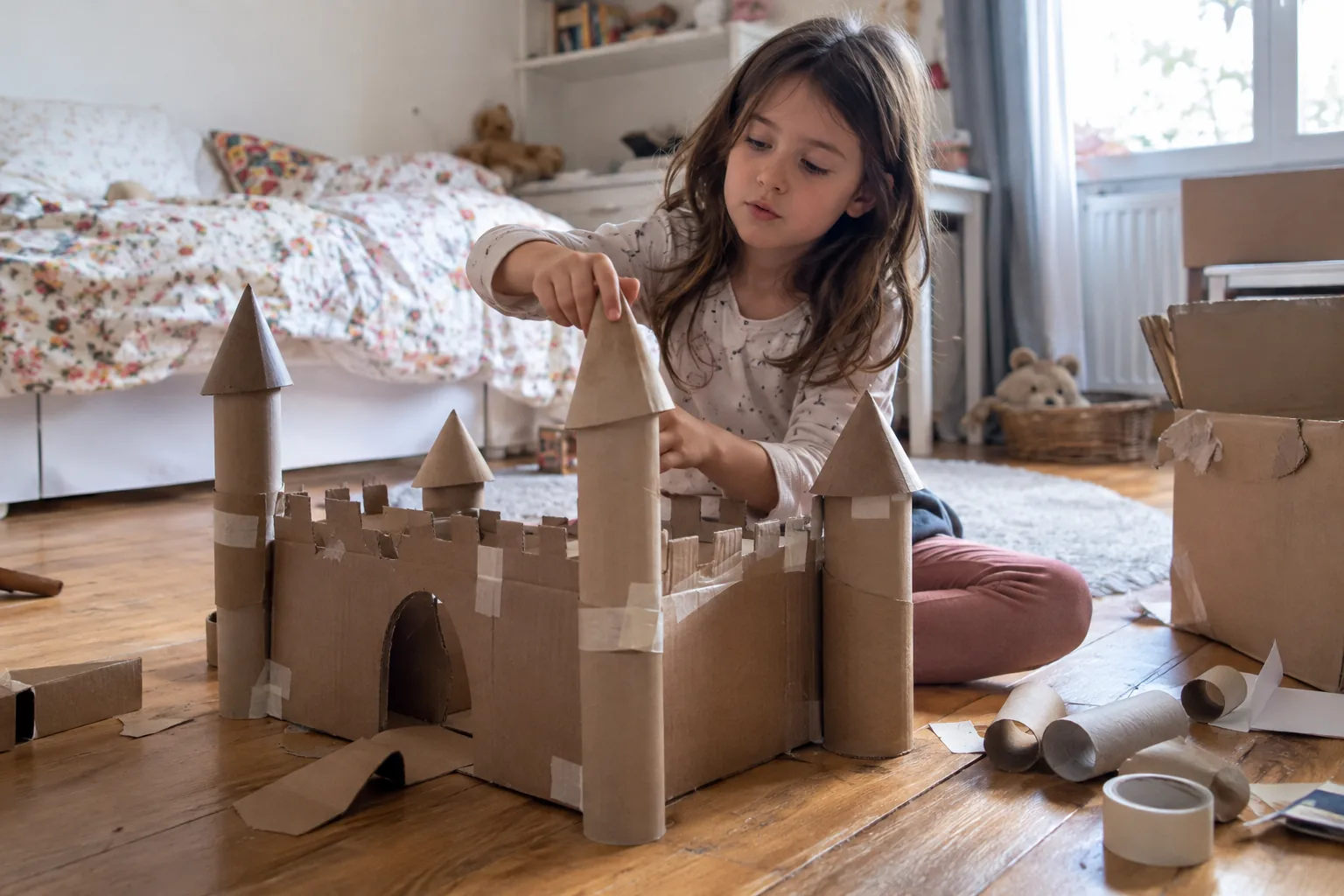
Left to their own devices, without a set routine, children let their mind wander. They invent a story, turn a cardboard box into a rocket, or set up their stuffed animals like a classroom. The Swiss foundation Pro Juventute even goes so far as to describe boredom as a "superfood" for the brain: it stimulates creativity, and children learn to manage their free time by themselves. Boredom thus develops independence: children discover that they are capable of keeping busy without an adult organizing everything, and they gradually figure out what they truly enjoy doing.
It is also the gateway to independent play, which we explain in detail in our article on independent play at home.
Getting through the first few minutes
The trickiest part is the beginning. Children complain, wander around, and come to see you several times. If you step in right away, they never reach the phase where ideas start flowing. The diagram below illustrates what many parents notice when they let things play out.
When your child comes to see you, acknowledge the complaint without brushing it off ("It's true, it's not fun when you don't know what to do"), then gently throw the ball back into their court: "I'm sure you'll come up with an idea. Will you tell me about it later?" You can also invite them to help you with a chore: many children will then, as if by magic, discover a much more interesting activity.
Setting up a play-friendly home
Single-purpose toys quickly lose their appeal. Open-ended materials, which can become anything, spark the imagination much more: cardboard boxes, fabrics, paper tubes, clothespins, crayons, paper, playdough, and action figures. Store them at your child's eye level in easy-to-open bins.
Rotate toys as well: by putting a portion of them away for a few weeks, they feel fresh and new when brought back out. Also limit the number of freely accessible objects: too many choices can sometimes be just as overwhelming as too few.
The idea jar
For days when inspiration is slow to strike, prepare an idea jar with your child ahead of time, filled with small slips of paper. Have your child suggest them at a time when they are not bored: that way, they pick their own ideas, not yours. You can try out the idea with the jar below and add your child's ideas to it.
When boredom masks something else
Sometimes, "I'm bored" actually means something else: "I'm tired," "I feel lonely," "I need your attention," or even "I'm feeling sad." If complaints happen very frequently, are accompanied by sadness, or show a general loss of interest, take time to talk it over. Spending a moment together, even a brief one, often meets their needs better than any activity.
Boredom at school is a different matter: a child who gets bored in class may need extra challenges or, conversely, may be tuning out because they don't understand. Talk with their teacher to get a clearer picture.

Screens, a quick fix
Screens cure boredom instantly, and that is precisely their limitation: children never have the chance to pass through the uncomfortable phase that leads to creative ideas. This doesn't mean banning screens entirely, but avoiding making them the default answer to every quiet moment. Our article on creating a screen-free routine offers simple alternatives, and our creative games with simple supplies give you plenty of ideas to fill your idea jar.
Frequently asked questions
Should you keep your child busy all the time?
No. Children need unscheduled moments to play freely, daydream, and learn to occupy themselves. Overly packed schedules leave very little room for imagination.
How long should you let a child be bored?
There is no set amount of time. Let the first few minutes of complaining pass without intervening right away, remain accessible, and observe: most children find an activity on their own after a little while.
My child comes to see me every five minutes, what should I do?
Acknowledge the complaint calmly, suggest picking an activity from the idea jar or helping you with a task, then return to what you were doing. They will gradually realize that it is up to them to figure something out.
Can boredom be a sign of a deeper problem?
Rarely, but if it is accompanied by lasting sadness, a general lack of interest, or sleep troubles, talk to your doctor. A child who says they are bored at school also warrants a conversation with their teacher.
To go further
Preview before choosing
Les Grands Curieux · Ages 7–10
For children who are beginning to read instructions on their own and enjoy playing with words, numbers, and riddles. An adult can help with reading.