
Table of Contents
Clenched fists, red face, rising tears: when emotions overflow, a child struggles to listen to words. Breathing, however, is always available. Learning to blow out slowly doesn't make anger or fear disappear, but it helps the body settle down enough to talk things through. Provided you practice during quiet times, through play. Here are six breathing exercises suited for kids aged 3 to 10, an animated guide to follow together, and our advice on when to introduce them.
Why breathing helps you calm down
When we feel scared or angry, breathing speeds up and becomes shallow. By intentionally slowing the breath, and especially by lengthening the exhale, we send the opposite signal to our body. Breathing slowly and deeply, then gently exhaling, helps muscles release tension: it is one of the simplest tools we have to lower stress.
Knowing how to soothe oneself is part of what public health agencies call psychosocial skills: recognizing emotions, regulating them, and managing stress. These skills can be learned from a very young age, and breathing is one of the simplest tools for it. To help your child put words to what they are feeling, our article on helping your child express their emotions complements these exercises perfectly.
Practice during calm moments, not in the middle of a storm
At the height of a meltdown, a child cannot learn something new; they are completely overwhelmed. Asking them to "breathe!" at that moment often annoys them more than it helps. Breathing exercises should therefore be learned during quiet times, like a game: in the evening before bedtime storytime, after an afternoon snack, or during a calm moment. Once the exercises are familiar, you can suggest them at the first signs of frustration: "Shall we do the balloon together?"
Six breathing games
The belly balloon
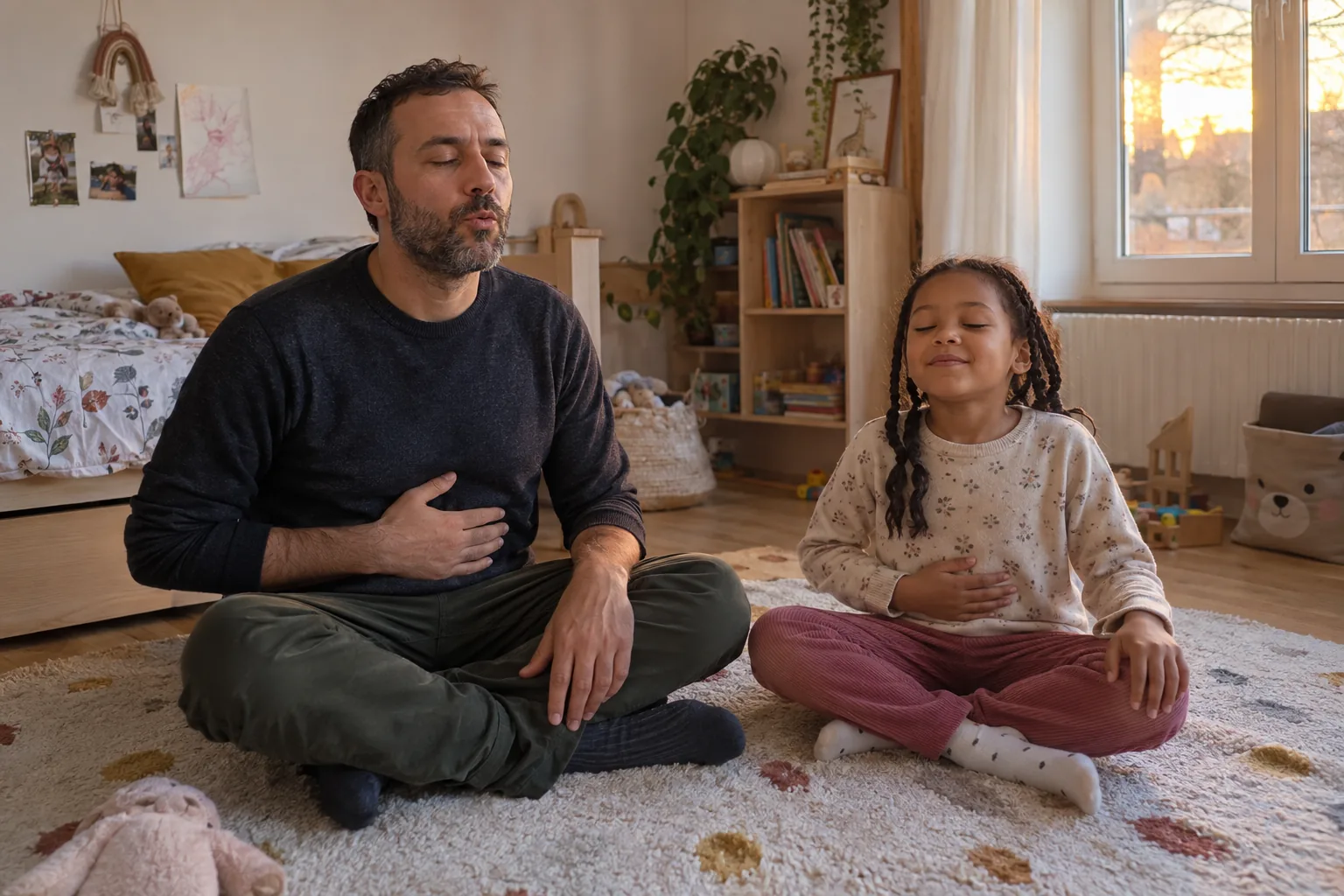
The child places their hands on their belly and imagines a balloon inside. They breathe in through their nose: the balloon inflates, and their hands rise. They breathe out gently through their mouth: the balloon deflates. For younger children, a stuffed animal placed on their belly can ride up and down like an elevator. The animated guide below lets them follow the rhythm visually.
The flower and the candle
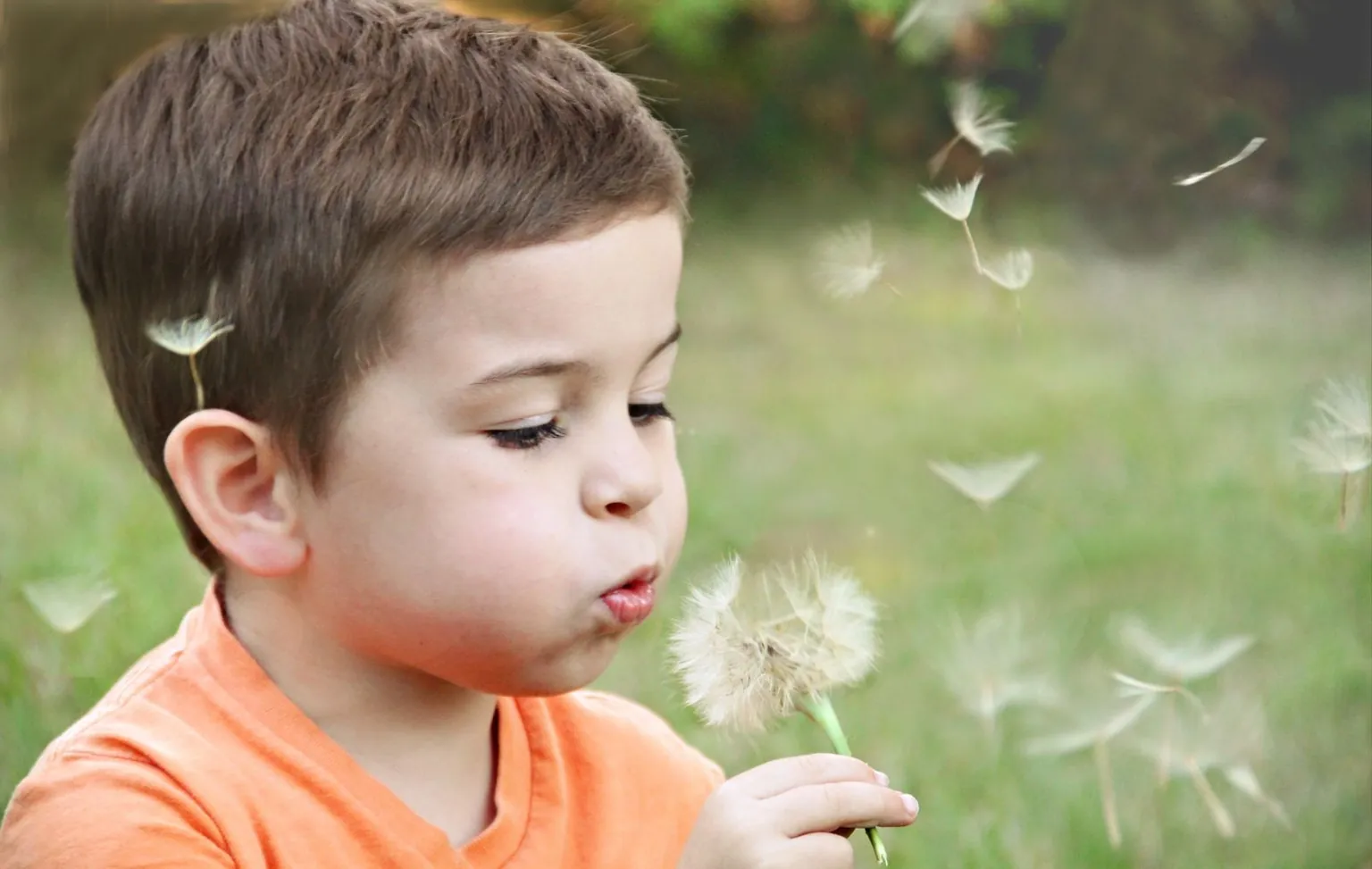
Smell an imaginary flower by inhaling through the nose for about three seconds, then blow out an imaginary candle slowly and quietly for about five seconds. The candle shouldn't go out all at once: blow gently, as if making the flame dance.
The five fingers
With an open hand, the child traces the outline of their fingers with the index finger of the other hand: breathing in as they move up a finger, and breathing out as they move down. Five fingers, five breaths: it's discreet, so it can be done in class or in the car.
The snake
Breathe in, then breathe out while making a long "sssss" sound. Who can make the longest snake sound? This game naturally lengthens the exhalation.
The feather and the pinwheel
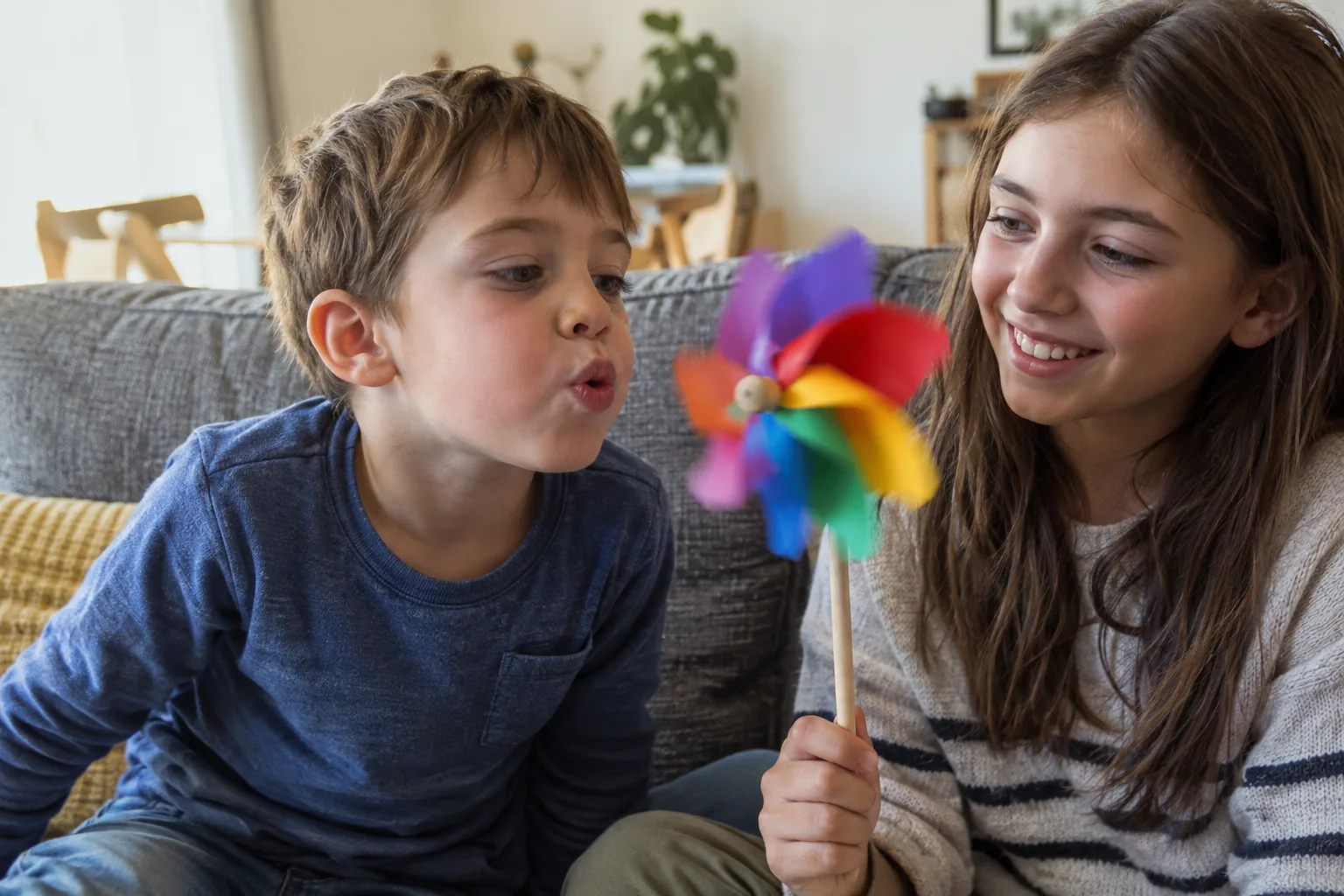
Blowing on a feather to make it move across the table, or on a pinwheel to make it spin gently: the object makes the breath visible and motivates young children.
Square breathing, for older children
Around age 7, children can trace a square with their eyes: breathe in along one side, hold their breath along the second, breathe out along the third, and pause along the fourth. For younger children, skip the pauses.
Suggest five breaths, no more at first. The goal isn't perfection, but noticing the feeling of calm setting in. Then ask: "How do you feel now?"
Animated square breathing
For children aged 7 to 10, square breathing provides a steady rhythm that's easy to follow. The dot moves at a constant speed; they just need to trace it with their eyes while breathing.
Creating a quiet corner
A quiet corner isn't a place for time-outs; it's a cozy spot to go when feeling overwhelmed. A few cushions, a stuffed animal, a pinwheel, a picture of the breathing balloon, and maybe an hourglass. Introduce it during a peaceful moment and let your child help set it up. If they go there on their own when they're upset, that's a huge step forward.
Breathing together
Children co-regulate and calm down largely through an adult's calm presence. When your child is upset, start by taking slow breaths yourself nearby. Your breathing acts as an anchor. The same goes for parents: taking three deep breaths before responding to a outburst prevents many situations from escalating.
These exercises can also be used at bedtime to make falling asleep easier: our article on the bedtime routine suggests incorporating them during storytime. And when frustration comes from board games, our guide to helping a sore loser child takes over.
Frequently asked questions
At what age can a child start doing breathing exercises?
Starting at age 3, using concrete visual ideas like the balloon or the flower and candle. Exercises that require counting or holding breath, like square breathing, are better suited for children ages 7 and up.
What if my child refuses to practice breathing when angry?
Don't insist in the middle of a meltdown. Stay near them, breathe calmly yourself, and try the exercise again later when everyone is calm. Regular practice during quiet times is what makes it helpful.
How long should we practice?
One or two minutes, or about five breaths, is enough to start. The key is consistency: a brief moment every day is better than a long session once in a while.
Is breathing alone enough to manage temper tantrums?
It is one tool among many. Naming the emotion, understanding what triggered it, and searching for solutions together remain essential. If tantrums are very frequent or severe, discuss them with your pediatrician.
To go further
Preview before choosing
Les Petits Explorateurs · Ages 4–6
For preschool and early elementary children discovering shapes, numbers, and the fun of drawing lines. An adult reads the instructions.