
Table of Contents
Start by welcoming what the child expresses
A child can find it hard to explain how they feel, especially when tired, upset, or surprised. They sometimes show their state through a gesture, silence, or a very brief phrase. Before looking for the cause or a solution, try to make yourself available: "I see that you are angry" or "You look disappointed." These words do not decide for them; they suggest a path that the child can accept or correct.
You don't need to instantly erase the uncomfortable emotion. Saying "there's no reason to be sad" can close down the conversation, even if your intention is to comfort. A phrase like "you wanted to keep playing" acknowledges what is happening without promising that the situation will change. The child can then feel heard while maintaining the limit you set.
Put feelings into words without turning the conversation into an interrogation
Ask a short, open-ended question: "What upset you?" or "What would you like to tell me?" Then give them time to answer. If your child doesn't know what to say, you can offer two possibilities: "Is it more disappointment or anger?" They remain free to choose another word, shrug, or pick up the conversation later.
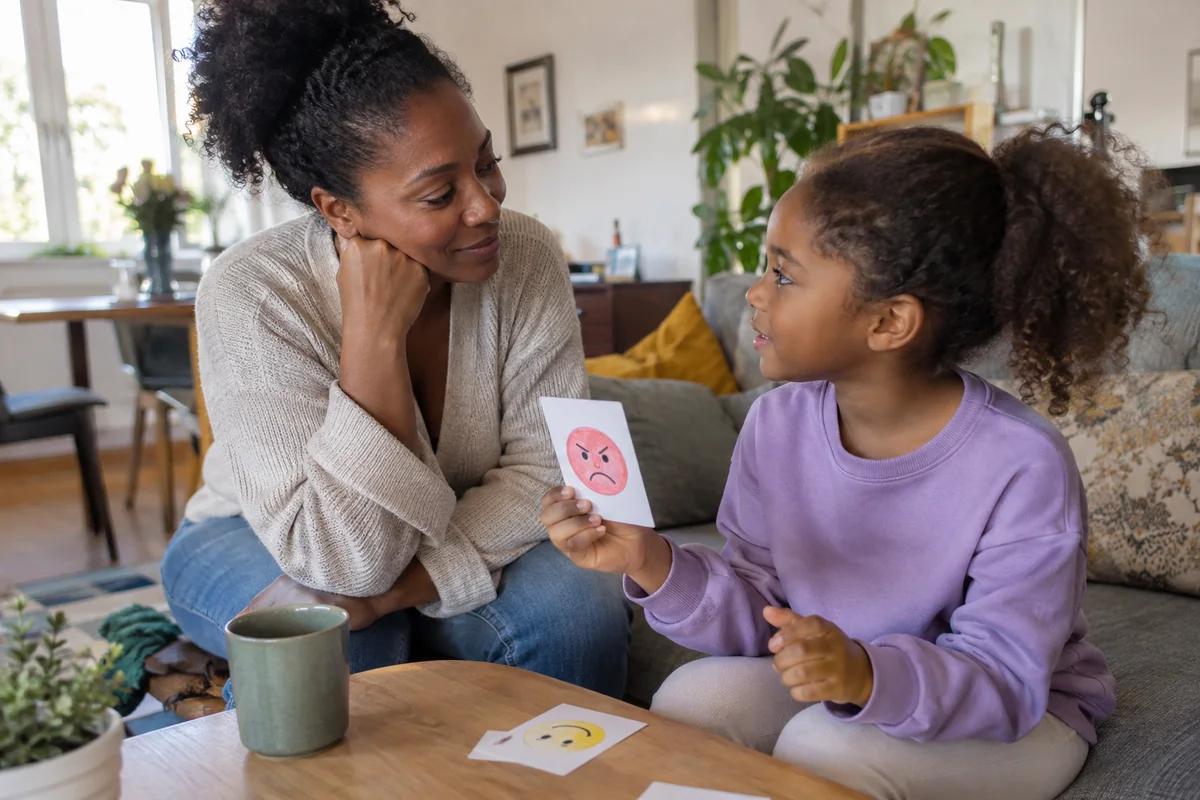
With younger children, a picture or a drawing can help. You can draw two very simple faces and ask which one matches their mood better. For an older child, talking while walking or drawing together can feel more natural than a face-to-face sit-down discussion. There is no single right way to open up; observe what works best for your child.

Separate the emotion from the behavior
Welcoming a feeling does not mean accepting every behavior. You can say: "You have the right to be angry; I will not let you hit." The sentence acknowledges what is happening while keeping a clear boundary. If things get noisy, first move everyone away from any object that could hurt and stay close by. The detailed discussion can wait until everyone is calmer.
Avoid asking the child to apologize before they have understood what just happened. When calm has returned, talk about the impact of the action and ask what they could try next time. If they don't find an answer right away, give a concrete option: calling an adult, putting the object down, or saying "I need a break." Repeating these opportunities helps them adopt these phrases.
To go further: Screen time for children: setting clear guidelines without daily arguments.
Regulate first, reflect later
When a child is overwhelmed, adding too many words can make the exchange even harder. Keep a calm voice and short sentences. You can offer a glass of water, a quiet corner, or sitting close to you. The child might decline these options. The goal is not to make what they feel disappear quickly, but to provide a framework where they feel safe and where the conversation can resume.
Your own emotional state matters too. If you feel like you are losing patience, simply say so: "I'm going to take a moment and I'll be back." Step away briefly if the child is safe, then resume the conversation. Parents can also need support, rest, or backup. Asking a trusted person for help takes nothing away from your role.
Revisit the incident once the tension has passed
Once the situation has calmed down, bring up just one element: what happened, how each person felt, and what could help next time. Your child might not want to talk about it immediately. Give them the chance to come back to it after a meal, during a walk, or while putting a game away.
If ongoing difficulties concern you or severely disrupt family life, talk to a healthcare professional or the educational staff who knows your child. This article provides everyday conversation ideas; it is not meant to evaluate a personal situation or make a diagnosis.
Draw an inner weather chart
On a sheet of paper, draw three simple symbols: a sun, a cloud, and a few raindrops. Everyone can pick the one that matches their mood and say a word, or keep the explanation to themselves. If your child wants, add a drawing showing what would feel good: a break, a story, or a moment together.
A video to watch first as a parent
The UNICEF resource embedded below mainly addresses teenagers. It is therefore not aimed directly at younger children aged 4 to 10. However, a parent can watch it alone and keep the listening practices that feel right for their family. For a younger child, a book, a drawing, or a short conversation will often be a more familiar starting point. The player will load only after a click.
To go further
Preview before choosing
Les Petits Explorateurs · Ages 4–6
For preschool and early elementary children discovering shapes, numbers, and the fun of drawing lines. An adult reads the instructions.