
Table of Contents
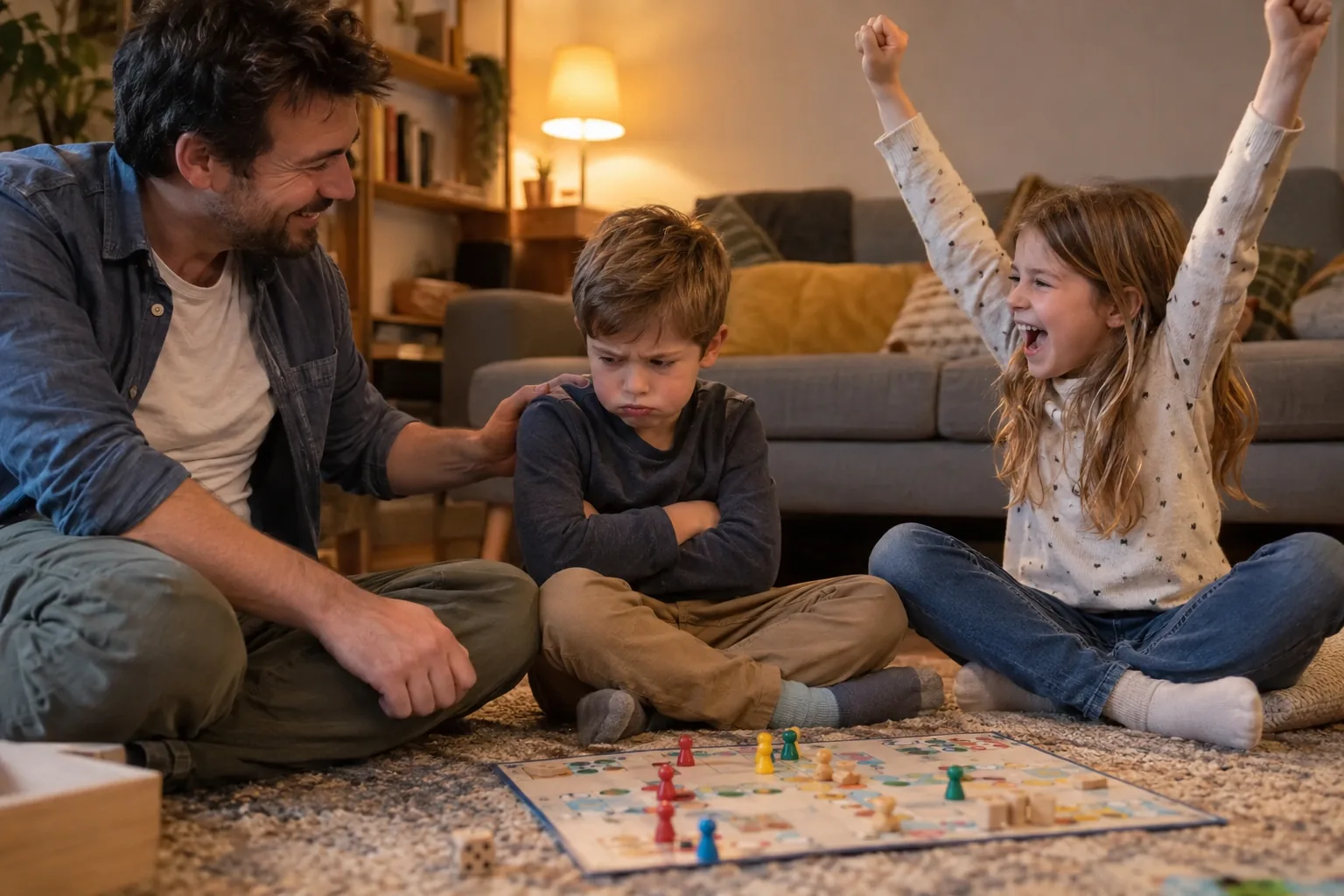
The die doesn't land on the right number, the game piece moves backward, and then comes the explosion: cards fly, tears flow, game over. Many parents then give up on board games altogether, or routinely let their child win to avoid a meltdown. Yet learning to lose is part of growing up, and playing games is precisely the best place to practice it. Here is why losing is so hard, whether or not to let them win, and how to support your child before, during, and after the game.
Why losing is so hard
For a young child, the line between "I lost the game" and "I'm no good" is very thin. They still struggle to understand that luck plays a role, that others might have more practice, or that a defeat says nothing about their worth. Nor do they always have the words or tools to handle intense frustration: it then overflows into anger, tears, or cheating.
This difficulty usually decreases with age, as the child learns to regulate their emotions. Public health guidelines categorize this ability under social-emotional skills: recognizing an emotion, regulating it, managing a stressful moment. Board games are an ideal training ground, with minimal stakes and caring adults around.
Should you let them win?
Opinions are divided, and the answer is nuanced. One principle comes up often among early childhood professionals: to learn to lose, a child must first have tasted the joy of winning. A toddler who loses every game against adults will eventually stop wanting to play. Letting them win from time to time, especially around 3–4 years old, keeps the fun of playing alive.
But a child who always wins never practices losing, and risks taking their first defeat against a peer very badly. The balance evolves with age: around 5–6 years old, you can play more and more "for real," choosing games where luck plays a big part, which gives everyone a fair chance.
Before the game
A few minutes of preparation avoid many meltdowns. State clearly: "In this game, we can win or lose. If you lose, you're allowed to be disappointed, but we don't throw the game pieces." Choose short games at first: a five-minute defeat is easier to swallow than a one-hour defeat. And avoid starting a game when your child is tired or hungry: frustration overflows much faster.
During the game: leading by example
Children learn a tremendous amount by observing adults. When you lose a turn, say what you feel out loud: "Oh no, I go back three spaces… I'm a bit disappointed. Okay, deep breath, it's only one turn." You show them that it's possible to feel frustrated without exploding. Conversely, avoid over-celebrating your victories: a winner who gloats makes defeat even more bitter.
If tension rises, name the emotion: "You're angry because you wanted to win." Suggest a break, a few deep breaths, and then resume if the child wants to. Our breathing exercises for children are very useful at that moment.
After the game
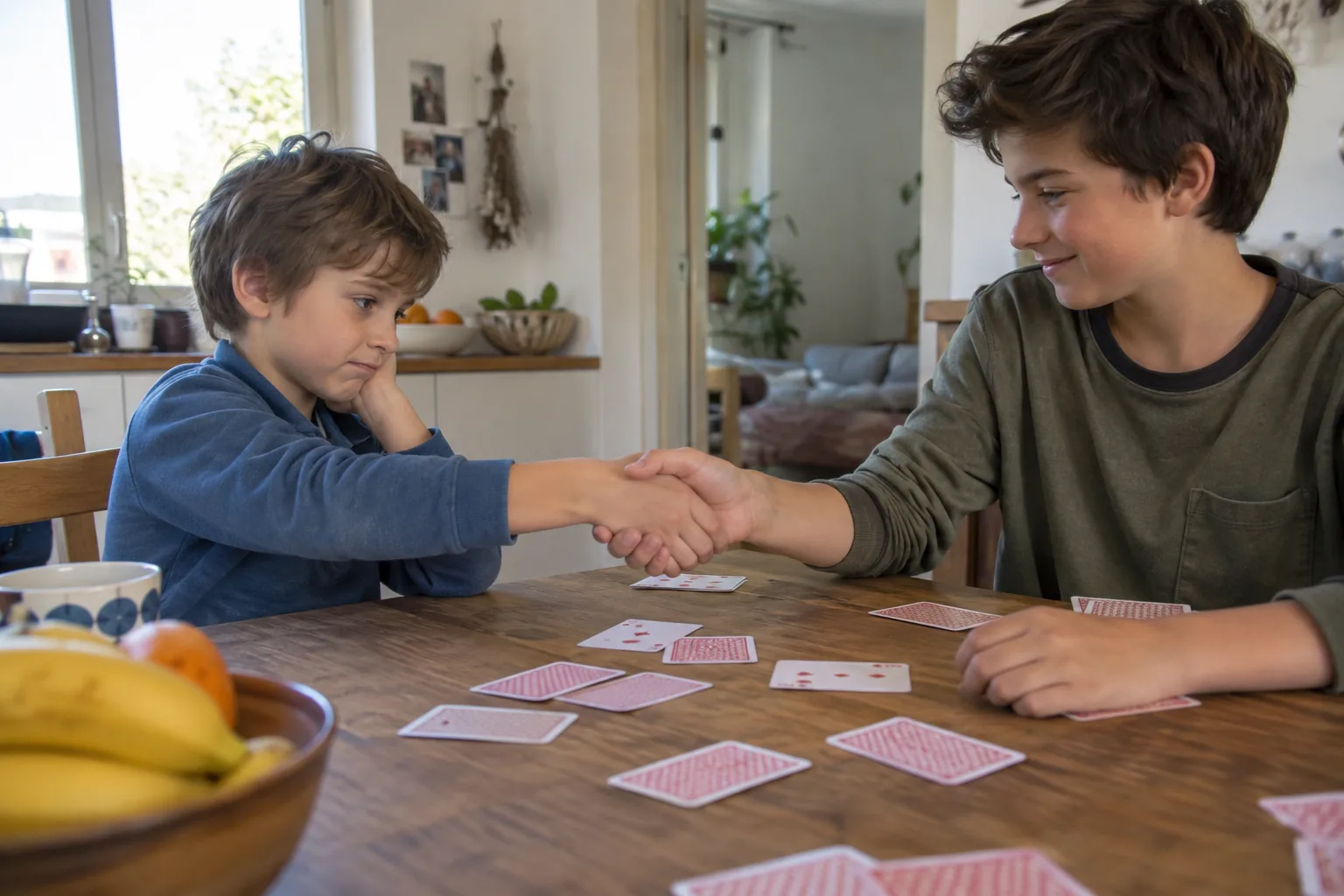
The end of the game is a key moment. Suggest a small routine: shake hands, say "good game," and clean up together. Then talk about what went well rather than the outcome: "Remember when you found that matching pair? That was a great move!" If your child handled their disappointment well, praise them for it—that is a real success.
If the game ended badly, talk about it later when things have cooled down: "Earlier, you threw the cards. What could we do next time when anger starts rising?"
Cooperative games: excellent practice
In a cooperative game, all players win or lose together against the game. The child no longer carries the weight of defeat alone, and learns to discuss, help each other, and lose... as a team. These games are particularly helpful for siblings of different ages, where skill gaps make competition unfair.
| Type of game | Why it helps | Starting from |
|---|---|---|
| Cooperative board game | Everyone wins or loses together | 3–4 years old |
| Game of chance (dice, cards) | Losing isn't tied to skill | 3–4 years old |
| Team memory game | Pairs found are counted together | 4 years old |
| Short strategy game | You can play a rematch right away | 6–7 years old |
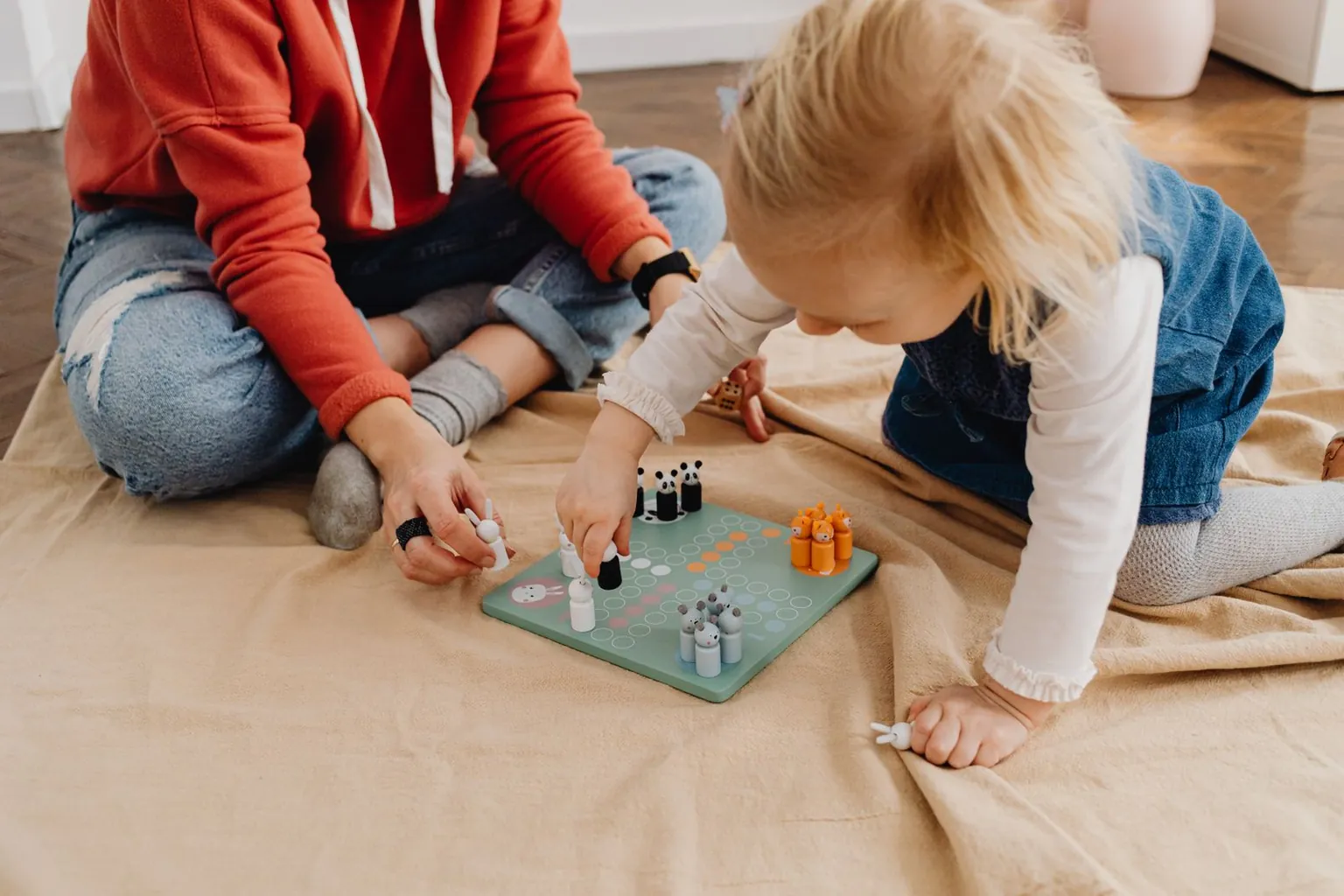
Between siblings, consider mixed teams—an older child with a younger one—or voluntary handicaps to balance things out. Our article on activities for two children of different ages offers more ideas.
Frequently asked questions
At what age does a child learn how to lose?
There is no exact age, but most children handle defeat better around 6–7 years old, when they understand the role of chance and can better regulate their emotions. Before that, strong reactions are normal.
My child cheats to avoid losing, what should I do?
In young children, cheating is often a way to avoid an overwhelming emotion. Calmly remind them of the rule without embarrassing them, and offer shorter or cooperative games. With older kids, you can set a no-cheating rule together.
Should I stop the game if they knock over the board?
Yes, for that day: clean up together and play again another time. Avoid heavy punishments; instead, talk calmly later about what they can do next time anger starts building up.
My child doesn't want to play anymore for fear of losing, how can I encourage them?
Go back to cooperative or very short games, where losing carries little weight, and play for the joy of being together. The love of playing usually returns when the pressure drops.