
Table of Contents
To prepare a paper activity, create a set of printable mazes with answer keys.
Look for common ground, not identical tasks
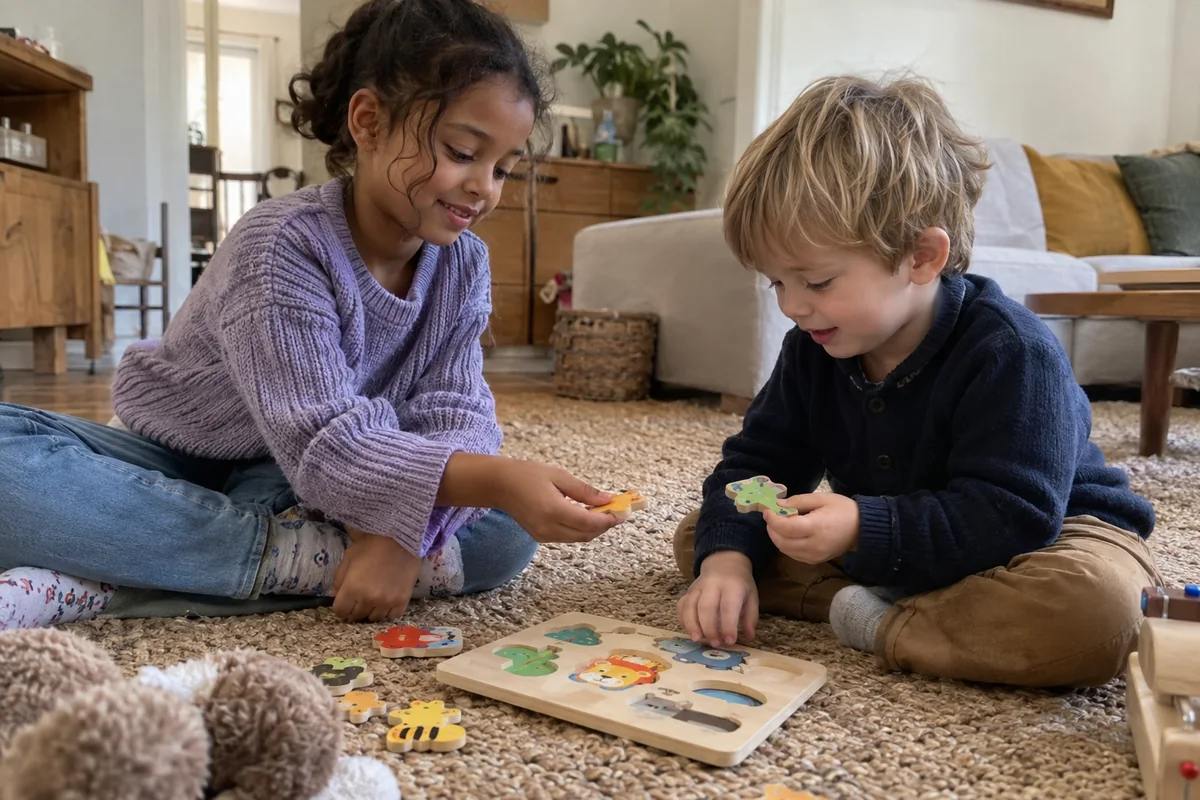
Two children of different ages do not always share the same interests, attention span, or dexterity. Yet a shared activity can give everyone a unique role. For a jigsaw puzzle, one can sort edge pieces while the other searches by color. For a storytelling game, the younger child picks a character and the older child crafts the plot.
Ask yourself what could bring them together: an object to build, a puzzle to solve, or a outdoor walk to observe nature. A great shared activity doesn't require both children to do the exact same thing. Instead, it allows each child to contribute doing what they enjoy and see what the other is doing.
Assign complementary roles
You can assign roles to each child without setting them in stone. One picks the crayons, the other gets the paper; next time, swap. In a building block game, one child can look for large blocks while the other plans the layout. In the kitchen, an adult can delegate age-appropriate tasks while managing steps that involve heat or tools.
Explain roles in one sentence and let children adjust them. If one child takes over, gently intervene: "We're waiting for your sister's turn" or "Each person picks one piece." You don't need to resolve every argument immediately; you can restate the boundary, then let them suggest a solution if they are ready.
Choose games that adapt to multiple skill levels
A shape hunt around the house can be adapted for two different ages. The younger one spots a circle, while the older one looks for three round objects and explains how they differ. For a group drawing, each child can add an element without having to copy the other's style. For a story, one invents a character and the other picks a setting.
Free building, pretend play, simple gardening, and supervised cooking activities also offer many ways to participate. Set up materials according to their age, then let the children add their own ideas. Keep safety in mind as an adult, especially regarding small objects or sharp tools.
To go further: Creative games for children: ideas without complicated supplies.
Plan a shared activity alongside separate moments
Not everything needs to be shared. You can start with ten minutes together, then let everyone choose a different activity. One child can keep playing while the other goes to listen to a story with an adult. Separate moments are not a failure in sibling bonding; they give room for different interests.
If one child needs attention, give them individual time whenever possible. Families do not always have the same amount of time available; a brief chat, a quick story, or a conversation during a drive can be enough to show that everyone matters. Try not to save all your attention for the child who finishes first.
Avoid comparing speed and results
One child might finish faster because the activity is familiar, because they are older, or because they chose a different approach. Avoid measuring both creations by the same standard. You can highlight what each person brought to the table: one found the pieces, the other designed the scenery. Contributions are not identical, nor do they need to be.
To maintain a pleasant atmosphere, set a clear endpoint: finishing a building project, completing a story, or wrapping up before mealtime. When play ends, everyone can clean up a share of the materials. If a disagreement starts, suggest a pause or offer two new choices instead of forcing them to keep going.
The garden of complementary tasks
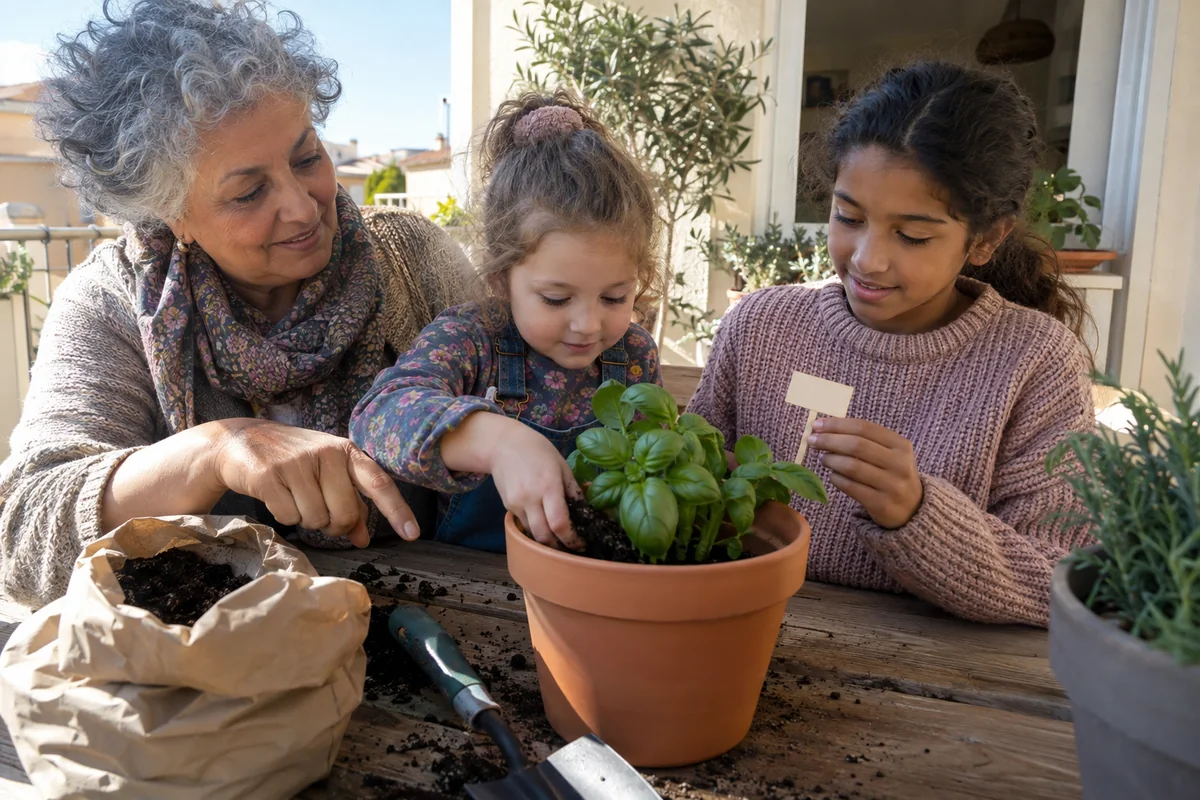
Take a pot, a little soil, and an herb plant suited for the space. One child can hold the pot while the other adds soil with a small spoon. The adult handles steps that require more strength or precision. Then, everyone can help pick a name for the plant.
Choose resources that let siblings breathe
The same book or game can offer different entry levels, but each child can also have their own format. Hepaly collections distinguish Les Petits Explorateurs for ages 4–6 and Les Grands Curieux for ages 7–10. You can preview the pages online and decide if a shared moment or two separate activities work best for your children.
The goal isn't to force kids to work together at all costs. Offer an idea, help distribute the supplies, and then watch if they want to keep going. Sharing can be a conversation, a laugh, or a small task done side by side. It doesn't need to produce a perfectly matching creation.