
Table of Contents
Cleaning up is easier when the request is specific
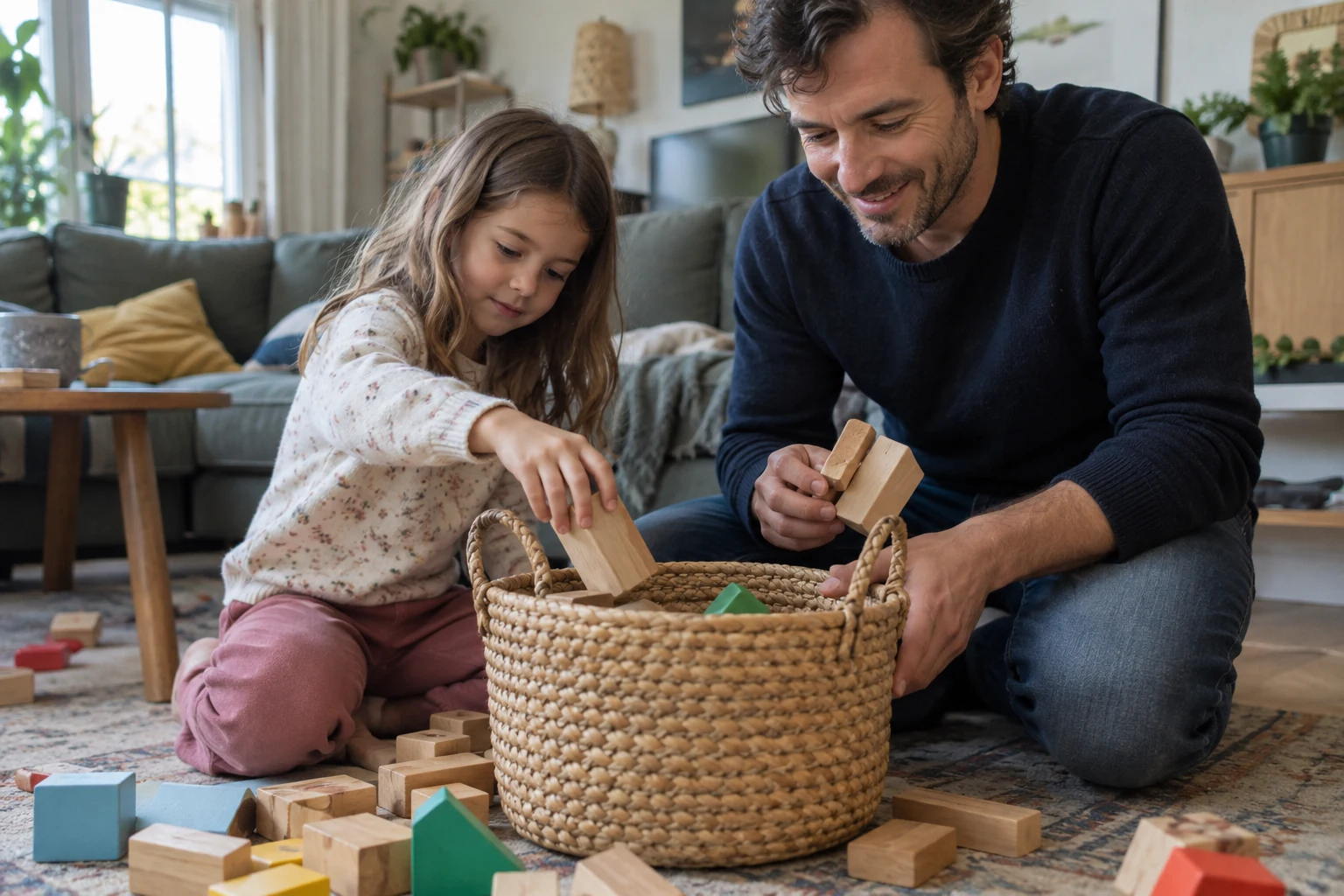
“Clean your room” can feel overwhelming to a child who doesn't know where to begin. Replace that direction with a clear, visible step: put the blocks in the basket, pick up the paper sheets, or put three cars back on the low shelf. One request at a time reduces decisions and helps your child understand what you expect.
Plan an amount of time appropriate for their age and the number of items. A child aged 4–6 will often need you to start with them; an older child can choose the sequence of steps. If everything doesn't fit in the available time, you can finish together or save part of the play setup for later, rather than turning cleanup into an independence test.
Give everything an easy-to-find spot
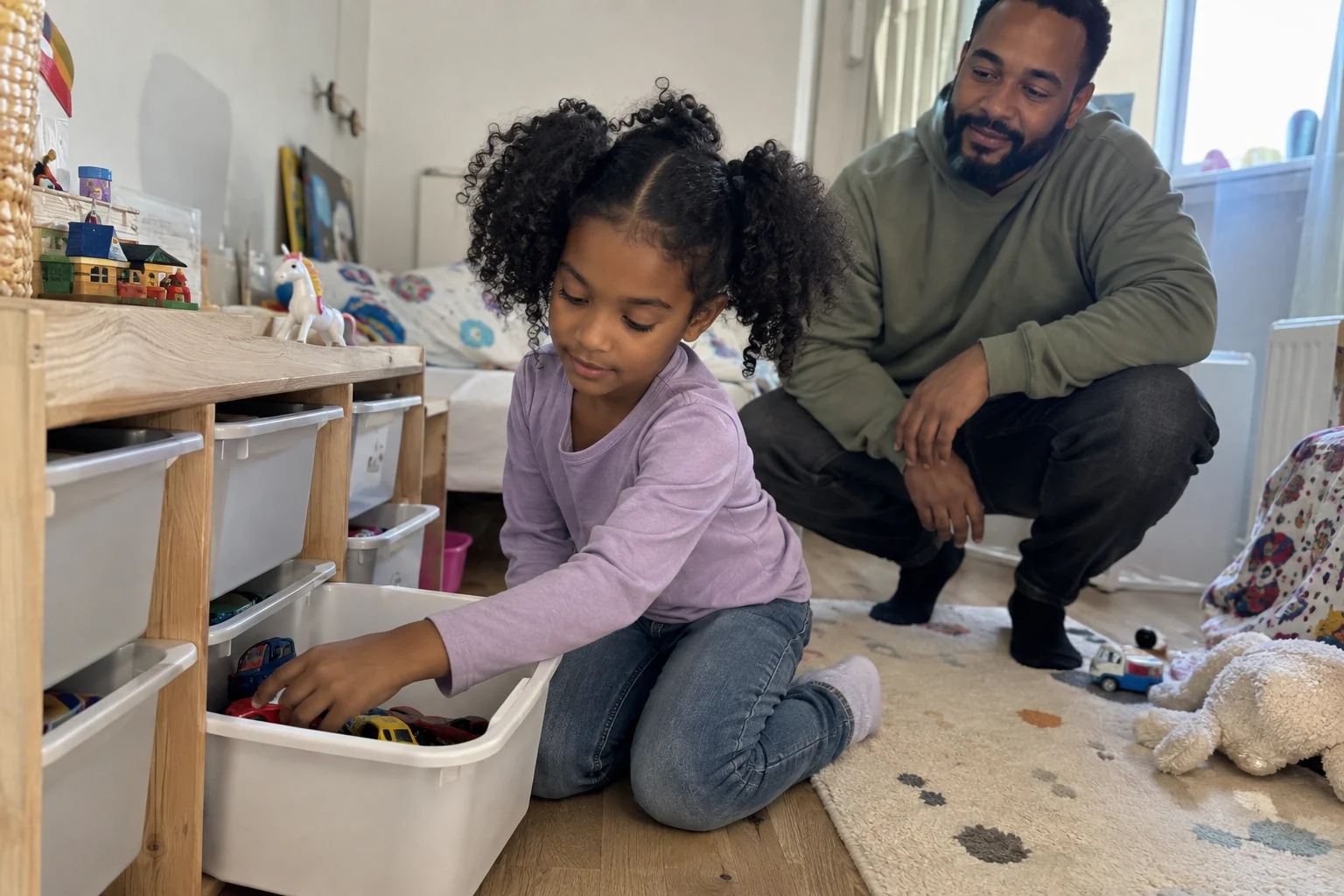
Open baskets and accessible shelves help children put their things away without asking where they go. At first, stick to a few clear categories: building blocks, vehicles, books. A picture can complement a label for a child who doesn't read yet. Avoid heavy boxes or items placed high up that require climbing.
You can observe together what makes picking up tricky: too many toys out, a bin that is too deep, or categories that are hard to tell apart. Make one small adjustment at a time and see if the room works better. Organization doesn't need to be perfect or picture-perfect; it just needs to suit your family and your space.
Give a heads-up before cleanup time
Give your child a warning when playtime is winding down: after the last turn, before dinner, or when the timer rings. The signal gives them time to wrap up their story or decide what can stay out. A timer helps some children, but a repeated phrase or familiar song works well too.
When it's time to clean up, offer two limited choices: “Would you like to start with the cars or the blocks?” or “Shall we pick up before or after putting the cushions back?” Your child takes part in a realistic decision without having to organize the whole house. If they refuse, keep a gentle voice, state the step clearly, and do the first action alongside them.
To go further: Helping your child become independent without leaving them alone when facing difficulties.
Participate together without doing it for them
To get started, you can hold the basket or gather items from one category while your child handles another. Then leave them a portion of the cleanup they can manage. Describing the action can help: “You put the books standing up on the shelf,” rather than focusing on whether the room is as neat as you'd like.
Siblings can split tasks based on age, but avoid making the older child responsible for the younger one. Instead, offer each child a zone or a type of item. If one child is tired, offer extra help that day and resume your normal routine later. Cooperation grows through repeated opportunities, not through comparisons.
The five-object challenge
Pick five visible objects and ask your child to put each one back where it belongs. If they enjoy it, repeat with five more; if not, stop there. With 7–10 year olds, everyone can pick a category and check together if anything is left on the floor. Keep the tone light and avoid turning the game into a speed race.