
Table of Contents
A routine is an anchor point, not another task
A small family routine doesn't need to take up the whole evening or happen at the exact same minute every day. It can simply mark a shared moment: you put away the afternoon snack, pick a page or a game, and then everyone gets back to their evening. What matters is keeping this time together light. Some days, your child will want to stay at the table for a long time; other days, two minutes will be plenty. You don't have to turn everyday life into a packed schedule of activities.
To get started, tie this moment to a habit that already exists: right after taking off shoes, while dinner is warming up, or just before the bedtime story. Pick a time when no one is rushing to head out. If you feel the timing isn't right, move it to another slot. The routine should slide smoothly into family life, not force the whole family to rearrange around it.
Set up an inviting space to get started
A small pouch or basket can hold three pencils, a sheet of paper, and an activity book. Keep it easily accessible to adults: with younger children, anything potentially sharp should stay aside and only be used under supervision. Take out only a few items at a time. A clear table makes the first step obvious, whereas a large bin packed with supplies can distract your child before the game even begins.
Let your child help with the prep. They can pick the pencil color, set out the paper, or open the book to a page they like. For ages 4–6, you can read the instructions out loud and point out where to begin. Older children can read them on their own, then explain to you what they understood. These small responsibilities are already a great way to start the activity together.
Offer two ideas instead of a giant menu
When it's time to choose, offer two concrete starting points: tracing a path or spot the differences, for example. A child who isn't sure where to start can respond much more easily to two choices than to a wide-open question. Then let them tweak your idea. They might decide to draw the character before following the path, or come up with a brand-new rule.
You can also start without a workbook: everyone looks around the room for three round objects, then picks the one they'd like to draw. The goal isn't to compare findings or produce a masterpiece to keep. You look, you name, you scribble, and sometimes you follow an unexpected idea. A home activity doesn't need to feel groundbreaking to an adult for it to be fun for a child.
To go further: Creative games for children: ideas without complicated supplies.
Keep it short and know when to stop
At first, announce a clear, simple limit: one game, one page, or the time it takes to clean up the snack. This prevents the moment from feeling like an open-ended chore. When finished, simply ask if your child wants to keep going or stop. If they want to pick it up later, a bookmark marks the spot where they stopped.
If your child doesn't want to join in, try not to push or turn participation into a earned reward. You can leave the basket in plain sight and try again another day, or start drawing on your own. Sometimes, just watching for a few moments is a way of connecting. Choosing to sit it out is also part of keeping these moments enjoyable.
The quick two-color game
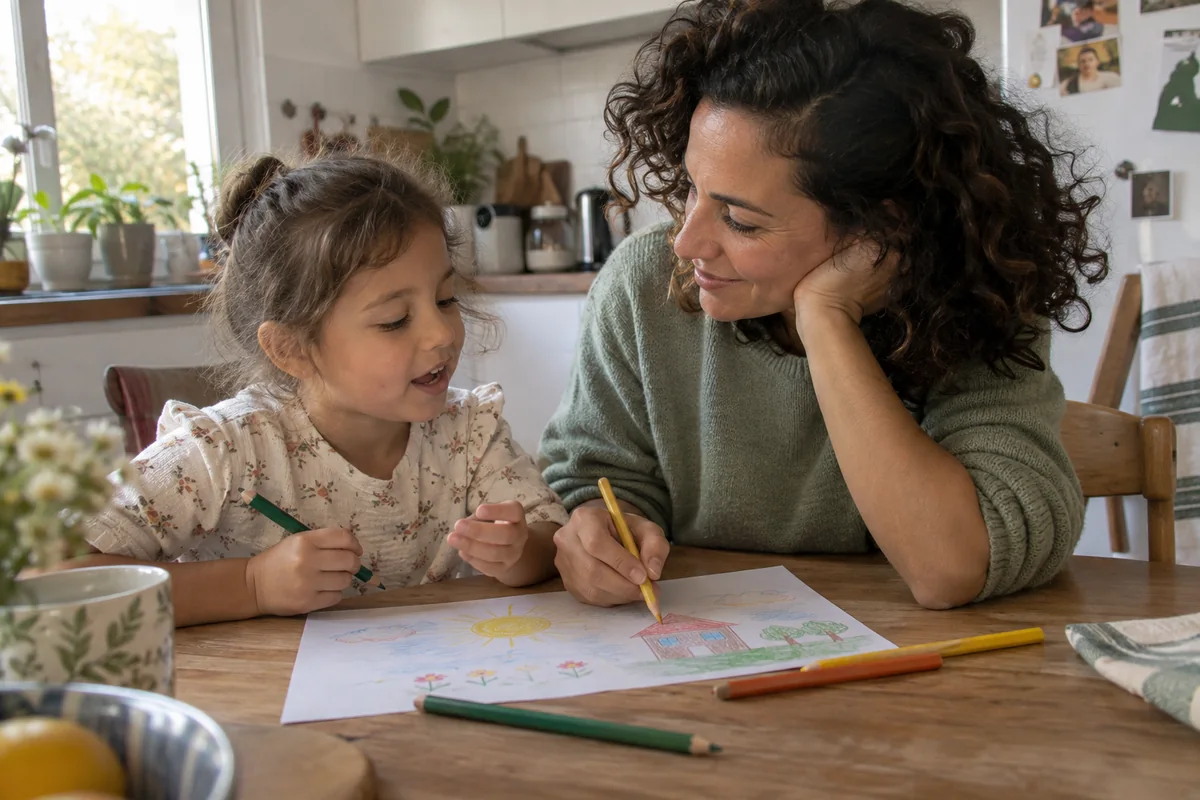
Place two pencils of different colors on the table. Each pick one color and look around the room for an object that matches it. Next, draw one of those objects together using simple shapes. The game can wrap up after two rounds, or keep going if your child asks to. To mix things up, swap roles and let your child give you a clue.
Use a workbook only if it makes your life easier
A workbook can help when you want ready-to-go ideas, but it isn't necessary to build a routine. Flip through a few pages with your child and see what catches their eye. If they like mazes, start there; if they prefer storytelling, let them describe what they see before reading the instructions. A page works best when it prompts a conversation rather than when it's filled out perfectly.
Les Petits Explorateurs workbooks are designed for children aged 4 to 6, with an adult reading the instructions. The online sample lets you view real pages in French before choosing. You can also pick from the free ideas in this article and enjoy your routine without buying anything. The best routine is the one that fits the people involved, the available time, and everyone's mood that day.
To go further
Preview before choosing
Les Petits Explorateurs · Ages 4–6
For preschool and early elementary children discovering shapes, numbers, and the fun of drawing lines. An adult reads the instructions.