
Table of Contents
Start with what your child already likes
A love of reading doesn't always start with a thick book that a child reads on their own. A comic book, a picture dictionary, a recipe, or a spoken story can serve as a doorway. Observe the topics that keep coming up in their play: animals, vehicles, mysteries, space, funny characters. At the library or bookstore, offer a few different options and let your child choose one.
Let them close a book that doesn't appeal to them, too. Free choice helps keep reading enjoyable. You can borrow a short book, reread a familiar picture book, or talk about an image without finishing the whole story. A reading session doesn't have to produce a summary or test comprehension.
Read together, each with a role
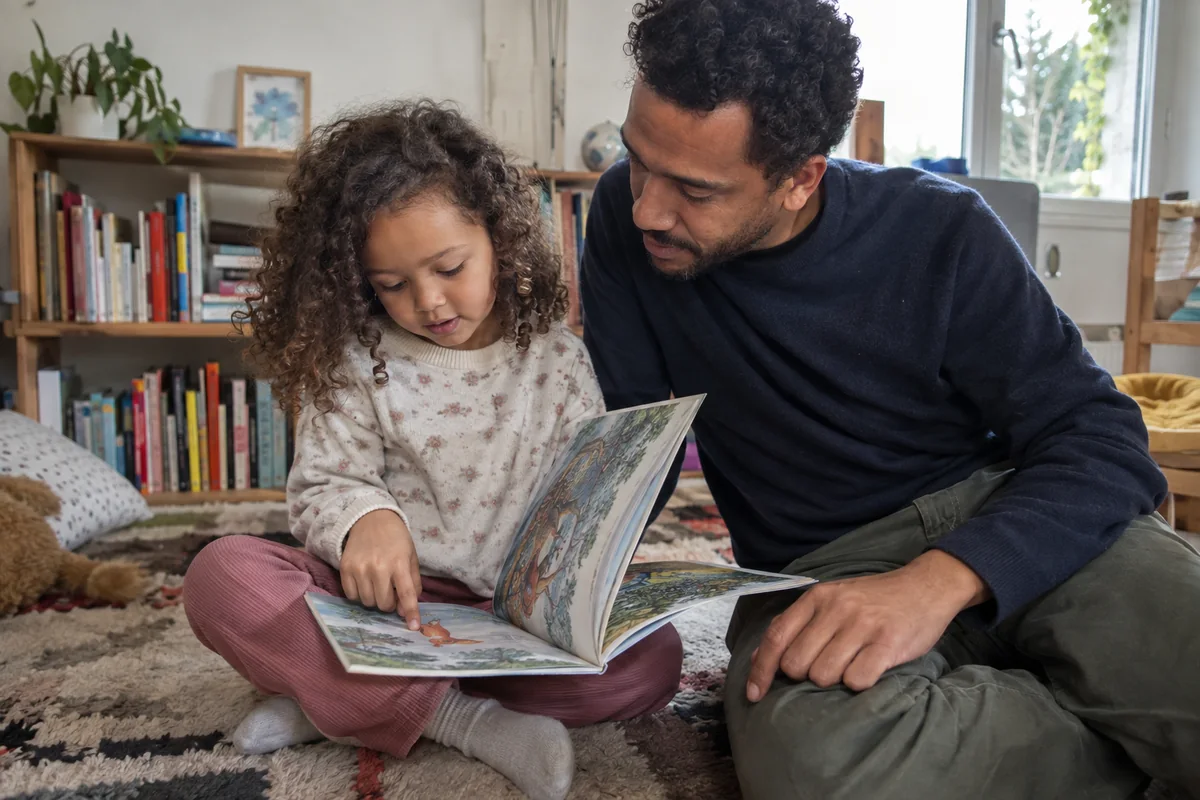
For a child who isn't reading on their own yet, an adult can tell the story while pointing at the pictures. You can follow the words with your finger if your child likes that, but it's not required. For a beginning reader, take turns: they choose a word or sentence, then you continue. A more comfortable reader can read a speech bubble while you do a character's voice.
Let your child interrupt the story to ask a question or comment on an image. You don't need to know everything. An answer like "I don't know, let's look together" shows that books can also spark exploration. Shared reading is a time for conversation, not an oral quiz.
Reread the same book again
If your child asks to reread their favorite story, you can agree without trying to switch things up every time. They recognize the images, anticipate certain passages, and sometimes spot a new detail. A familiar book is also comforting for a child who doesn't yet know where to start in a library.
When you want to try something new, offer it alongside the familiar book rather than replacing it. Your child can listen to a few pages and then go back to their usual story. A simple conversation is enough: "Which character do you like best today?" or "What's happening in this picture?" Give them time to answer or move on to the next page.
To go further: Set up a screen-free routine without turning the evening into a rigid schedule.
Keep books within easy reach
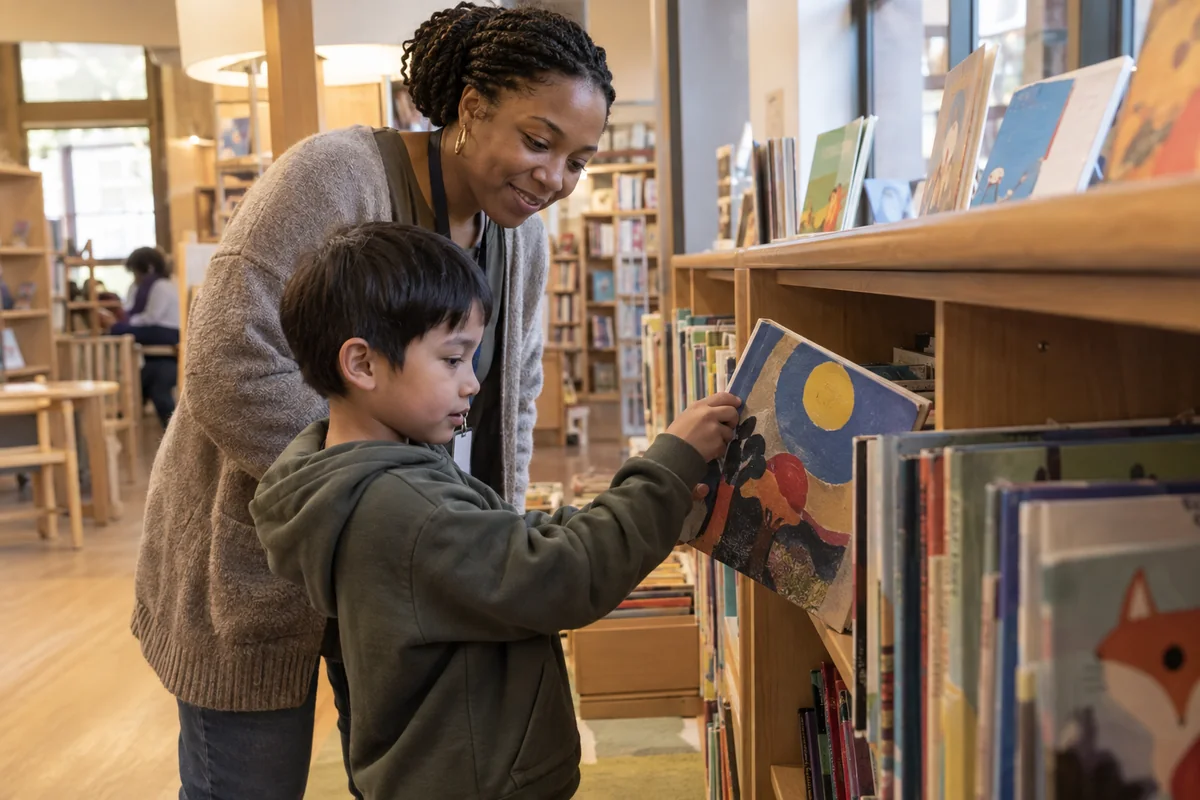
A small basket of books or a low shelf makes choosing easier. Rotate picture books according to interests, seasons, or topics that excite your child. The local public library allows you to explore different formats without buying everything. Children can look at the covers, handle the books, and bring home one that intrigues them.
Audiobooks and narrated stories are also great ways to listen to a tale. They can accompany a car ride or a calm moment, without replacing the interaction when you feel like reading together. Ask your child if they want to listen alone or near you. Afterwards, leave a moment to talk about what they liked.
Make reading a regular moment, without pressure
You can connect a story to a time that is already quiet, like coming back from the library or the start of bedtime. A short routine matters too. If the evening is too busy, read on another day rather than turning storytime into one more chore.
The French Ministry of National Education describes reading or storytime as a habit that can build vocabulary and imagination while sharing family time. This doesn't mean you must read every single night. Pick a realistic frequency and remain flexible when daily routines change.
Invent what comes next from a picture
Open a picture book to a page rich with details and ask your child what they imagine happening right before or right after the scene. Another time, each person can pick a character and make up a line for them. Let ideas go in unexpected directions; you can always return to the written story later, or simply close the book.
Offer an activity related to the stories
After reading, draw a place from the story, craft a bookmark, or look for an object that resembles one from a character. There is no need to ask your child to recreate the scene exactly. Their interpretation might differ from the book, and that is perfectly fine.
Excerpts from the Hepaly collections show illustrated stories and games intended for ages 4–6 and 7–10 (note: sold full PDF workbooks are in French). You can flip through them with your child, or simply keep going with library books and your own ideas. Choose whatever format fits their mood right now.