
Table of Contents
What if knowing number words is not enough?
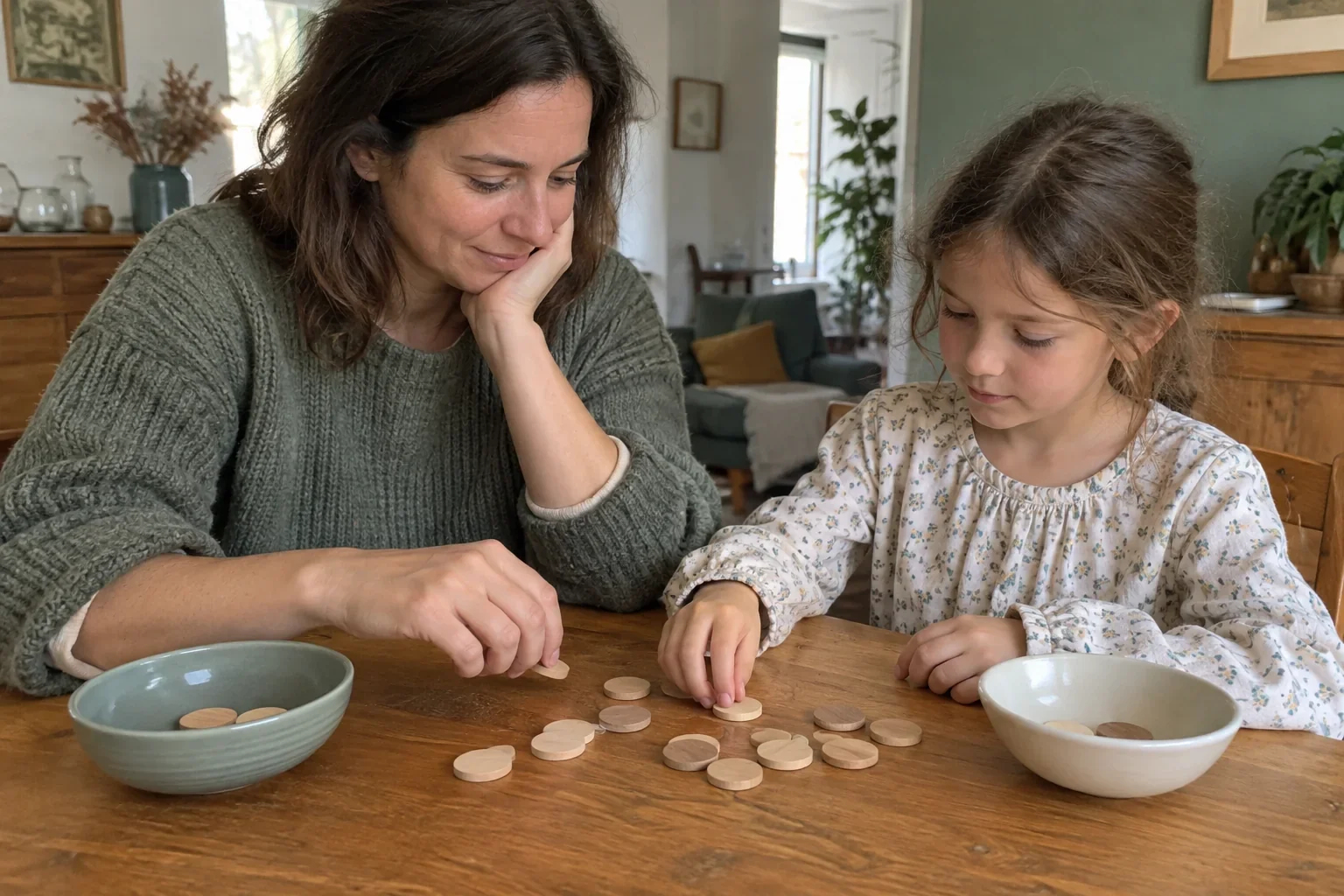
Reciting numbers and counting a collection are different tasks. A child may know the spoken sequence but point to an object more than once. Watch the movement as well as the words before offering a larger collection or asking for a faster answer.
Choose a few matching objects large enough to handle safely. Spread them so none overlap. The guide to everyday counting offers other games; this session focuses only on keeping track of which objects have already been counted.
How can two areas on the table help?
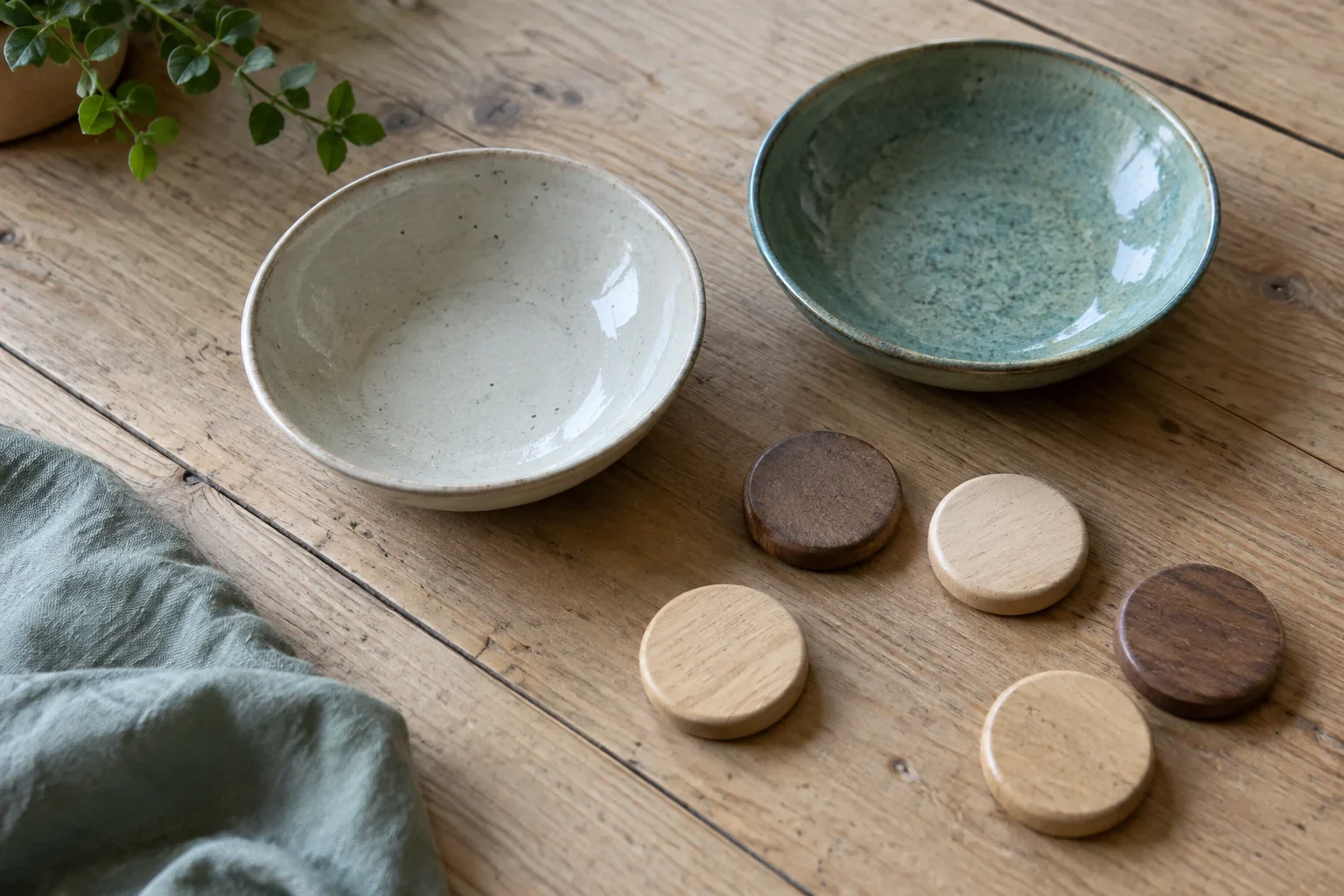
Draw two areas: “still to count” and “already counted.” Your child moves one object while saying its number. Slowing down, pausing, or starting again is allowed. The separation provides a record of progress; it is not a timer or a score.
At the end, ask how many there are altogether. If your child starts counting again, allow a check. You can point out that the last number word told the total. Do not secretly move objects during the count, because that changes the task without explaining it.
Track which objects you counted
Activate each counter once to mark it. Activate it again to remove its mark. Rearranging preserves the objects and their marks.
0 counters marked out of 8.
{n} counters marked out of {total}.Nothing you enter is stored or sent.
What if the objects are pictures on a page?
A printed picture cannot move like a counter. Add a small mark to each counted object without covering neighboring pictures. Children can circle, check, or ask an adult to draw the mark for them. Use one consistent method for the first attempt.
In the screen activity, pressing the same counter again removes its mark. It does not add another object to the collection. The displayed number describes the marks currently present; it is not a measurement of a child’s ability or a record sent anywhere.
Does spreading objects out make a larger collection?
Rearranging objects does not change their number if none are added or removed. The Counting and Cardinality standards distinguish one-to-one counting, the final total, and the fact that rearranging objects does not change that total.
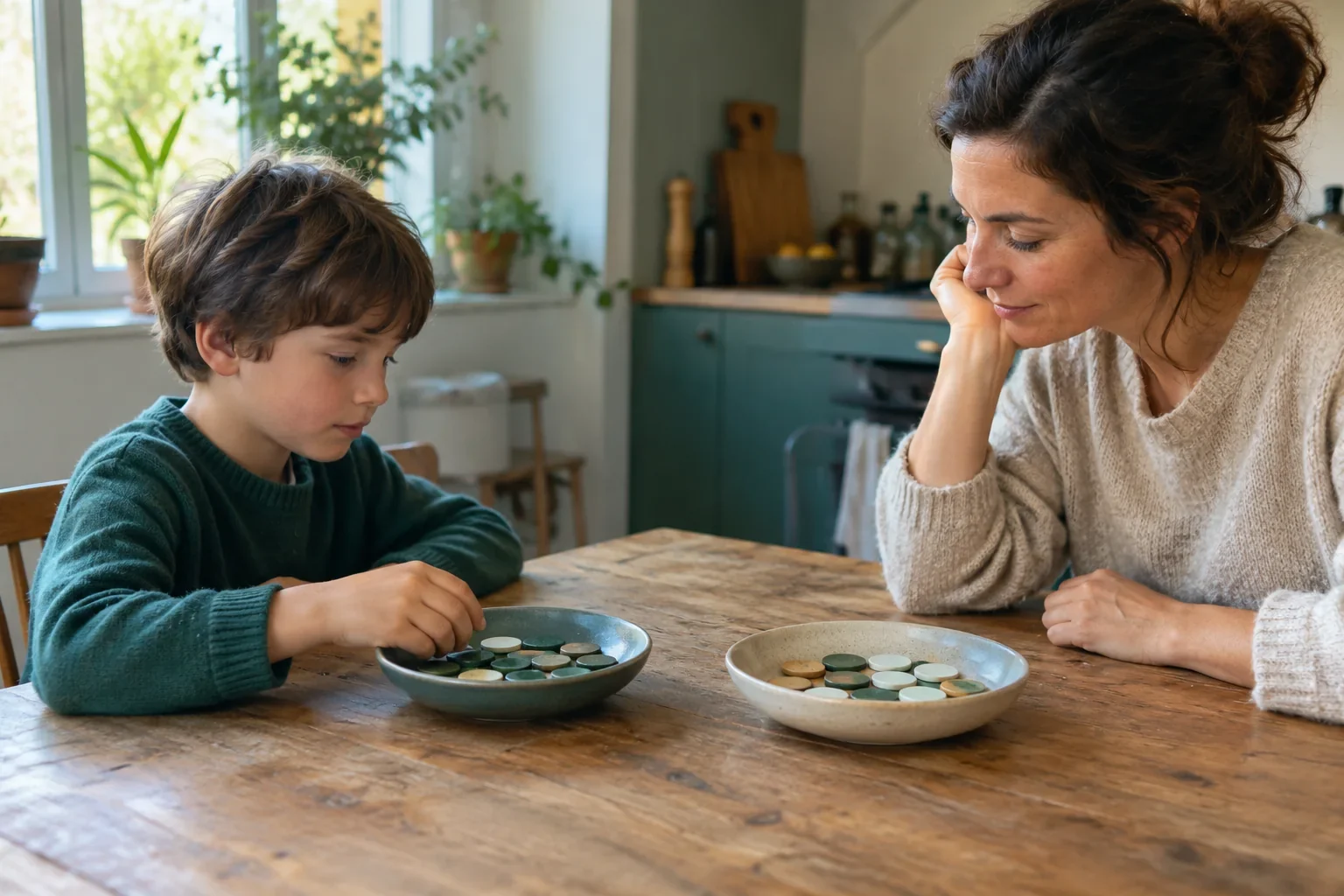
Count a collection and then arrange those same objects in a line in front of your child. Ask what changed and allow another count. Our tool retains the same counter identities when rearranging them: the space occupied can change while the collection stays the same.
Make a sheet and answer key
A collection of 8 objects. Count before opening the answer key.
Collection prepared: {n} objects.The total is {n}. Numbers show one count for each object.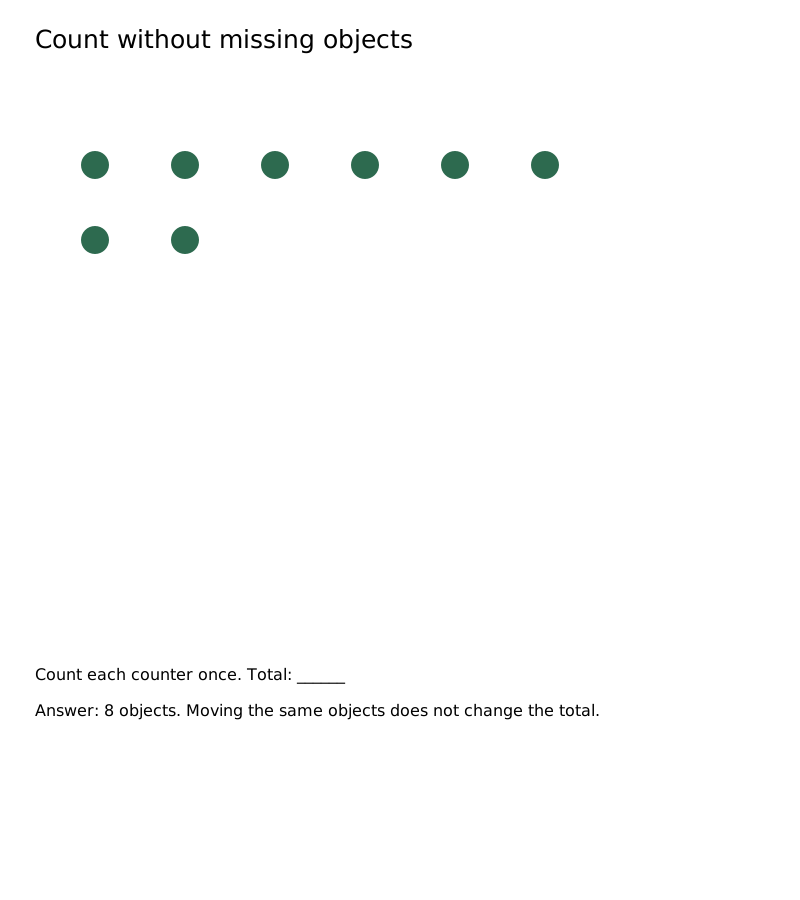
Nothing you enter is stored or sent.
How do you choose a useful next step?
If keeping track becomes difficult, use fewer objects or return to two areas instead of a scattered picture. If the count is comfortable, invite your child to explain the method to someone else. A harder task is not required at every session.
The number 10 house explores parts of a total. A two-way table sorts objects by two criteria. Counting, sharing, and sorting may use the same materials while still asking different questions.
Frequently asked questions
Must children count from left to right?
A consistent route may help, but the order does not change the total when every object is counted exactly once.
Why does my child count everything again?
Recounting allows a check. Watch the pointing and ask what the last number meant, without forbidding another count.
Must children write a numeral after each try?
Children can say or show the total. Writing a numeral adds another task that can be saved for a separate session.
What if an object is counted twice?
Return to the last reliable point or restart with a small collection. A visible separation helps track the next attempt.
Does the counter assess a child’s level?
It only counts active marks. The number does not establish a level, diagnosis, or school progress.
Can you use the activity without JavaScript?
The sheets and answer key remain available. Move objects between two areas or mark the pictures on paper.