
Table of Contents
Listening to words like music
Before taking an interest in letters, a child can have fun with sounds: a long name, a silly word, or a nursery rhyme on repeat. These listening games aren't tests or homework. You can sing, exaggerate a rhythm, invent an imperfect rhyme, and laugh when it falls flat. Enjoying play with words matters far more than landing on the expected answer.
In preschool, sound games evolve naturally. Some children love repeating nursery rhymes; others prefer listening to neighborhood sounds or their own names. You can suggest a game and follow whatever catches your child's interest. There's no need to correct every syllable or push them to read before they're ready: you're simply inviting them to pay attention to language.
Clapping out syllables with first names
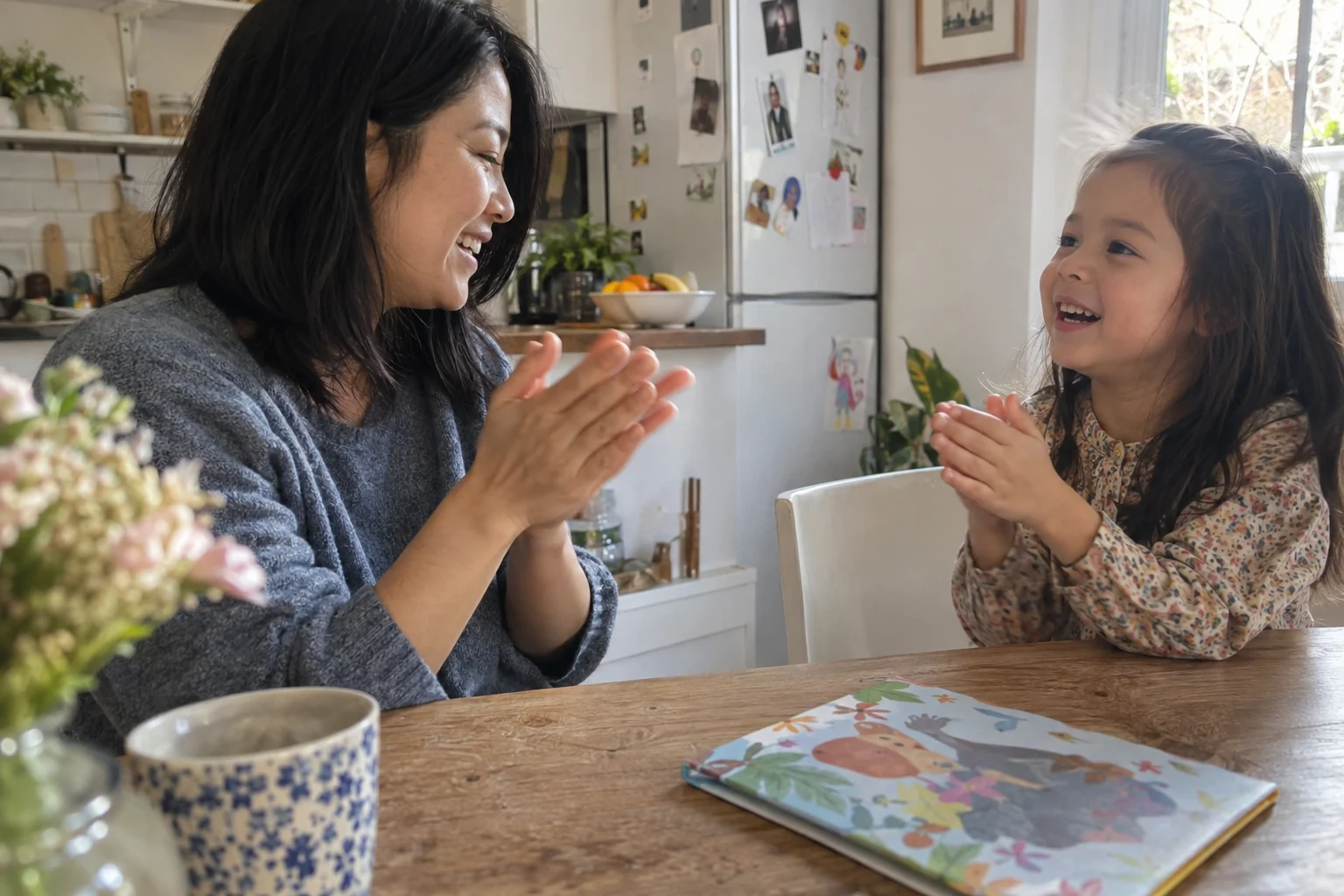
Say a name normally, then repeat it while marking its syllables with a tap, step or clap. Invite your child to try. Choose familiar words such as “rab-bit” or “ba-na-na,” or a favorite animal’s name. Pronunciations and accents vary; listen together to the way you say the word.
If the rhythm gets mixed up, slow down and repeat without pushing. The goal isn't perfect counting, let alone repeating until matching the adult's answer. With an older child, hide objects and ask them to find one whose name shares a rhythm with another. Let them invent examples too: they often know words you wouldn't think of.
Looking for rhymes without prep cards
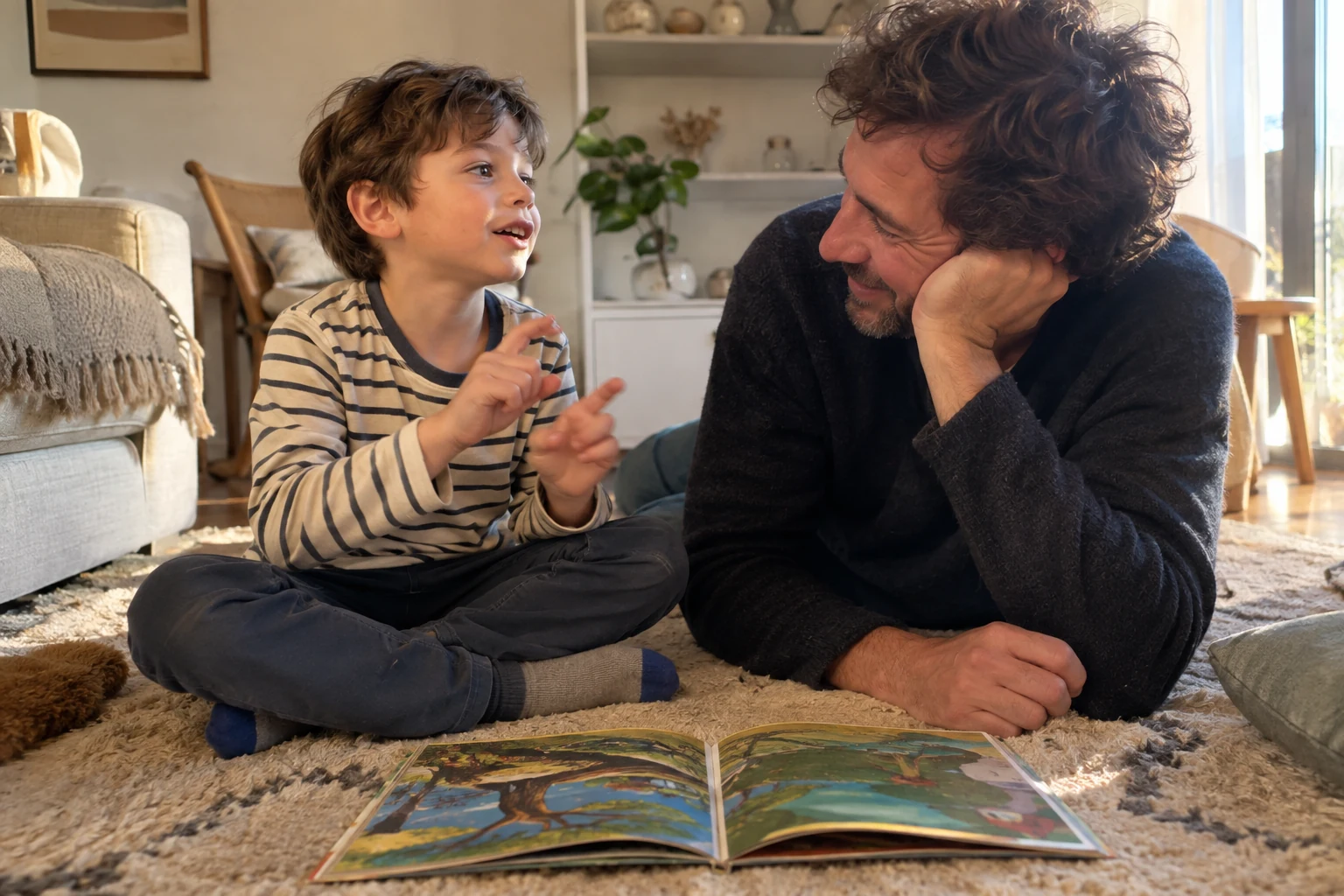
Pick a simple word, then look together for another word that ends with the same sound: like "cat" and "hat". A made-up rhyme or nonsense word can get a laugh too. On a walk, look for a word that rhymes with a family member's name; at bath time, let your child offer the next word. These moments last as long as they stay fun.
Some sounds are tricky to distinguish, especially during fast play or with unfamiliar words. Rephrase gently instead of offering a sharp correction: "You heard the sound at the start; let's listen to the ending together." You can accept an unexpected answer if your child explains what they heard. Home languages also offer their own rhythms and rhymes to explore.
To go further: How to encourage a love for reading in your child every day.
Listening to the sounds around you
A listening game works on the bus, in the garden, or while getting dressed. Close your eyes for a few seconds and name the sounds you hear: footsteps, a door, a bird, water from the faucet. Then make the sound with your voice or look for a word starting with that same sound. For a young child, mimicking animal sounds is plenty; an older child can spot a repeating sound across multiple words.
Offer just one prompt at a time and let your child listen in their own way. Some prefer saying the sound, while others show it with a gesture. If the game doesn't take off, stop without turning it into a task to finish. Casual conversations about sounds can come up again later in a song or story, without any special gear.
A nursery rhyme to remake
Pick a nursery rhyme your child knows well. Swap a word for a silly noise, slow down the chorus, or clap out the syllables to the beat. Take turns suggesting a twist. For 7–10 year olds, make up a short sentence where several words start with the same sound, then search for an exception. No need to write it down: speaking out loud is enough.
To go further
Preview before choosing
Les Petits Explorateurs · Ages 4–6
For preschool and early elementary children discovering shapes, numbers, and the fun of drawing lines. An adult reads the instructions.