
Table of Contents
- What do you need to get started?
- How do you make a first number house?
- How can you record the results without requiring writing?
- How can you check that you found every possibility?
- What if some objects are hidden?
- How can you adapt the activity to your child?
- Where can you see another demonstration?
- Frequently asked questions
The number 10 house shows how to split ten objects between two spaces. Start with two containers and objects to move, then record the splits you find. A worksheet and separate answer key let you check the possibilities without asking your child to memorize them first.
A drawn house gives ideas a place: the roof shows the total and each floor has two rooms. Objects do not disappear when moved. If six counters are in one room, four remain in the other. Your child can count to check.
What do you need to get started?
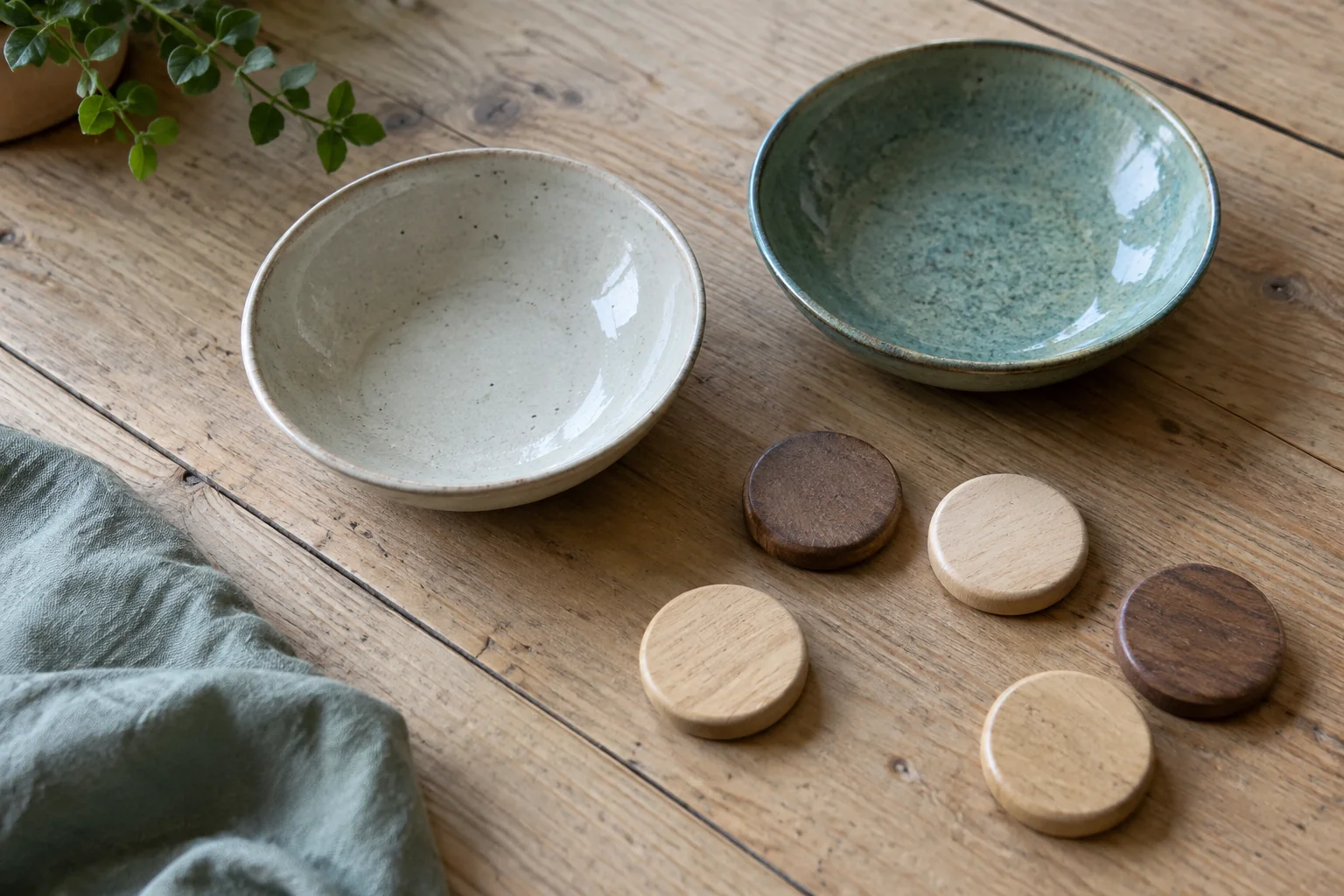
Choose ten similar objects and two bowls, plates, or areas drawn on a sheet of paper. Use large counters with adult supervision, or pieces of paper large enough for your child. For a young child who still puts objects in their mouth, choose appropriate materials and avoid small pieces.
A sheet of paper and a pencil are only needed if you want to record the results. The first attempt can use objects and spoken words. The French Ministry of Education describes handling objects and explaining ideas as supports for learning numbers in preschool.
How do you make a first number house?
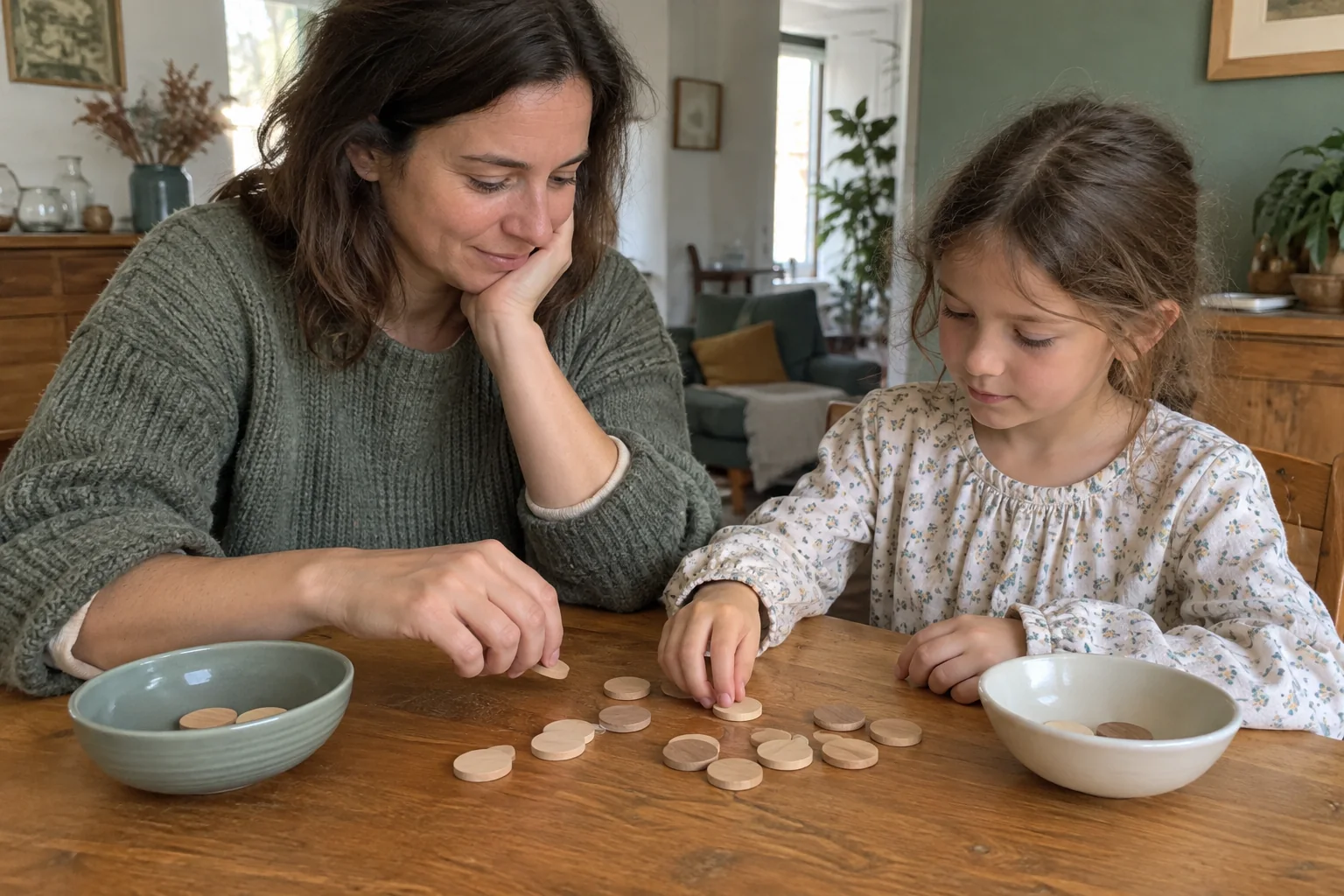
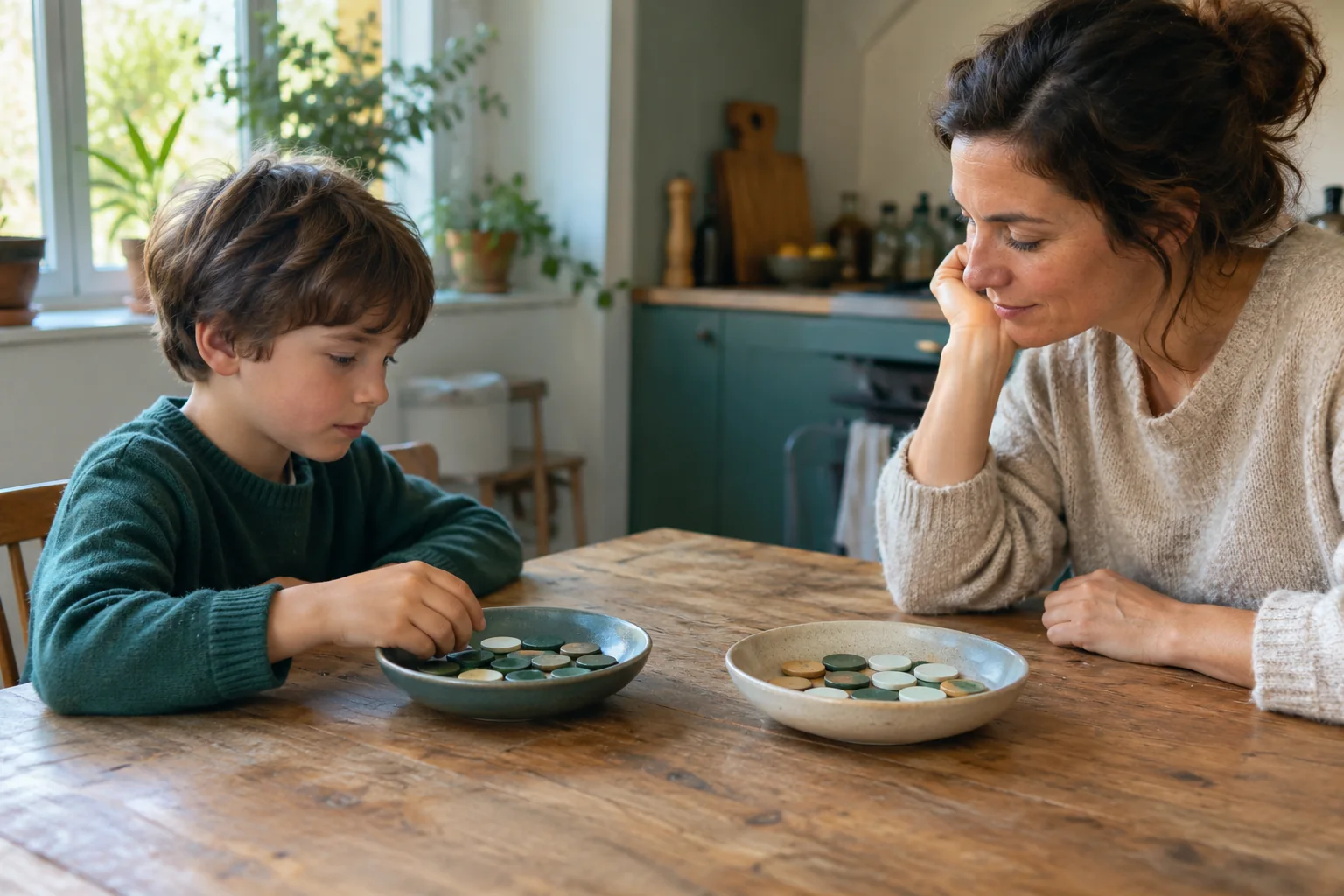
Put all ten objects in the first bowl. The second is empty: ten and zero. Move one object into the second bowl: now you have nine and one. Invite your child to count both groups and describe what changed.
Move one object at a time while your child enjoys the activity. They can move the counters, point to the groups or ask an adult to move them. Keep the total visible: the aim is to understand the split, not to answer quickly.
| First space | Second space | How to check |
|---|---|---|
| 10 objects | 0 objects | The second space is empty. |
| 6 objects | 4 objects | Bring both groups together and count. |
| 5 objects | 5 objects | Both groups have the same number of objects. |
How can you record the results without requiring writing?
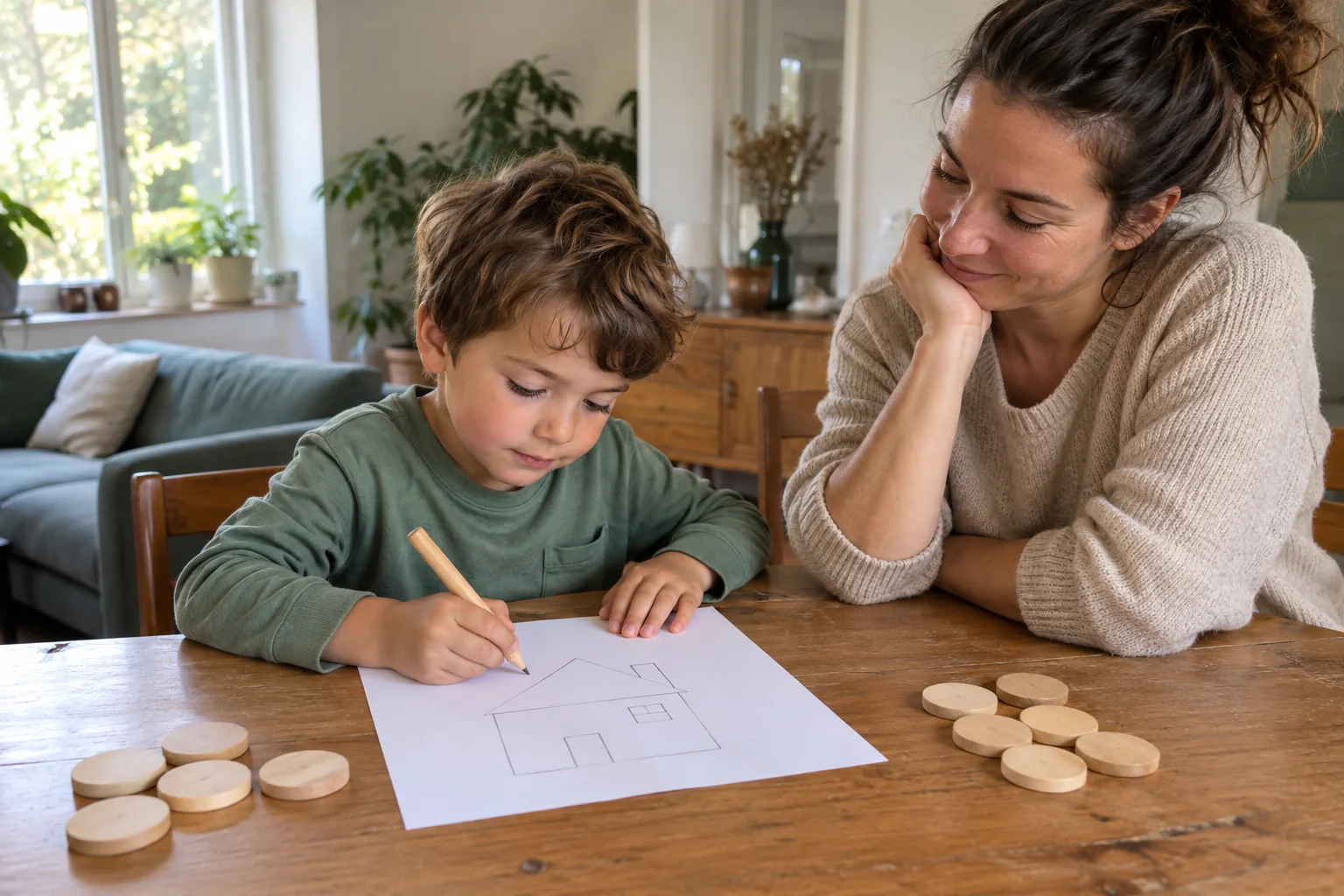
Draw a house with a roof and two rooms on each floor. An adult can record the number of objects on each side, or your child can draw dots. Show that each floor represents the same total as the bowls. Write “6 + 4 = 10” later if that fits what your child is learning at school.
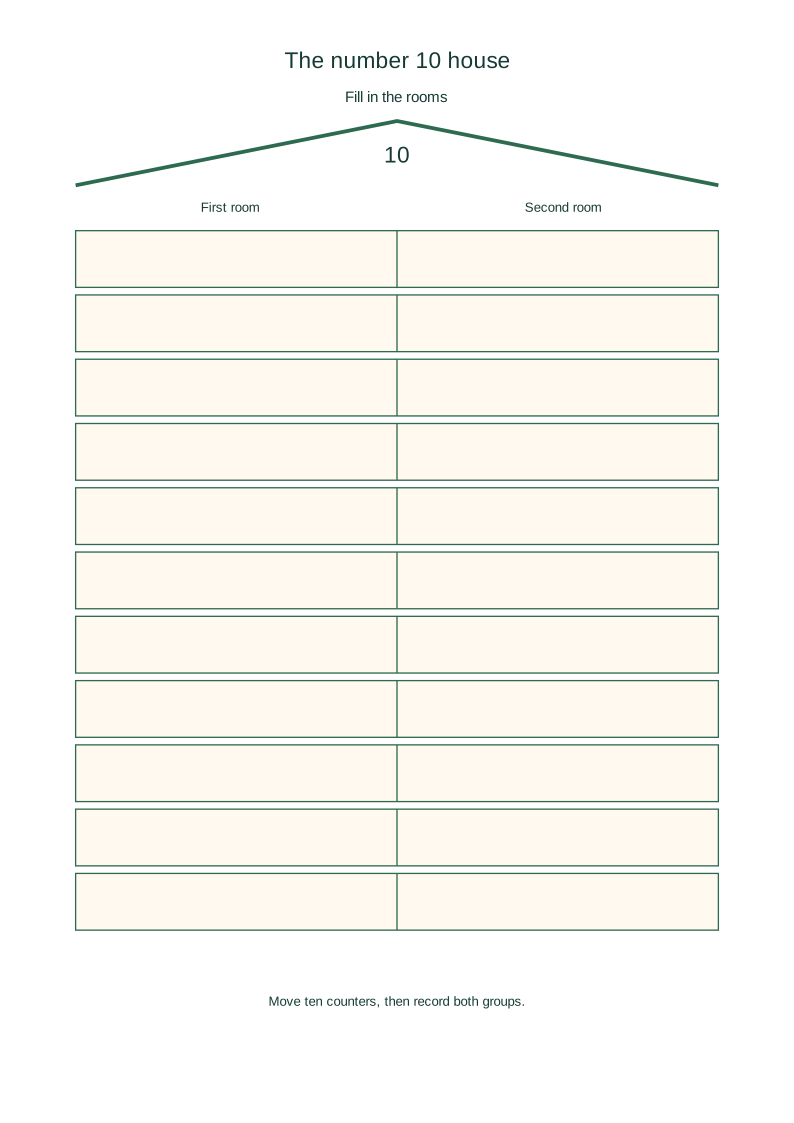
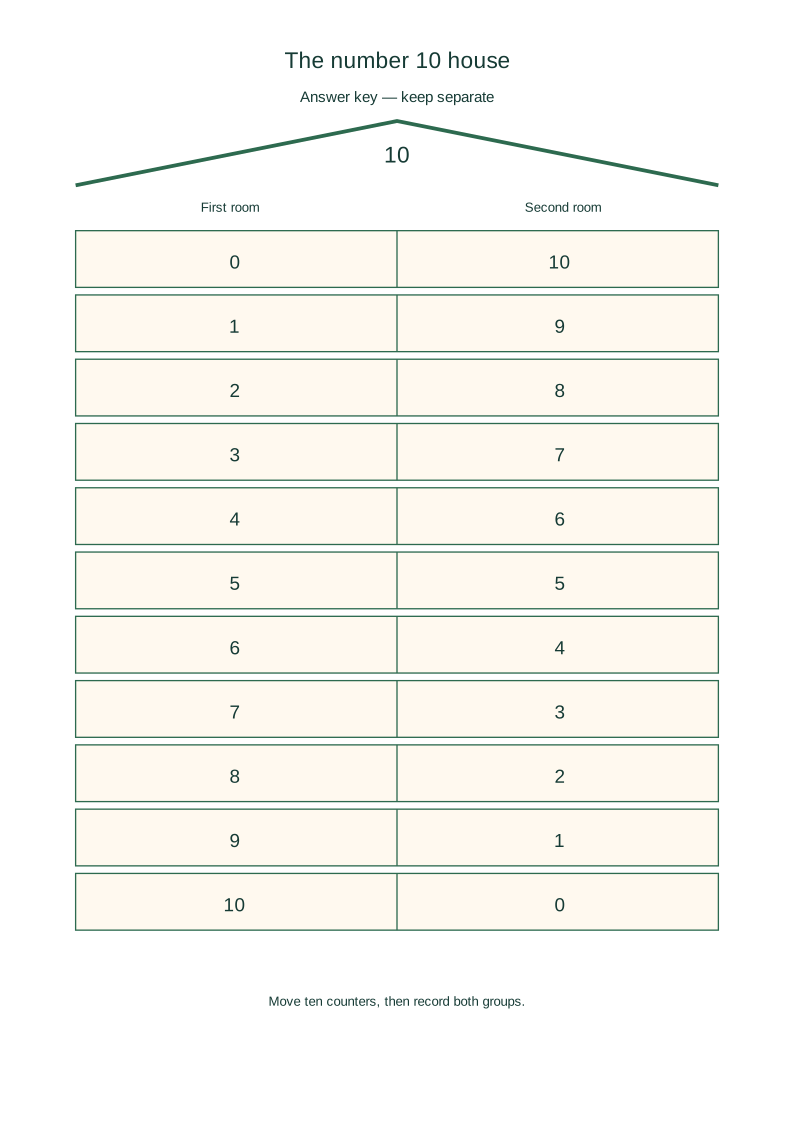
The activity includes a house and a separate answer key. Open each file before printing to check the format and keep the answers apart. The everyday counting guide offers more ways to talk about quantities without a worksheet.
How can you check that you found every possibility?
Change the first group in order: zero, one, two, and so on up to ten. At each step, count what remains in the other space. This makes missed possibilities visible without asking your child to guess.
If the rooms are distinct, zero on the left and ten on the right are a different placement from ten on the left and zero on the right. There are eleven ordered placements, including both ends. If order does not matter, those two placements are the same pair, and there are six pairs. The activity states which convention it uses.
This check helps you discuss a choice; it does not measure your child’s abilities. For more practice, explore the mental math games and choose a situation that matches what your child already knows.
What if some objects are hidden?
Once your child understands the two visible groups, cover one bowl and leave the other visible. If six objects remain visible, ask how many are under the bowl. Your child may count on their fingers or lift the bowl to check.Georges Brassens School describes an activity with two houses, first visible and then with one part hidden.
If the question is too hard, return to two visible groups. The game does not need hidden materials to be worthwhile. A break or a smaller number can help you resume without pressure.
How can you adapt the activity to your child?
If your child is still exploring small groups, start with three or four objects and keep both groups visible. If ten is familiar, invite them to predict the hidden group and explain their answer. These are starting points, not levels imposed by age.
Shapes, sizes or positions can distinguish the groups without relying only on color. In a two-way table, a row and a column combine two criteria; here the spaces represent two parts of one group.
Where can you see another demonstration?
The English video below demonstrates ten frames and number bonds for adults. It also presents a commercial teaching set; no purchase is needed for this activity. Choose materials suitable for your child and keep the screen optional.
Hepaly offers more activities to download and print. All six commercial activity books are in French; choose a collection for your child’s needs rather than judging them by this one activity.
Frequently asked questions
Does my child need to know how to write addition equations?
No. Objects and the words “six and four make ten” can be enough for a first attempt. Written equations can come later when appropriate.
Why include zero?
One room can be empty while the other holds all the objects. Zero describes the empty room.
Can we start with fewer than ten objects?
Yes. A smaller group helps your child explore moving objects between two spaces before returning to ten.
Do we need two colors?
No. Two bowls, two marked areas or two shapes can distinguish the groups. Do not ask your child to rely on color alone.
Does the answer key show only one way to play?
The answer key lists the splits using the stated convention. Your child can explore them in another order and compare what they found.
How long should the activity last?
Watch your child’s attention and interest. A few attempts are enough to begin; you can put the materials away and return another day.
Before finding number pairs, use counting without missing objects to check that every object gets one number word. For a different question, equal sharing with a remainder fixes the number of groups rather than finding every split.