
Table of Contents
Talk about school with concrete words
Starting school for the first time is a big change, and every child reacts in their own way. You can explain what will happen using simple details: the journey there, hanging the coat on the hook, playing in the classroom, and the time when you'll return to pick them up. Avoid promising that everything will be easy; instead, say that you can talk through their questions together.
Stories, drawings, or pretend play can sometimes offer a low-pressure way to talk about school without forcing a serious talk. A toy figure can enter an imaginary classroom, or your child can draw the place they visited. Let them ask questions at their own pace. If they don't seem concerned, you don't need to remind them about school every day.
Make the location familiar before the first day
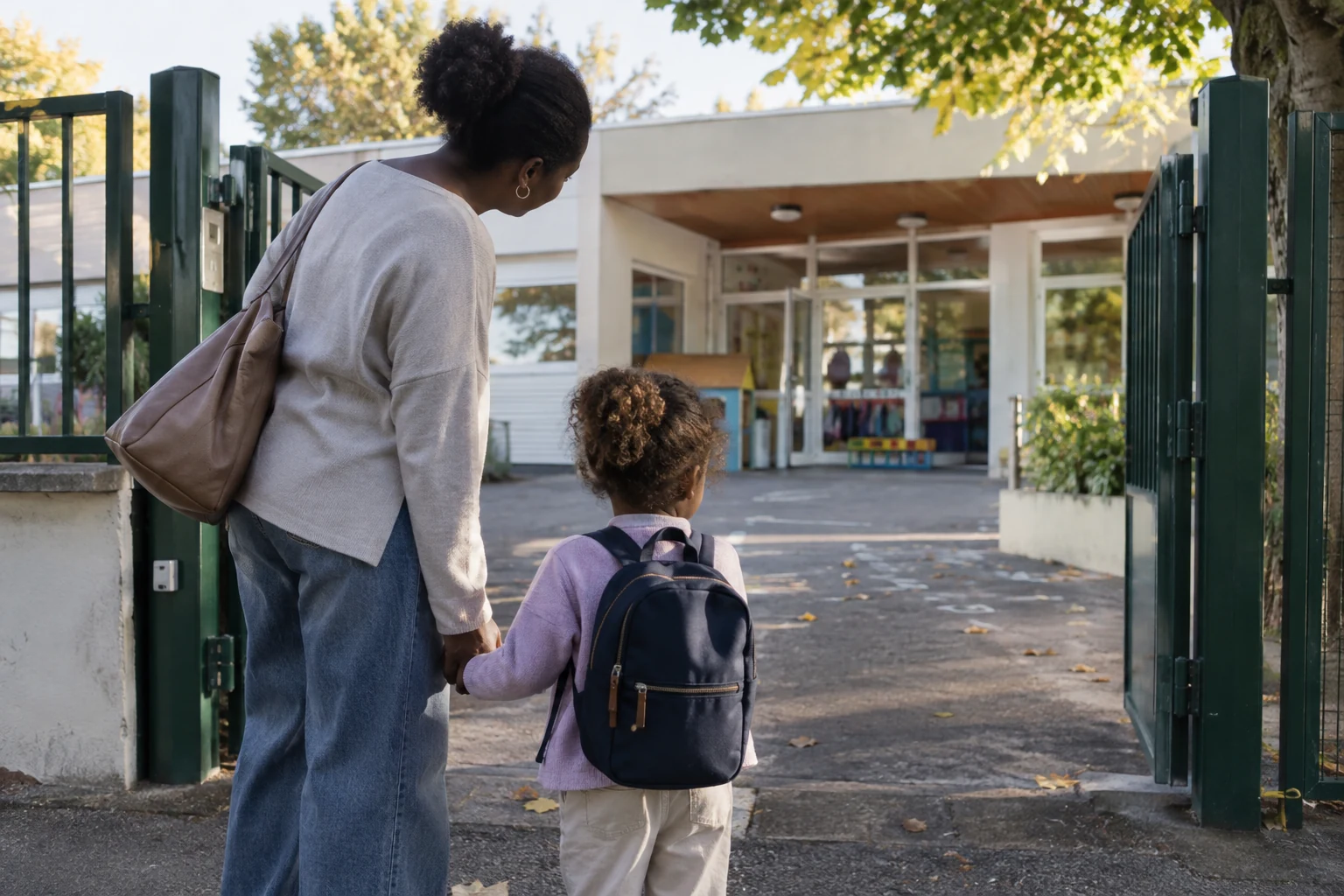
When possible, walk the route to the school or pass by the playground. Look together at the entrance door they will use and point out a recognizable detail. An official visit, if offered by the school, can also allow your child to see a space or meet an adult. Check schedules and rules directly with the school, as they vary from one establishment to another.
At home, your child can practice opening their bag, recognizing their coat, or stowing a water bottle. These small dry runs serve mainly to make these items familiar; they aren't a test. If a zipper is tough to pull, you can help them. They will discover other routines once in class, supported by the school staff.
Prepare for separation without making it a drama
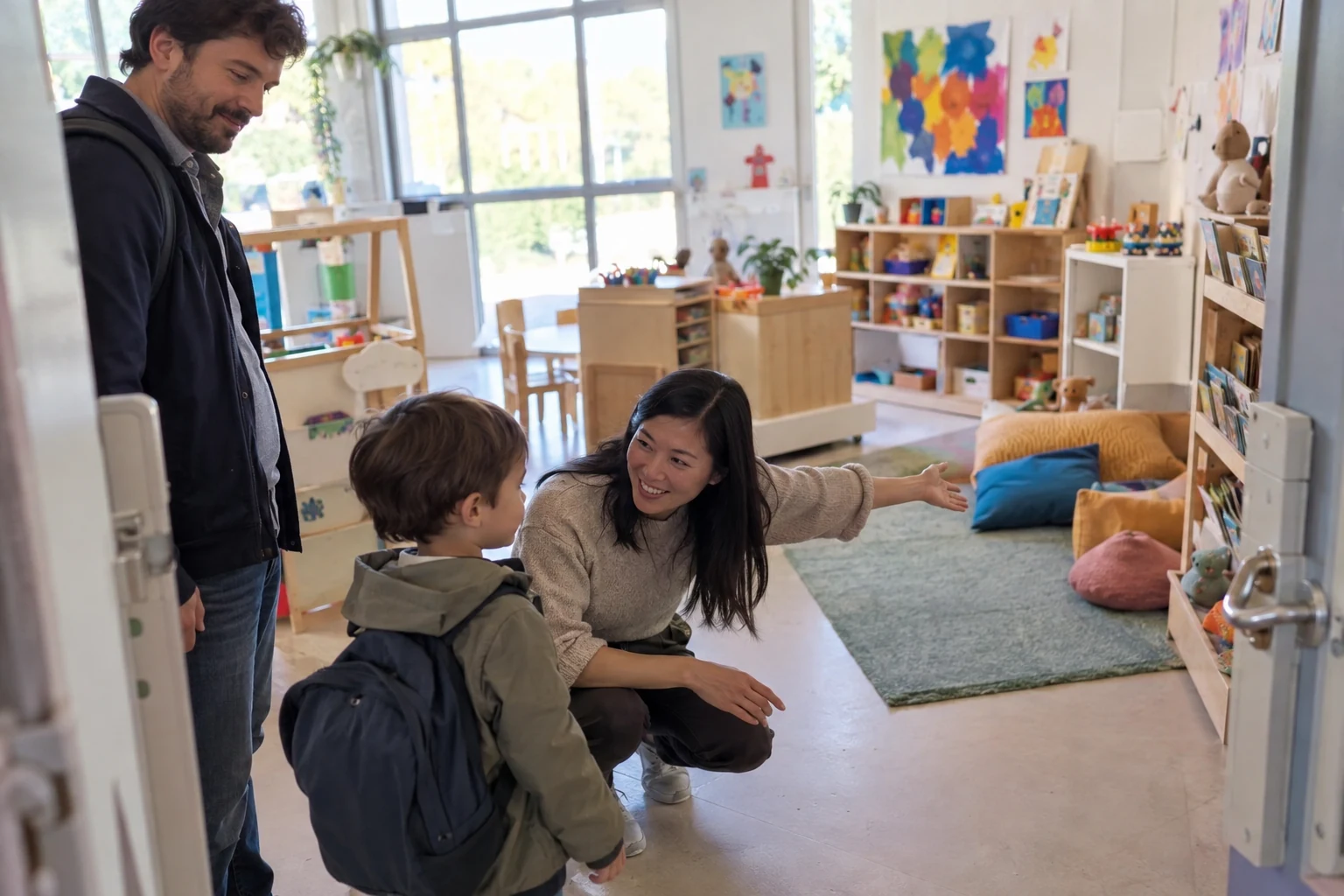
Explain the separation in an honest and predictable way: you will say goodbye, your child will stay with the staff, and then you will return at the agreed time. Avoid sneaking away. A warm and brief goodbye is clearer than a long negotiation that delays the moment of parting. Ask the school about their drop-off routine and plans for the first few days.
Some children cry at the moment of separation and then settle down after the parent leaves; others seem calm and talk about the day later. The teaching staff can help you understand how the drop-off goes. You can share how you feel as well, without putting the responsibility on your child to reassure you.
To explore further: Bedtime routine: soothing points of reference to support your child.
Set up a few helpful routines
The evening before, prepare comfortable clothes together and put the items requested by the school into the backpack. Keep a morning routine that leaves you a bit of extra time if possible. You do not need to teach preschool activities at home: playing, listening to a story, resting, and taking part in everyday chores are already familiar experiences.
Every child arrives with their own habits, interests, and needs. If you have a question about sleep, meals, clothes, or a specific requirement, write to the school or request a chat with the staff. Answers depend on local setup and individual situations; it is best to check directly with the people who will be welcoming your child.
After school, let the day unfold naturally in conversation
Upon returning, a broad question like "What did you enjoy?" can open the discussion, but a tired child may not always want to answer. You can also offer a snack, a quiet moment, or a game. Avoid asking too many questions right after pick-up. Memories may come out later, during bath time, at dinner, or while reading a story.
If a moment is difficult, acknowledge what your child shares and note down key facts to discuss with the team if necessary. Starting school builds over several days; you can adjust routines based on what you observe. Keep time for play and rest, without asking your child to recount every detail of their classroom.
To go further
Preview before choosing
Les Petits Explorateurs · Ages 4–6
For preschool and early elementary children discovering shapes, numbers, and the fun of drawing lines. An adult reads the instructions.