
Table of Contents
“That thingy, over there, to drain the pasta.” Between the ages of 3 and 10, a child's vocabulary expands dramatically, but not at the same pace for everyone. Words are picked up everywhere: in conversations, stories, games, and family outings. The more words a child knows, the better they understand what they hear and read, and the better they express what they think and feel. Good news: building vocabulary doesn't require worksheets or drills, just a few simple everyday habits. Here are ten of them, along with word games for all ages.
Why vocabulary matters so much
French preschool guidelines state it clearly: teaching vocabulary is a top priority, because knowing words well allows children to comprehend better and express themselves more clearly. It even sets a benchmark: solid language proficiency relies on knowing at least 2,500 words by the end of Kindergarten (Grande Section, around age 5–6).
Later on, vocabulary becomes a pillar of reading comprehension. A child who decodes a word they already recognize orally understands it right away; if they don't know the word, they stumble over its meaning, even if they read smoothly. Every word learned at home is a small investment for school.
Learning a word in four steps
In French preschools, vocabulary teaching follows four stages: introducing new words, structuring vocabulary by showing connections between words, memorizing them, and then encouraging their use. At home, you can follow the exact same path effortlessly: encounter a word in a story, connect it to others ("A colander is like a sieve"), repeat it in a game, and use it again the next day while cooking.
Reusing words is the step that gets forgotten most often. A word heard just once quickly fades away; a word used multiple times in different contexts stays for good.
Ten daily habits
Name things precisely
Replace "that thing" or "the stuff" with the exact word: colander, skimmer, whisk. Children love precise words, especially when they sound funny.
Narrate what you are doing
When cooking, doing DIY projects, or gardening, describe your actions: "I pour, I mix, I knead." Action verbs are best learned by experiencing them.
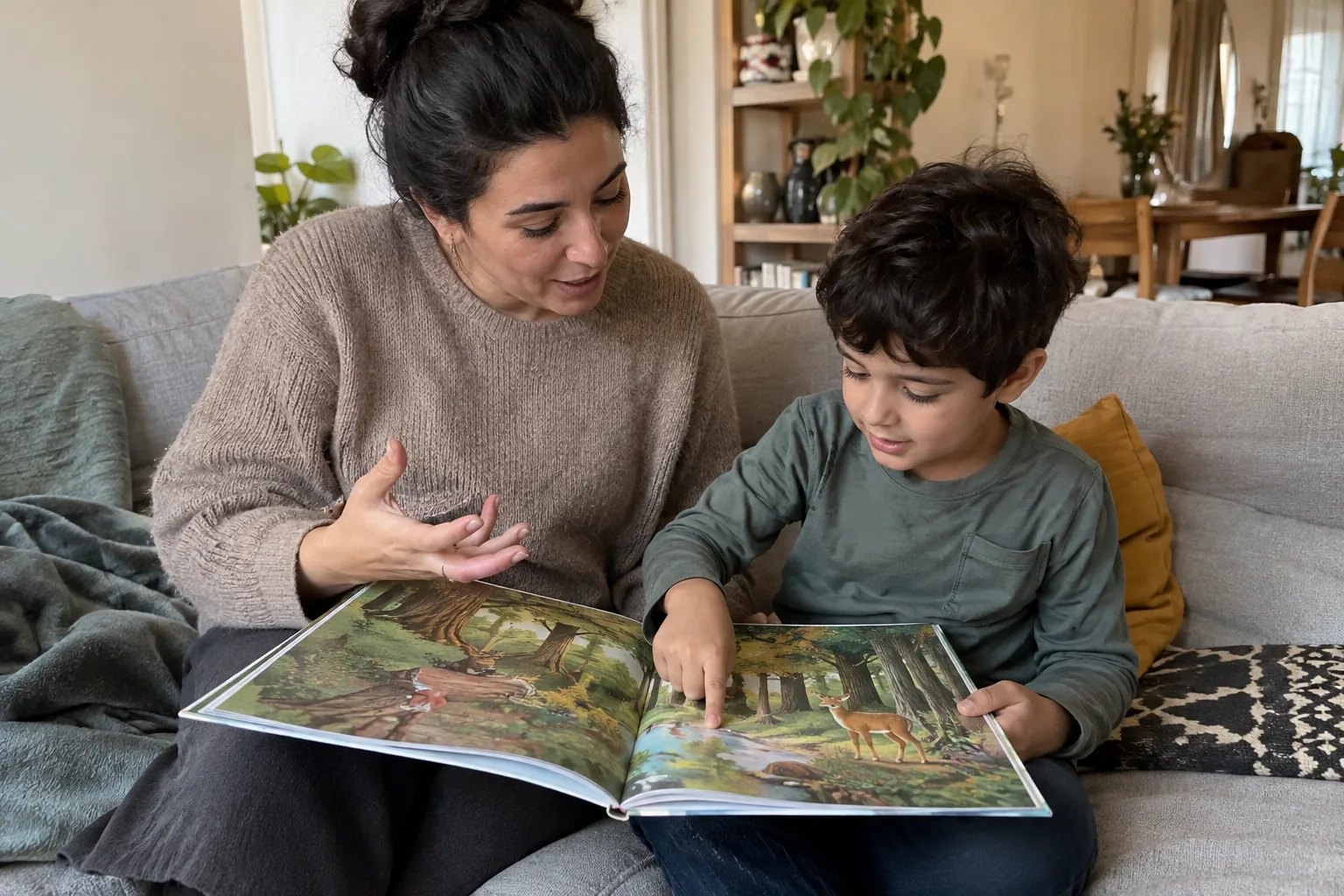
Read picture books… and discuss them
A story read aloud introduces words that rarely come up in everyday speech. Pause at a new word, explain it with an image or a gesture, then continue reading.
Play with opposites and shades of meaning
Hot, lukewarm, scalding; small, tiny, minuscule. Suggest finding a "stronger" or "gentler" word: it's a game children love.
Explore word families
Garden, gardener, gardening: word families help children understand and remember vocabulary. They also support spelling.
Put words to emotions
Happy, proud, relieved, disappointed, jealous: a rich vocabulary of feelings helps children say what they feel rather than acting it out.
Ask open-ended questions
"Tell me about..." and "How did you do that?" invite longer sentences than "Was it good?".
Rephrase instead of correcting
If they say "that sharp thing", reply: "Ah, the scissors? Yes, grab the scissors." The child hears the right word without feeling corrected.
Make the most of outings
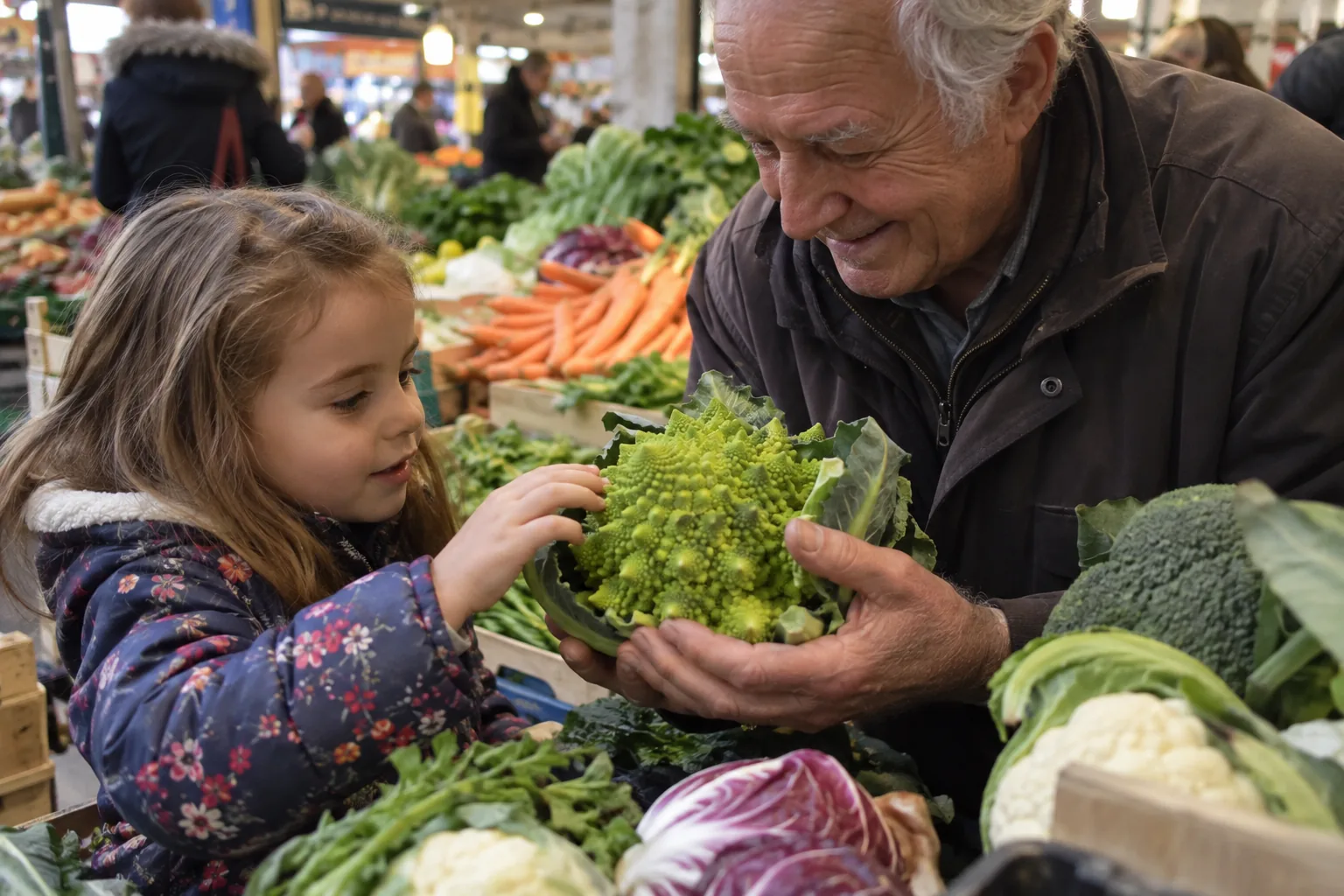
The market, the forest, the museum, the train station: every place brings its own set of words. Prepare for the trip by talking about what you will see.
Let your child explain things
Ask them to explain a game, a rule, or a recipe to you: searching for the right words to make themselves understood brings huge progress.
Word maps: a game for ages 6–10
For children who can read, a word map helps organize vocabulary. Write a word in the center of a sheet of paper, then brainstorm stronger words, gentler words, opposites, and words from the same family together. Tacked to the wall, the map grows over time.
This game also prepares children for spelling: knowing a word's family helps them understand how it is spelled. Our guide on learning spelling through fun games offers more ideas.
Reading, the primary source of words
Books contain words rarely heard in everyday conversation: "marvel," "pathway," "whisper." Reading aloud to a child, even when they know how to read on their own, remains one of the best ways to expand their vocabulary. Yet reading time among youth is dropping: according to a 2024 study by the Centre national du livre (French National Center for Book Publishing), 7-to-19-year-olds spend an average of 19 minutes per day reading for pleasure, compared to 3 hours and 11 minutes in front of screens.
Source: Centre national du livre / Ipsos, "Young French People and Reading", 2024
View chart data
| Activity | Minutes per day | Breakdown |
|---|---|---|
| Reading books for pleasure | 19 min | average for 7–19 year olds |
| Screens (excluding e-books and audiobooks) | 191 min | 3 h 11 |
This isn't about guilt, but about protecting a cozy shared reading moment during the day. Our tips to nurture a love of reading in children can help you build this daily routine.
Word games for all ages
- I went to the market and I bought...: each player repeats the list and adds a new item. Boosts both vocabulary and memory.
- The forbidden word: talk about your day without using generic words like "thing" or "stuff".
- Riddles: "It's a tool used to drain pasta." For younger kids, sound and rhyming games are a great starting point: check out our ideas for playing with syllables and rhymes.
- Word of the day: an unusual word written on the fridge that everyone tries to use at least three times during the day.
Frequently asked questions
How many words does a 5-year-old know?
Numbers vary greatly from child to child. French preschool guidelines set a benchmark: solid language proficiency relies on actively using at least 2,500 words by the end of Kindergarten (Grande Section, around age 5).
Should mispronounced or misused words be corrected?
It is better to rephrase naturally than to correct sharply: repeat the sentence naturally using the proper word. Your child learns it without feeling discouraged from speaking.
Do cartoons build vocabulary?
A little, especially when watched together and discussed. However, nothing replaces real conversations and shared reading, where children can ask questions and actively practice new words.
My child doesn't talk much, should I be concerned?
Every child develops at their own pace. If you have concerns about their speech, comprehension, or pronunciation, mention it to your pediatrician or family doctor, who can refer you to a speech specialist if needed.
To go further
Preview before choosing
Les Petits Explorateurs · Ages 4–6
For preschool and early elementary children discovering shapes, numbers, and the fun of drawing lines. An adult reads the instructions.