
Table of Contents
Numbers are already part of everyday life
Counting doesn't have to start with a worksheet. At the table, on the stairs, or while putting away toys, your child encounters quantities they can observe and name. You can simply put words to what you're doing: "There are two plates left to set" or "You picked three blocks." The situation gives meaning to the number without demanding a perfect answer.
Let your child show you how they do it. They might move each object, point to them, or count out loud. If their count differs from yours, recount together gently rather than correcting right away. For ages 4–6, small concrete sets are often easier to explore; with older kids, you can compare more, create groups, or find multiple ways to get the same total.
Counting through moving and touching
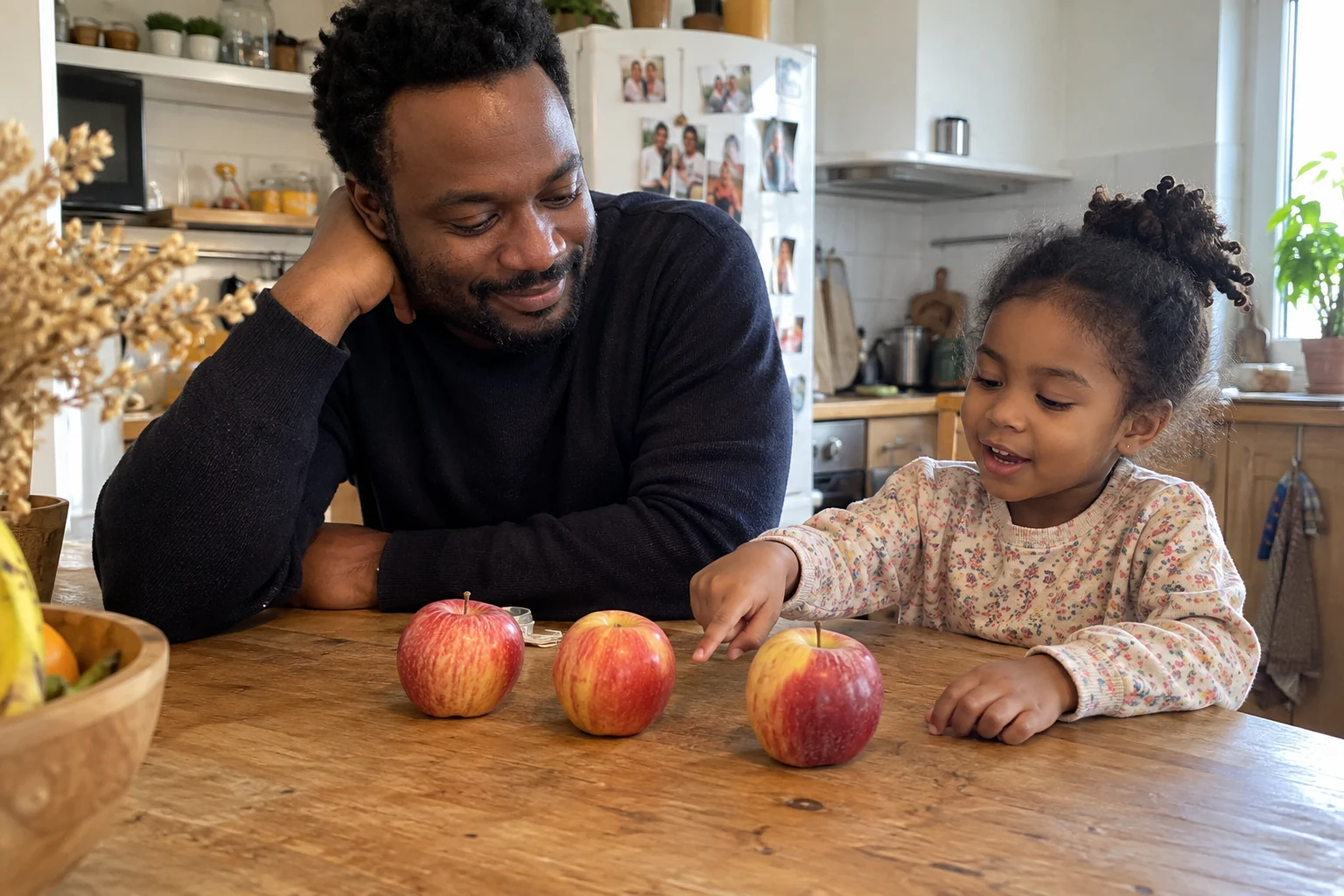
At snack time, offer to count apple slices or biscuits already served. During a walk, count a few steps or passing bikes, letting your child choose what to watch for. Moving helps keep track: touching one item at a time prevents skipping and turns a small quantity into something hands-on.
Start with a number that feels manageable for your child, then stop when interest fades. There's no need to repeat the exercise until everything is correct. Numbers appear naturally in many situations throughout the day; this ordinary repetition offers plenty of other chances to try.
Comparing without turning play into a test
Are two block towers the same height? Which basket seems to hold more socks? Before recounting, ask your child what they notice. They might rely on line length, object size, or an overall impression. Play begins with this observation; counting comes next to check an idea, not to evaluate skill.
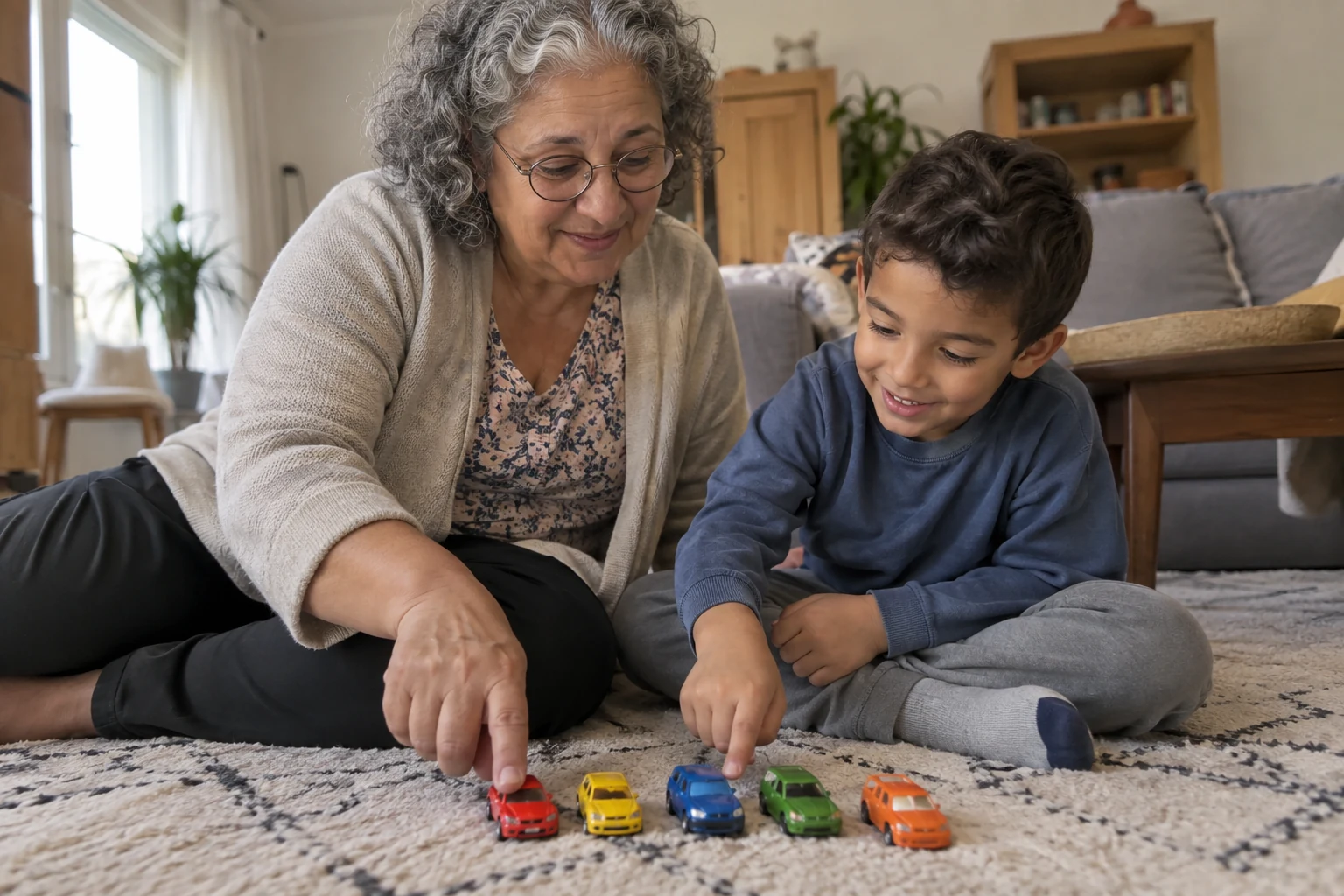
To make comparison clearer, place objects in two lines starting at the exact same spot. Your child can then see how items align. Next, change the spacing: the longer row doesn't always have more items. This small contrast starts a conversation about the difference between occupied space and quantity.
To explore further: Printable number 10 house: a hands-on activity.
Playing with quantities during routines
You can create a mini-mission: bring two spoons, find four red building blocks, or divide cards between two players. Keep instructions brief, then ask your child how they want to manage it. For an older child, add a fun challenge, like finding three different items that are all round.
If your child doesn't feel like counting, keep going with the routine and try again another day. Some children like reciting number sequences without immediately assigning a word to each item; others prefer sorting or comparing. These forms of participation show you what catches their interest today and can serve as the spark for a new game.
The storekeeper number game
Place a few familiar objects on a table and pick roles. Your child might ask for "two apples" or "three blocks," then count what they receive. Switch roles on the next turn. For 7–10 year olds, add pretend price tags and ask how many items are needed to reach a small group, keeping it relaxed and pressure-free.
Split a group without changing its total
Prepare a small group of objects appropriate for your child and two spaces. Move one object into the second space and ask what changed. The groups differ, but the whole collection still has the same number. Bring them together to check instead of demanding an immediate answer.
If your child is ready to explore splits of ten, a drawn house can record both groups. Start with fewer objects when needed and keep both spaces visible. Fingers, words and pointing can all help; writing an equation is not required to begin.
To record the splits, the printable number 10 house offers an activity sheet and a separate answer key.
If an object is missed or counted twice, track which objects you visited. The counting without duplicates activity uses marks and a separate space for counted objects.
To go further
Preview before choosing
Les Petits Explorateurs · Ages 4–6
For preschool and early elementary children discovering shapes, numbers, and the fun of drawing lines. An adult reads the instructions.