
Table of Contents
It is often the very first word children learn to write, and they take immense pride in it: their own name. Yet behind these few letters lie many foundational learning skills: recognizing shapes, knowing letter names, holding a pencil correctly, tracing in the proper direction, and moving left to right. In French preschool (maternelle, ages 3–6), this journey unfolds over three years. At home, a few simple games support this growth without making writing a chore. Here are the steps, what school expects, and an animation demonstrating the correct stroke direction for each letter.
A name: a word like no other
A first name is the word that means the most to a child: it represents them. They see it on their coat hook, their cubby, and their drawings. Even before learning to read, they recognize the shape of their name tag among others by spotting a letter they know, often the first one. It's this emotional connection that makes it a fantastic gateway to written language.
What preschool and kindergarten cover
The French preschool curriculum, in effect since the start of the 2025 school year, organizes learning into steps with indicative age guidelines.
| Period | What the child learns | Example of success |
|---|---|---|
| Before age 4 | Recognize letters from their name, draw basic shapes | Find their name tag among others |
| From age 4 | Copy their name in uppercase, move from left to right, get introduced to cursive | Copy their name in capital letters |
| From age 5 | Hold a pencil with a finger pincer grip, connect cursive letters | Write their name in cursive, without a model |
The curriculum also specifies that cursive writing is introduced in Pre-K (moyenne section, ages 4–5), or when the child is ready, and is taught in a structured way. So there's no rush at home: the main thing is to follow along, without rushing ahead.
Step 1: Recognize their first name
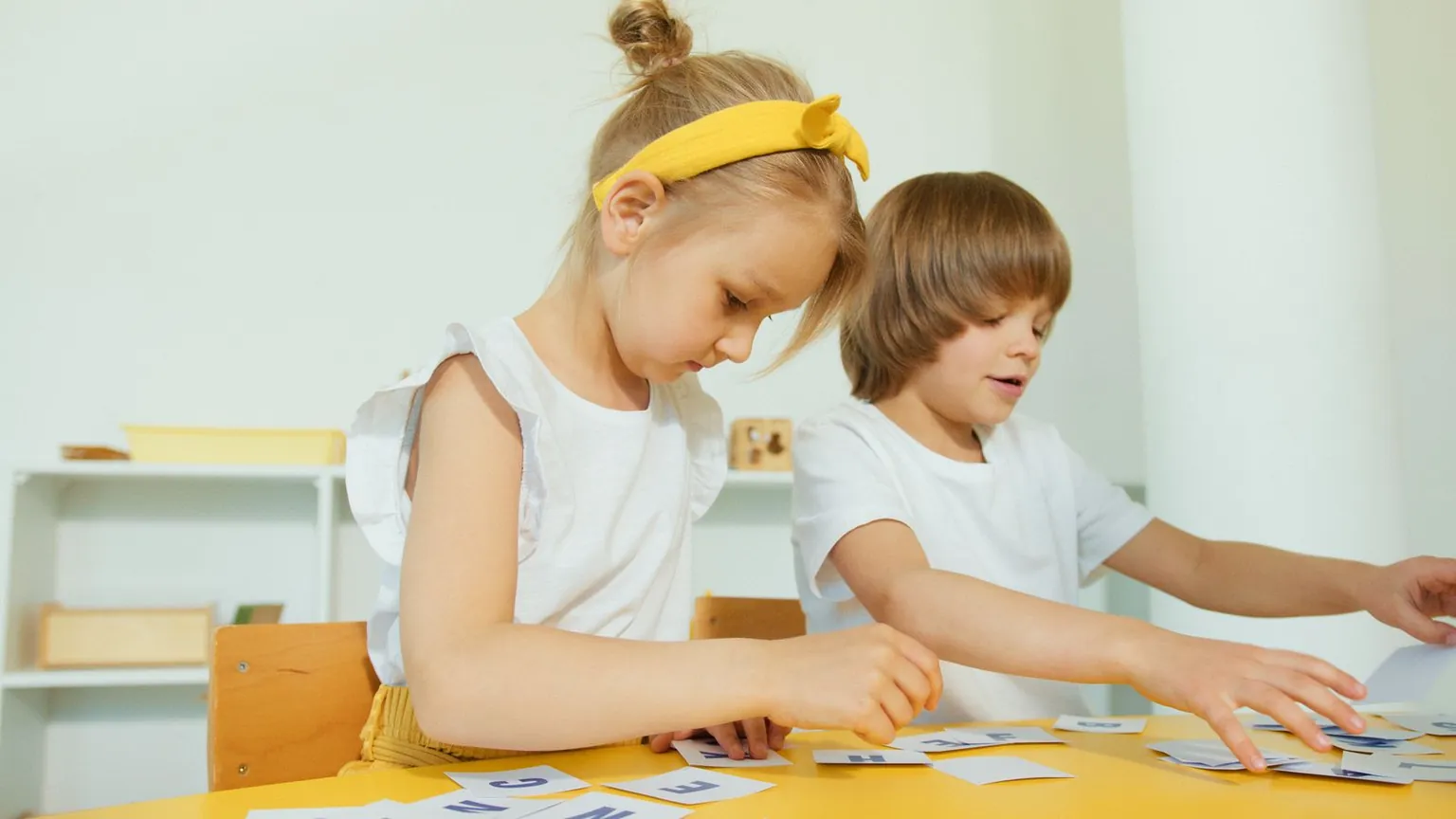
Play with name tags: write the family members' names in uppercase on cardstock, mix them up, and ask your child to find theirs. Then Dad's, Mom's, or their sister's. To make the game trickier, hide one letter of their name with a token: which one is missing?
Step 2: Manipulate the letters
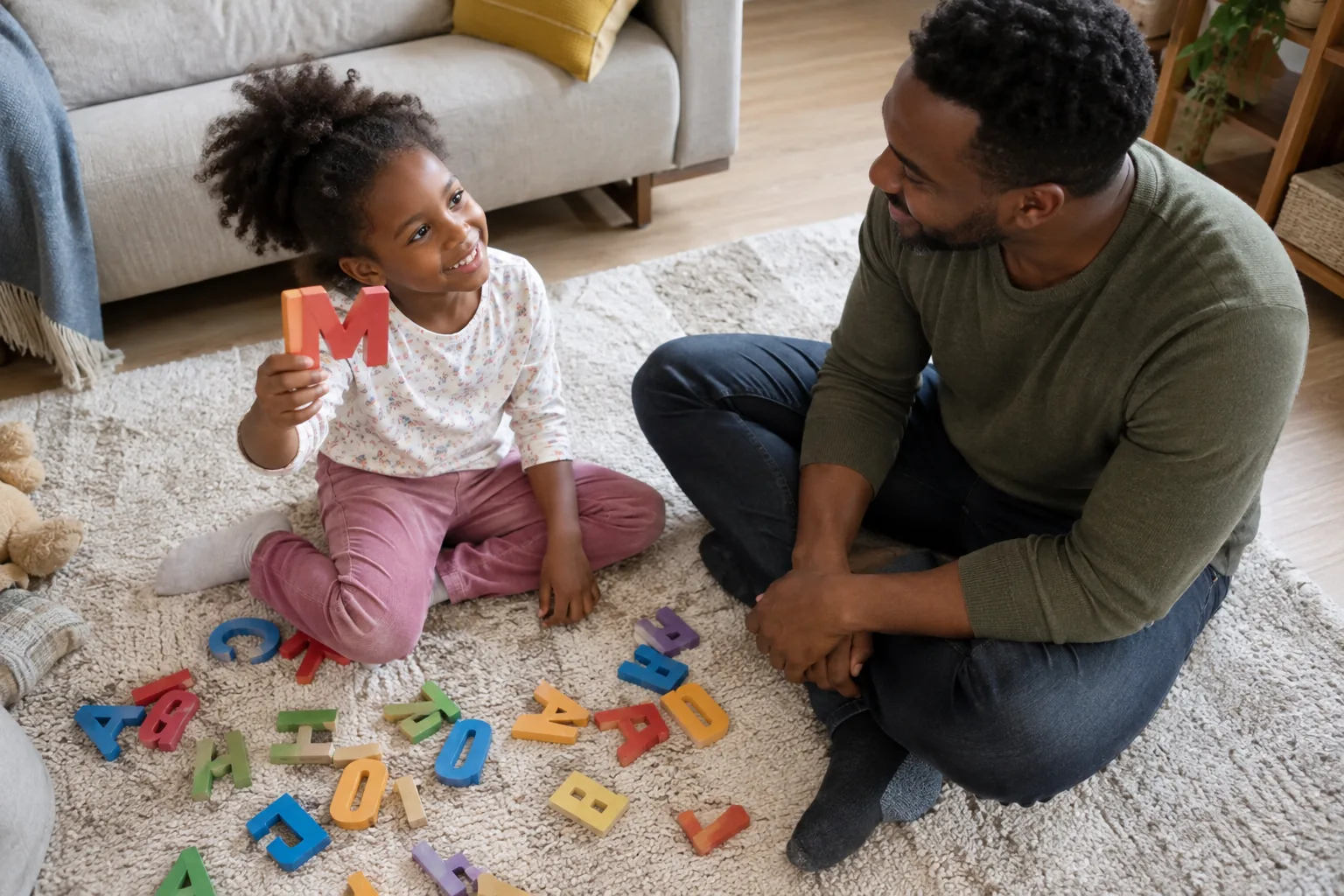
Before drawing, we touch. Wooden, foam, or magnetic letters let children build their name following a model. Shaping each letter out of playdough helps them feel its shape: a stick for the I, a circle for the O. And naming the letters while handling them prepares them for what's next: our ideas for learning the alphabet through play build on this work.
Step 3: Trace with the whole body
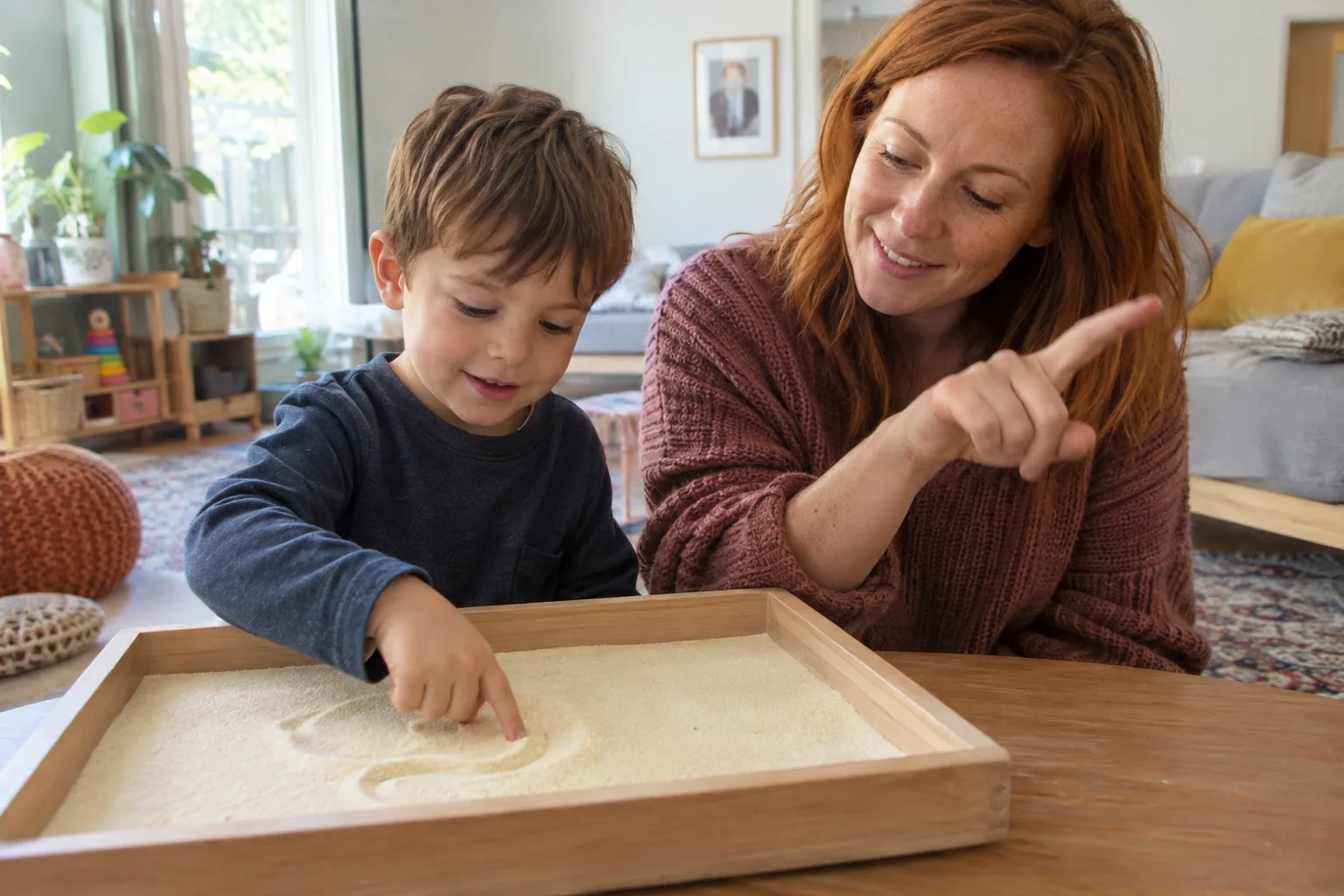
The movement of writing starts with big motions: tracing a letter in the air with the arm, using a finger in a tray of semolina or sand, using chalk on a board or on the ground. These large formats help memorize the shape and direction of the stroke, without the constraint of holding a small pencil. They are also very reassuring: in semolina, you can erase with a swipe and start over.
Step 4: Write in capital letters, in the right direction
Capital letters are the easiest to draw, because they are made of straight lines, slanted lines, and circles. Their stroke direction follows two simple rules: start at the top, and move left to right. Round letters start at the top and curve to the left. The animation below shows the stroke order for a name: type your child's to see it drawn.
Grouping capital letters by families of movement helps a lot: once you know how to draw an E, F and L become easy.
Pencil grip matters too: a short or triangular pencil helps little hands. We detail the stages of pencil grip in our article on how to properly hold a pencil.
Step 5: Move on to cursive
In Kindergarten (grande section, ages 5–6), children learn to draw cursive letters—the ones that connect—and then link them together. The goal at the end of French preschool is to write their name in cursive without a model. At home, follow the handwriting style used by their teacher: each cursive letter has a specific shape and starting point, and learning two different styles confuses children. Feel free to ask the classroom teacher for a copy of the model.
Normal mistakes
Letters written as mirror images, reversed order, letters slanting downward like stairs, varying sizes: these mistakes are very common between ages 4 and 6. They show that your child is still developing spatial awareness on the page. Rather than correcting every letter, show the model, trace next to them while explaining out loud ("I start from the top, I go down"), and praise what they got right. Persistent reversals after 1st grade, however, are worth discussing with the teacher.
If your child is left-handed, a few simple adjustments will help a lot: check out our tips for a left-handed child.
Frequently asked questions
At what age can a child write their first name?
According to the French preschool curriculum, children copy their name in capital letters from around age 4, and write it in cursive without a model at the end of Kindergarten (grande section), around age 5–6. Every child moves at their own pace.
Should we start with capital letters or cursive?
Capital letters come first: they are simpler to draw and match classroom name tags. Cursive is taught next, mainly in Kindergarten (grande section).
My child writes some letters backwards, is that serious?
No, it's very common between ages 4 and 6. Show them the starting point and stroke direction, without stressing it. If reversals persist noticeably after 1st grade, discuss it with their teacher.
What if my child has a long or hyphenated name?
Start with the first part, then add letters bit by bit. A long name is a great opportunity: it gives them practice with more letters. Just be patient and break learning into smaller steps.
To go further
Preview before choosing
Les Petits Explorateurs · Ages 4–6
For preschool and early elementary children discovering shapes, numbers, and the fun of drawing lines. An adult reads the instructions.