
Table of Contents
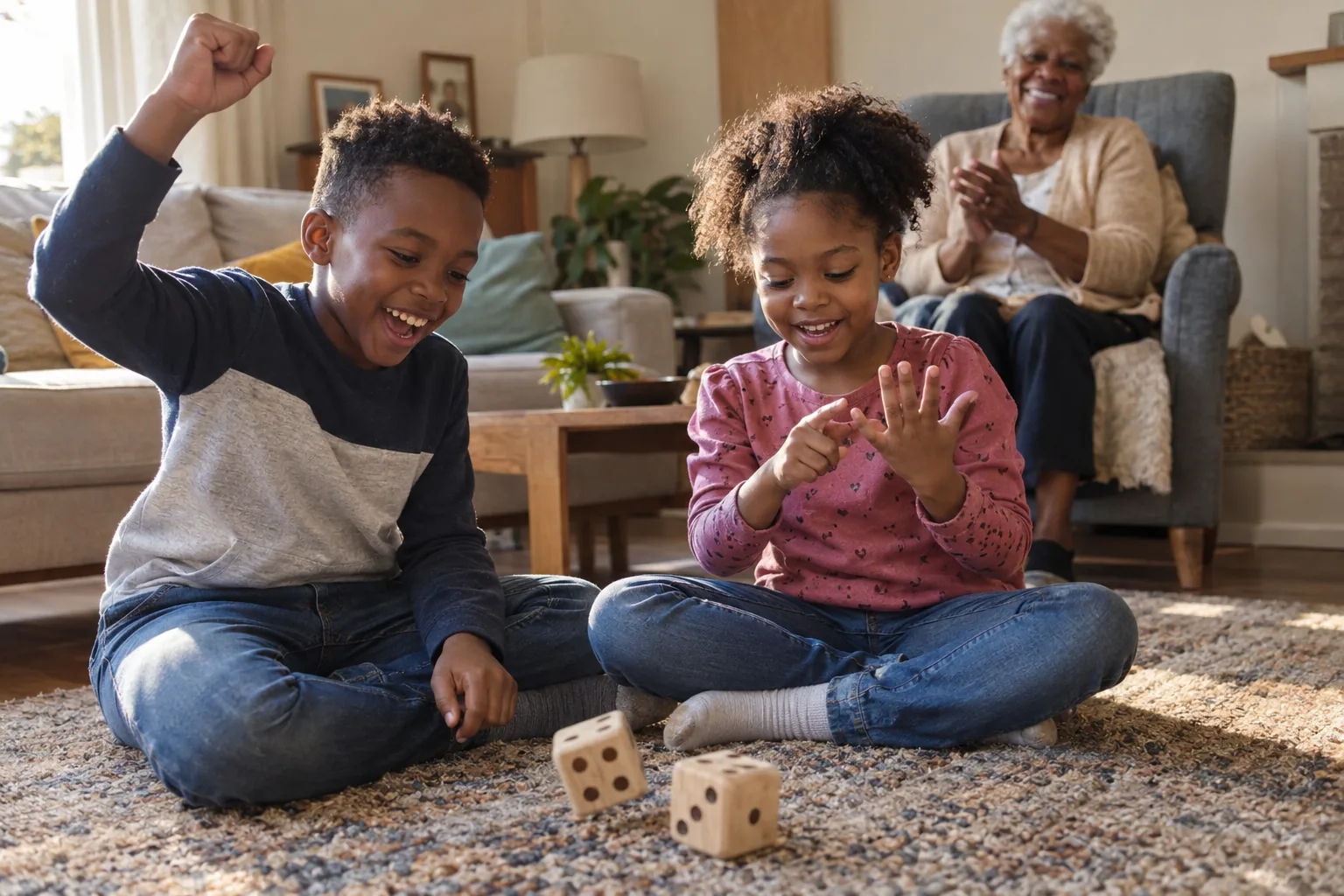
Eight plus seven? Your child counts on their fingers, miscounts by one, starts over... Mental math gets exhausting when every result has to be rebuilt from scratch. Yet a few solid automatic reflexes change everything: number bonds to 10, doubles, and bridging to the nearest ten allow calculating quickly and accurately, leaving energy to focus on solving the problem. Good news: these automatic reflexes are easily developed through play, two minutes here, three minutes there. Here are ten parent-tested games and an interactive challenge to measure progress.
Why Mental Math Matters So Much
When a child has to count on their fingers to find 8 + 7, all their attention goes into that calculation. If they know the answer, or know how to find it in a second, they can focus on the meaning of the word problem. That's why the early elementary curriculum places great emphasis on memorizing numerical facts and mastering mental calculation procedures.
Curricula even refer to math fluency: the number of correct results a student produces in a limited time. For example, at the end of 1st grade (CP), it means recalling nine mental math results in three minutes; twelve at the end of 2nd grade (CE1); fifteen at the end of 3rd grade (CE2). At home, you don't need a stopwatch at first: regular play is enough to build these reflexes.
The Foundations: Number Bonds to 10 and Doubles
The "friends of 10" (1 and 9, 2 and 8, 3 and 7, 4 and 6, 5 and 5) are the basis of many calculations. As long as they aren't automatic, 38 + 7 or 100 − 30 remain painstaking. Same goes for doubles: 6 + 6, 7 + 7, 8 + 8 are later used to calculate 7 + 8, which is "double 7 plus 1". They also prepare kids for the 2 times table, the first step in learning multiplication tables.
To master them, fingers are great allies: show 7 fingers, how many are missing to make 10? 10-count egg cartons (or two rows of 5 drawn on a piece of paper) also work really well: fill them with bottle caps and see what's missing.
Bridging to the Nearest Ten
To calculate 38 + 7, kids who have understood number bonds take a clever shortcut: they first add 2 to reach 40, then add the remaining 5. This strategy, taught starting in 1st grade with small numbers, becomes a lifelong tool.
10 Games to Practice Without Worksheets
Choral Counting
Take turns counting by 1s, then by 2s, 5s, 10s, forwards and backwards. The person who makes a mistake starts over with a new number. Ideal while walking or in the car.
Friends of 10
Using a deck of cards without face cards, lay the cards face up. Taking turns, collect two cards that add up to 10 together. For older kids, move on to friends of 20 or 100.
Addition War
Each player turns over two cards and adds them up: the highest total wins. A subtraction variation is a big hit with 8–10-year-olds.
The Mystery Number
Think of a number between 1 and 100. Your child asks questions: "Is it bigger than 50? Is it even?" They refine their guesses and work with number order.
Playing Store
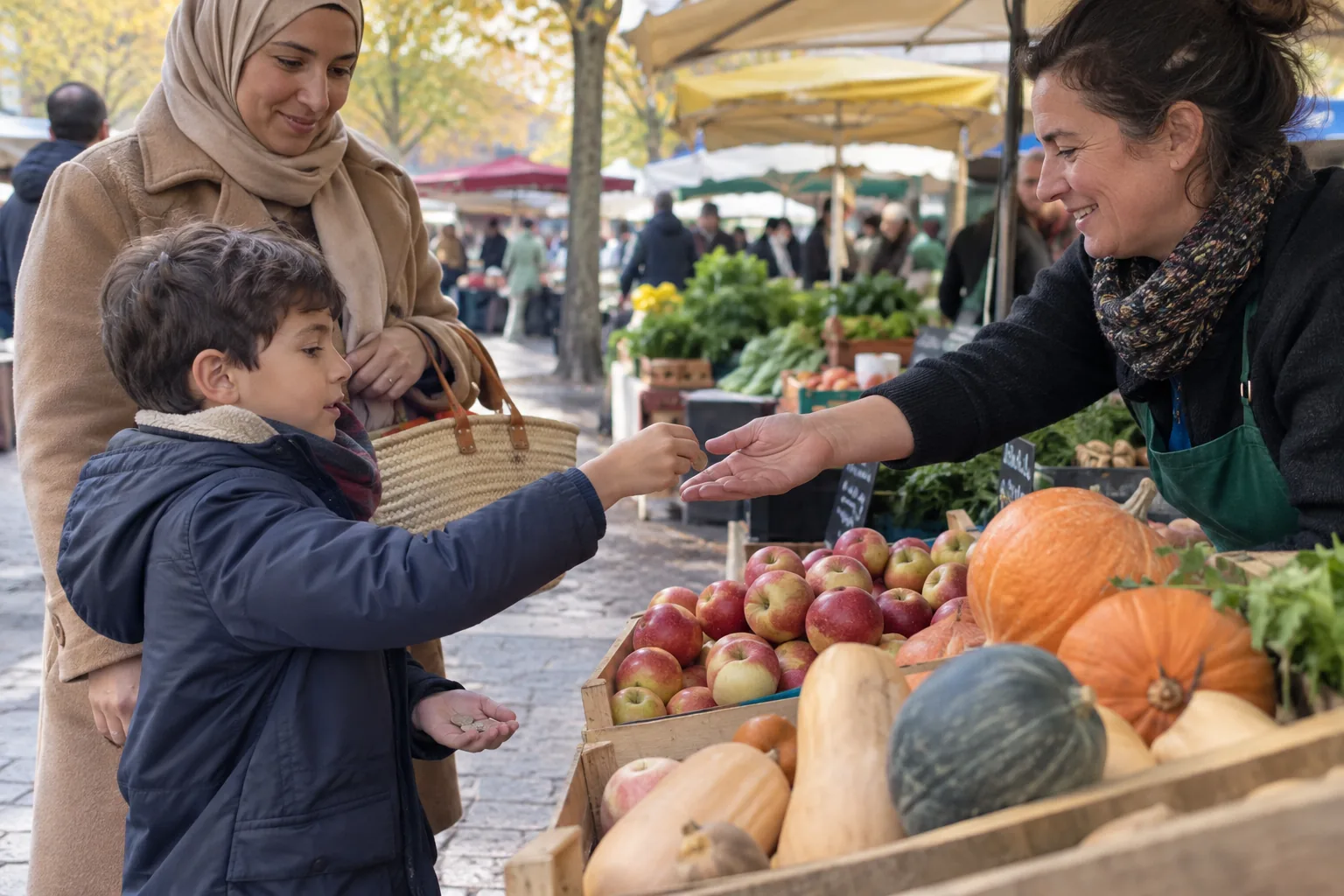
With price tags and a few coins (real or cardboard), play buying, paying, and giving change. Schools teach money starting in 1st grade: it's a great practice ground that also prepares kids to manage their pocket money.
Dice Roll
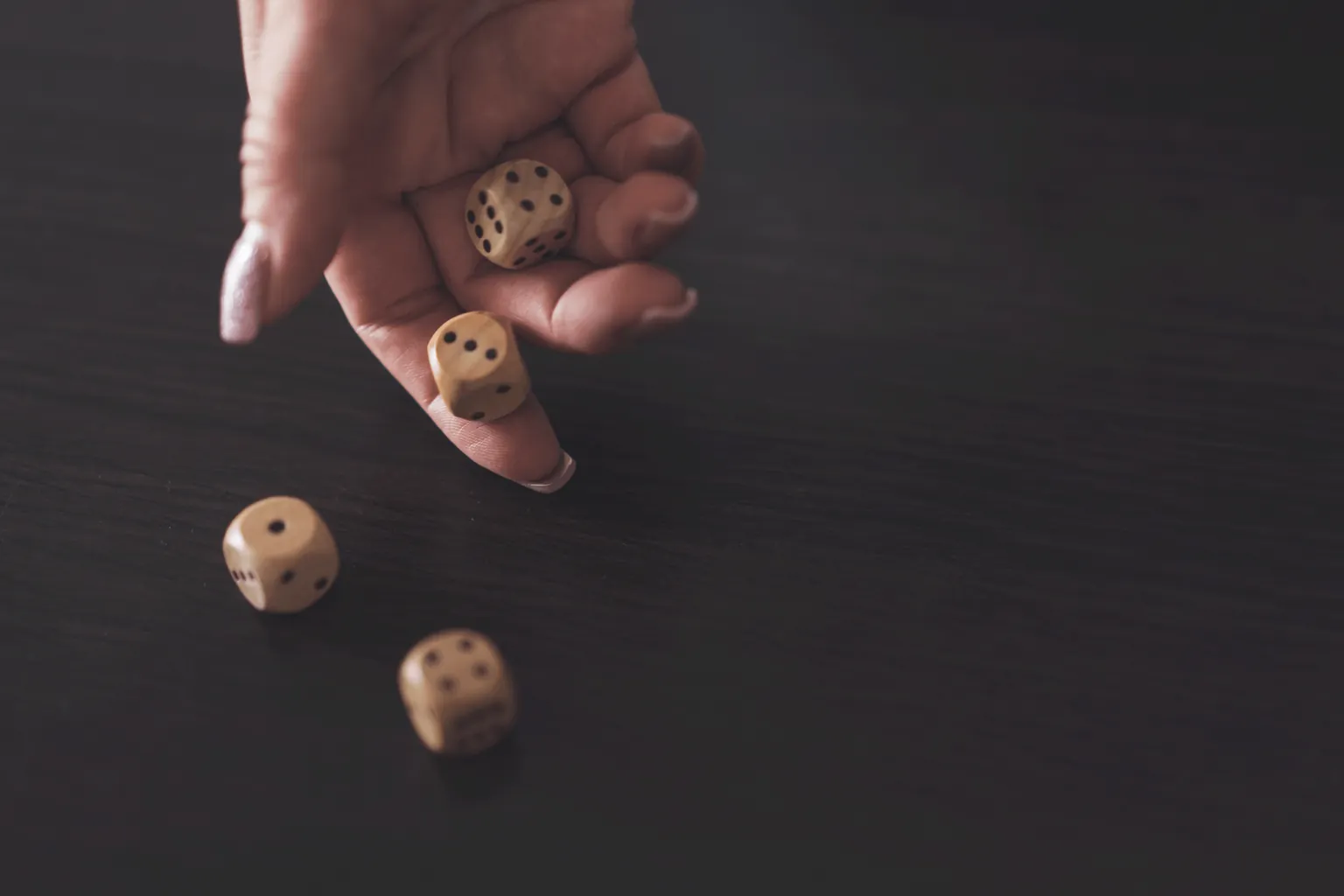
Roll two dice and add them; three dice for older kids. Variation: keep the highest die and double it.
Target Number, Kids' Edition
Draw four cards and a target number. Using additions and subtractions, who can hit the target or get closest to it?
Rhythmic Doubles
Clap hands while saying "3 and 3, 6; 4 and 4, 8". For young children, rhythm aids memory.
License Plates
In the car, add up the numbers on a license plate. The first one to find it calls out the answer, and the others check.
Chain Calculations
You call out "5", then "plus 3", "minus 2", "double it"... Your child keeps the total in mind until the end. It's also an excellent workout for working memory.
Two Minutes a Day, No More
Mental math consolidates through short, repeated sessions. Pick a moment that already exists: the drive to school, waiting at the doctor's office, five minutes before dinner. Once a game is mastered, your child can challenge you: they get to call out the math problems. To track progress without pressure, the challenge below offers ten math problems of your chosen type. Encourage them to beat their own score from one week to the next, never anyone else's.
Guiding errors constructively
When a result is incorrect, avoid giving the right answer immediately. Instead, ask: "How did you do that?" Often, children spot their own mistake while explaining. Value different strategies: for 9 + 6, one child might do 10 + 6 − 1, while another does 9 + 1 + 5. Both are excellent.
If counting on fingers remains indispensable for simple math by the end of 2nd grade (CE1, around ages 7–8), talk with their teacher: they can tell you which strategy is being worked on in class. In the meantime, games focused on complements and doubles remain the best help. For younger children who are just discovering quantities, our article on counting in daily life offers suitable ideas starting at age 4.
How can you find a complement without rushing?
To find how many more than six make ten, prepare ten suitable objects and place six in one group. Keep the other four visible and let your child count them. Then bring the groups together to check that there are still ten objects.
A quick answer is not needed on the first attempt. If a hidden group is too difficult, return to two visible groups. The printable number 10 house records several splits with a separate answer key; this game does not assess a school level.
To give division a meaning, distribute objects before asking for a quick answer. The sharing-with-remainders activity keeps the undistributed objects visible and reconstructs the total.
Frequently asked questions
What do we mean by math fluency?
It is the ability to give accurate answers quickly. The French elementary curriculum sets milestones, for example: nine mental math results in three minutes at the end of 1st grade (CP), twelve at the end of 2nd grade (CE1), and fifteen at the end of 3rd grade (CE2).
Is it a problem if my child still counts on their fingers?
No, fingers are a normal support early on. The goal is for them to become unnecessary for simple calculations, thanks to memorizing complements to 10 and doubles. Short, regular games help bridge this step.
How much time should be spent on mental math at home?
Two to five minutes a day is enough, preferably through play. Regularity matters much more than length.
My child calculates accurately but slowly, should I be worried?
Speed comes with automatic recall. If the answers are correct, keep playing games and let them beat their own personal bests. If the gap with the class worries the teacher, they will offer targeted advice.
To go further
Preview before choosing
Les Grands Curieux · Ages 7–10
For children who are beginning to read instructions on their own and enjoy playing with words, numbers, and riddles. An adult can help with reading.