
Table of Contents
Kitchen tasks sized just right for children
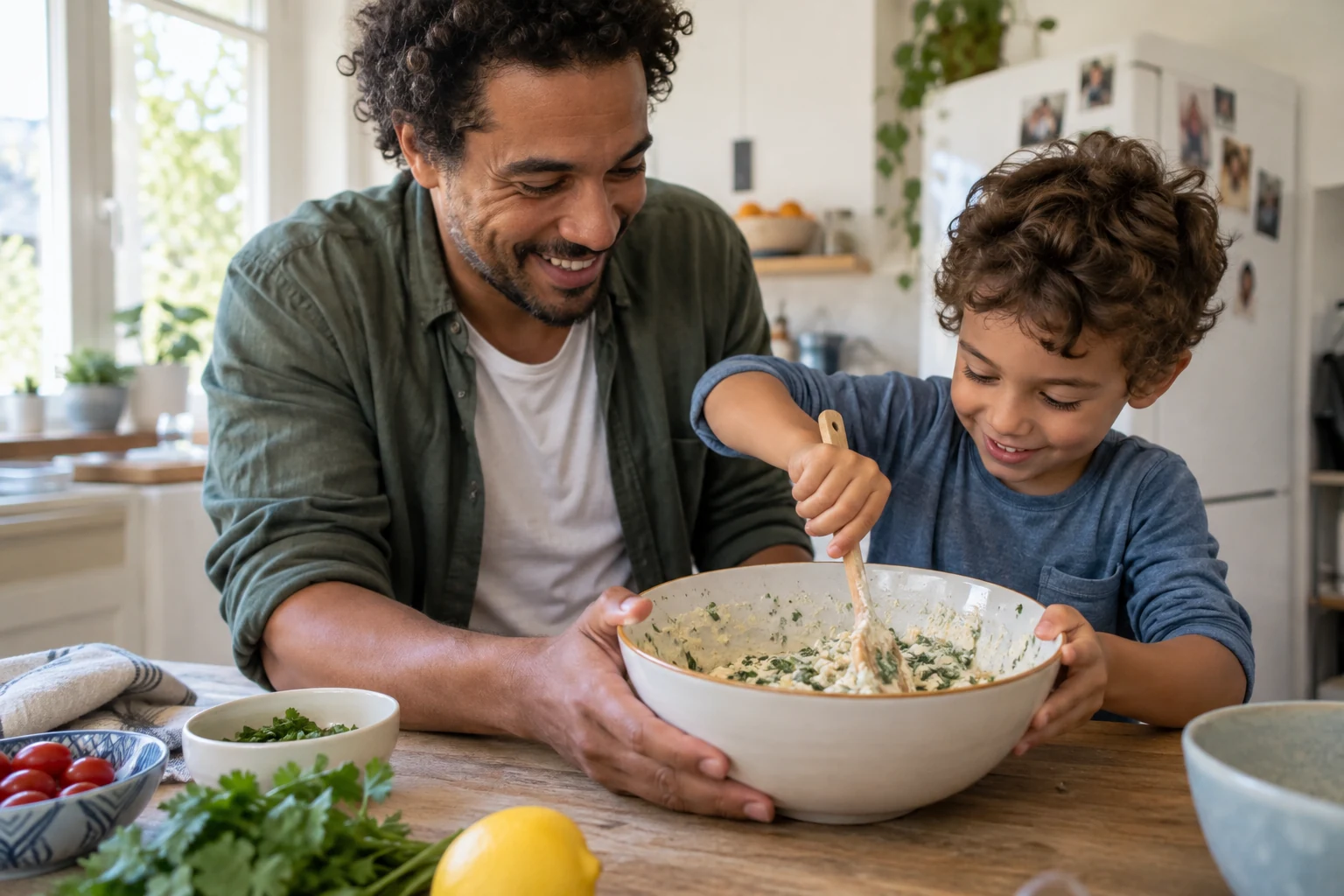
Preparing a meal together doesn't require following a complex recipe. A child can choose a piece of fruit, rinse vegetables under your supervision, pour pre-measured ingredients, or stir a cold mix with a big spoon. These steps invite them to join a real activity without giving them tools or steps that carry a risk.
Before starting, explain what you are going to make and show where everyone can sit or stand. Younger children often enjoy one mission at a time; a 7–10 year old can read a step, count spoonfuls, or take out ingredients. You remain responsible for sharp objects, electric appliances, and hot surfaces, even if your child wants to help more.
Set up a simple workstation
Wash your hands together with your child, tie back long hair, and clear a stable space. Take out only the necessary ingredients and place knives, boiling water, and appliances out of reach. A small container for peels and a kitchen towel within adult reach make cleanup easier without multiplying rules while your child is handling things.
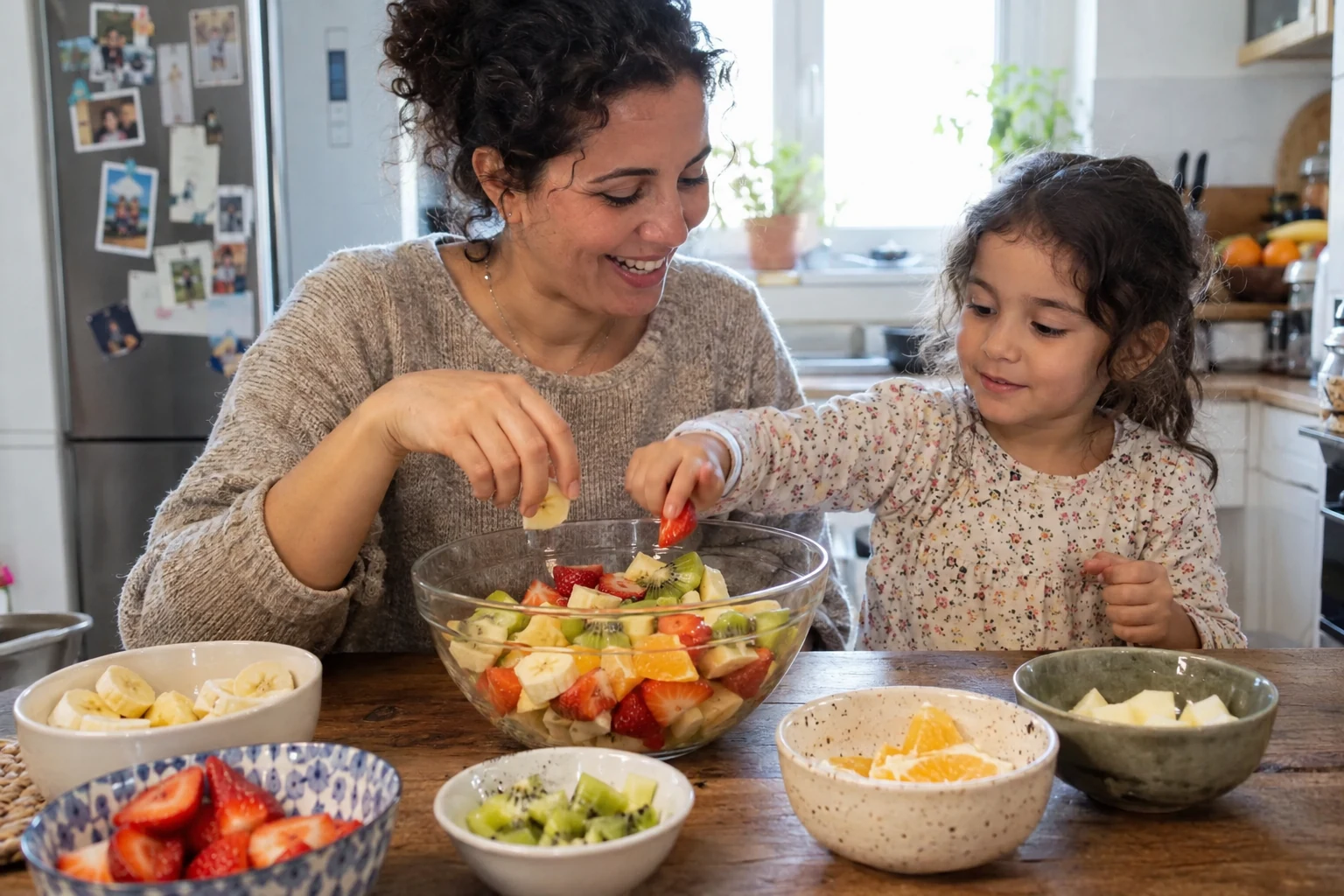
Choose a preparation that allows for breaks: fruit salad with fruit pre-cut by an adult, slices of bread to top, or cold batter to mix. Your child can arrange the pieces or choose the presentation. If the counter is too high, don't have them climb on an unstable chair; instead, set up their station at a suitable table and stay close by.
Discover foods without any pressure to taste
Talking about colors, smells, or textures can be an activity in itself. Your child can look at a whole fruit, smell an herb, or describe a shape. You don't need to turn it into a test where every food must be tasted. Let them decline or try later, then calmly continue cooking.
You can also explain where an ingredient comes from or ask what shape they recognize. An older child can pick a topping between two options. Stay factual and avoid promising that a new food will definitely be enjoyed. The shared moment can remain pleasant even if your child doesn't eat what they helped prepare.
To go further: Fine motor skills: 8 short games to practice finger control without pressure.
Keep hygiene practices visible
After handling raw meat or fish, wash hands, utensils, and surfaces before moving on to other foods. Keep raw foods separate from ready-to-eat foods, and refrigerate preparations when needed. These steps belong to the adult; you can name them briefly without asking your child to monitor meal safety themselves.
If your child loses patience, finish the risky task yourself and ask them to pick out napkins or set the silverware. A brief participation is better than a session that drags on until everyone feels rushed. Cleanup can be shared using a soft sponge, far from cleaning products, before you put dangerous objects away.
A no-cook mix-and-match recipe
Pre-cut fruit into sizes that are safe for your child's age, then let them choose what they want to arrange in a bowl. They can count the pieces, alternate colors, or name the ingredients. The adult does the cutting and checks food storage. If your child doesn't want to taste it, they can simply help set the table.
To go further
Preview before choosing
Les Petits Explorateurs · Ages 4–6
For preschool and early elementary children discovering shapes, numbers, and the fun of drawing lines. An adult reads the instructions.