
Table of Contents
Clear the area before starting
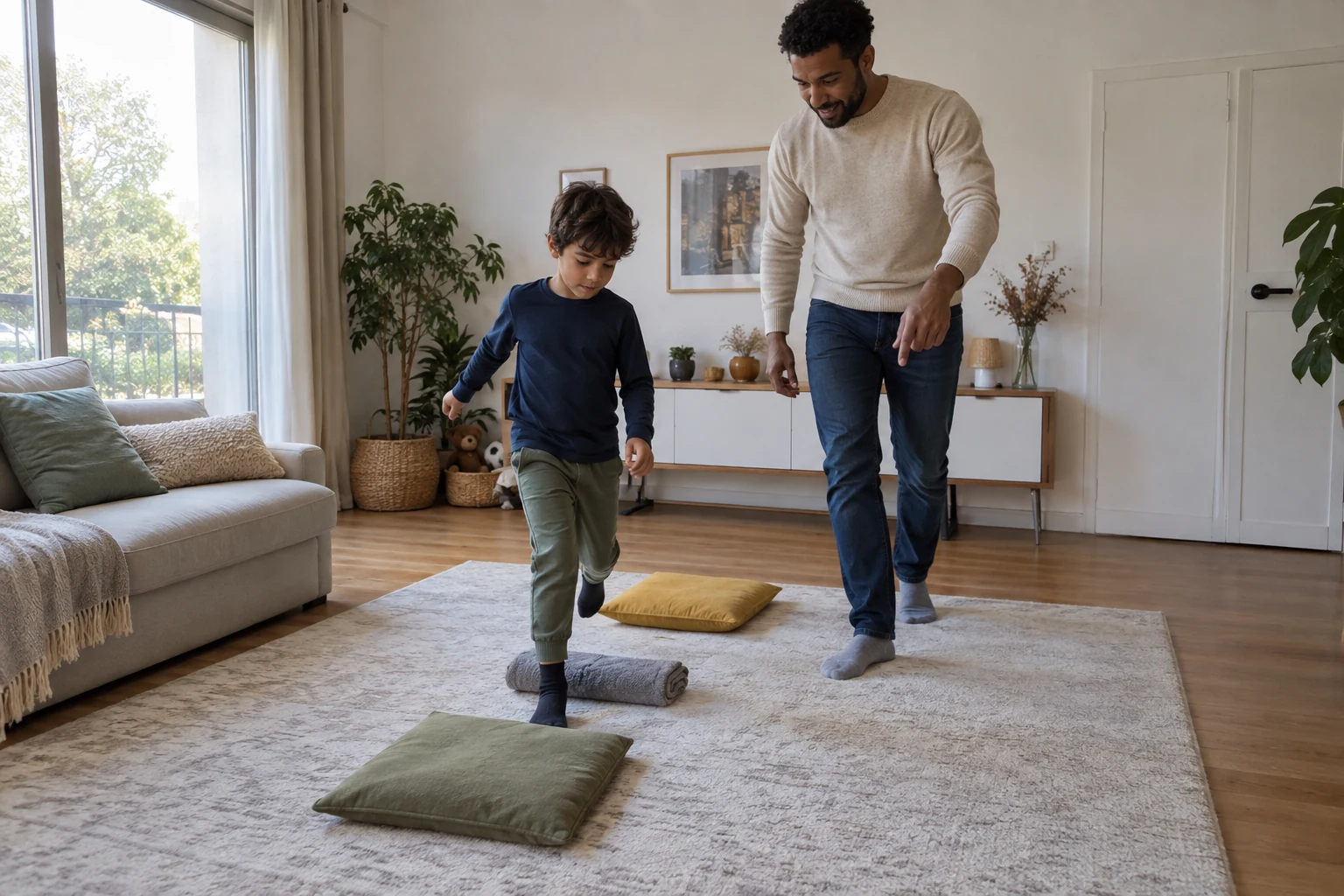
When the weather or the day's flow calls for staying indoors, a little active play offers a welcome break. Before starting, push fragile items aside, clear the floor, and make sure nothing is slippery. Pick a area where your child can stop without bumping into furniture. An adult stays in the room during play.
The activities here take place on the floor: walking, stepping around, stretching, or dancing without climbing on furniture. Do not use the couch, a chair, or a table as an obstacle. Your child can choose to walk the course instead of jumping, or stop if they feel uncertain. The goal is to move according to their own abilities, not to put on a performance.
Seven simple ideas to fit the room
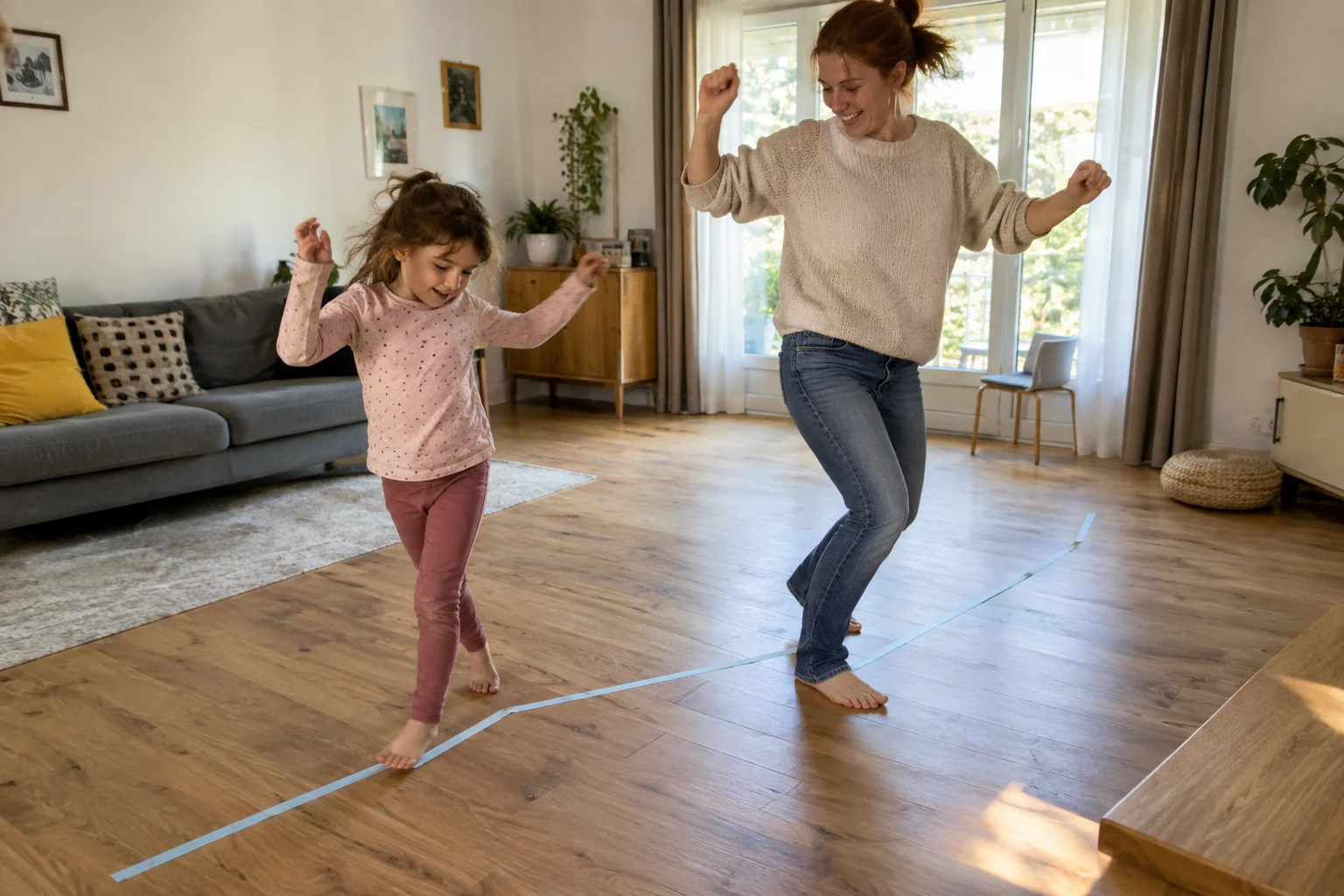
1. Follow a chalk line drawn on a large piece of cardboard placed on the floor. 2. Step over a rolled-up towel. 3. Walk slowly and then quickly to the rhythm of music. 4. Imitate animal movements. 5. Strike a freeze-pose when the music stops. 6. Toss a rolled-up pair of socks into a basket on the floor. 7. Set up a path around stable cushions, without stacking them.
Pick one or two ideas, then let your child adapt them. They might give the course a name, act as the guide, or invite an adult to play along. With 7–10 year olds, add a sequence of movements to remember or a change of direction. For younger kids, keep the path short and demonstrate each move before starting.
Follow your child's pace
Offer the game with a flexible duration: for one song, three rounds, or as long as your child wants to play. Some children enjoy repeating the exact same path; others want to change moves on the very next try. You can join in, show a variation, or simply count the rounds out loud.
If your child trips, gets frustrated, or shows signs of fatigue, pause the game and check that the area stays safe. You don't need to press them to "finish the course." A rest break, a glass of water, or a quiet activity might be the right next step for that moment.
To go further: Fine motor skills: 8 short games to practice finger control without pressure.
Playing together without competing
As a family, everyone can pick a movement for others to copy: raise your arms, take three steps sideways, or touch a color in the room. An older child can design the route while a younger sibling follows along in their own way. Give everyone a role they like, without comparing speed or precision.
For the sock game, place the basket a short distance away and let each child throw from the same spot if they wish. You can also take turns tossing toward a target drawn on the floor. Stick to soft items, remove small parts, and avoid aiming at anyone's face.
The color course
Place three colored sheets on the floor, spaced a few steps apart. Call out a color and invite your child to walk to the matching sheet. For variety, sidestep like a crab, take a step backward, or let your child pick the next move. Secure the sheets with floor-safe tape to keep them from sliding, and remove them when play is done.
To go further
Preview before choosing
Les Grands Curieux · Ages 7–10
For children who are beginning to read instructions on their own and enjoy playing with words, numbers, and riddles. An adult can help with reading.