
Table of Contents
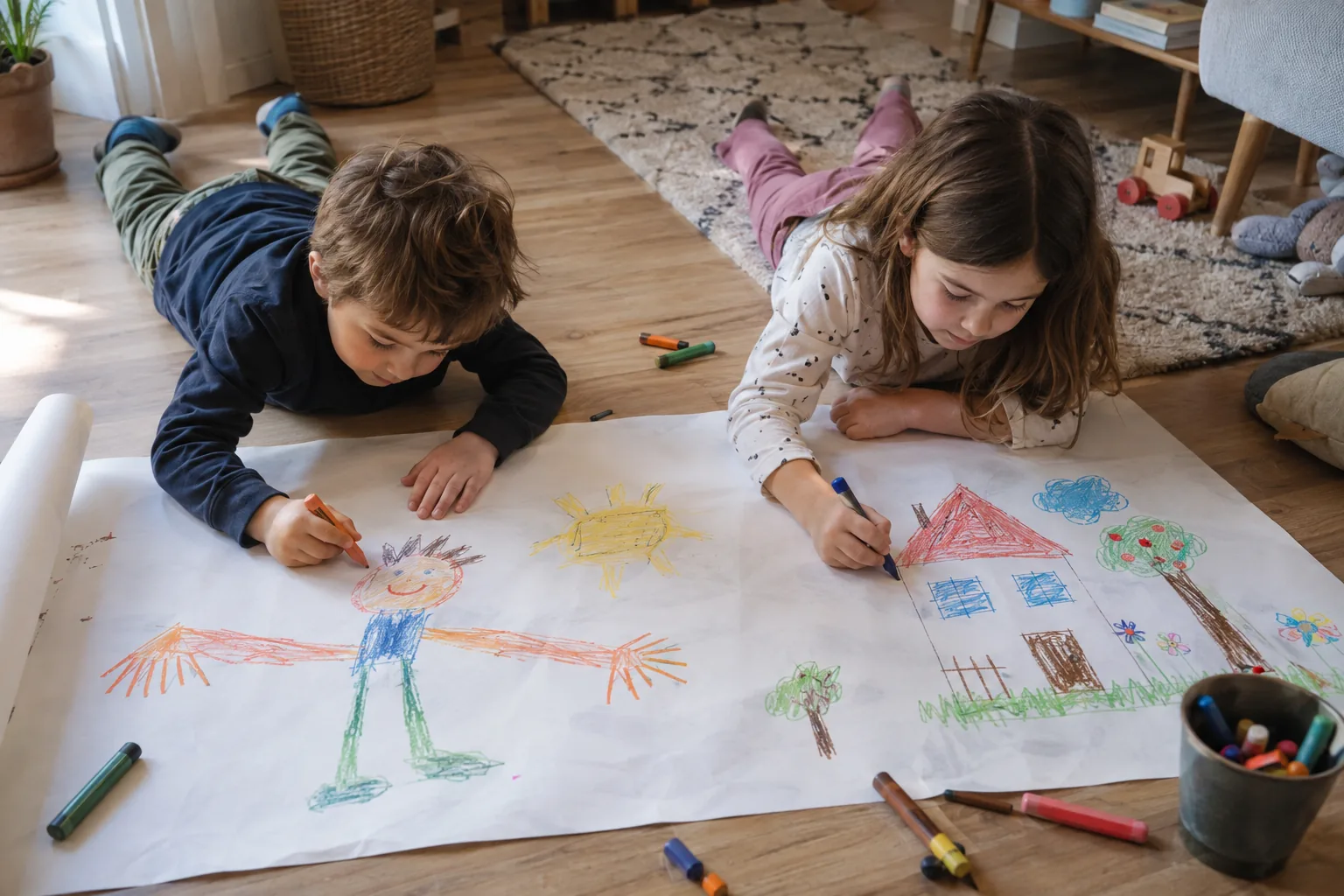
Energetic scribbles at age 2, a "tadpole stick figure" made entirely of a head at age 3, a house where you can see inside at age 6… Children's drawings change dramatically over the years, and each stage shows how a child sees and understands the world. Knowing these stages helps you look at their drawings differently, talk about them thoughtfully, and encourage them without correcting. Here is the evolution of children's drawing, illustrated with animations, along with our advice for supporting this wonderful creative outlet.
Why drawing matters so much
Drawing is self-expression, fine motor practice, and cognitive organization all at once. French preschool guidelines highlight this: from the earliest preschool year (Petite Section, around age 3), student drawing progresses from initial random marks to controlled, intentional movements. Teachers value every drawing during class discussions, which also builds language skills. They also set aside dedicated time for free drawing.
At home, drawing is often one of a child's first independent activities, and one of their first ways to tell stories about their life. It also prepares the hand for writing: our articles on pencil grip and fine motor skills games build on this work.
The main stages of drawing
In the early 20th century, philosopher Georges-Henri Luquet outlined developmental stages that remain famous and have since been referenced by numerous researchers and educators. Ages are approximate: every child progresses at their own pace.
Scribbling, around age 1 to 2
Toddlers discover that a movement leaves a mark. They scribble for the pure joy of the motion, often using their whole arm. There is no intention to represent something yet.
Fortuitous realism, around age 2 to 3
One day, the child notices that one of their markings looks like something: "It's a snake!" They name their drawing after making it. The first closed circles and suns start to appear.
Failed realism, around age 3 to 4
Children now announce what they are going to draw, but the result does not always look like it yet. This is the era of the famous tadpole figure: a large circle for the head and body, with legs and sometimes arms branching directly off the head.
Intellectual realism, around age 4 to 8
Children draw what they know about things rather than what they see. This brings "see-through" houses showing the furniture inside, tables shown from both above and the side, and front-facing faces with a profile nose. The person drawing becomes complete: a body, arms, hands, and clothes.
Visual realism, starting from age 8 to 9
Children seek to represent what they see, using perspective, proportions, and shading. They also become more critical of their drawings, and some kids start drawing less out of fear of "failing."
How to talk about their drawings
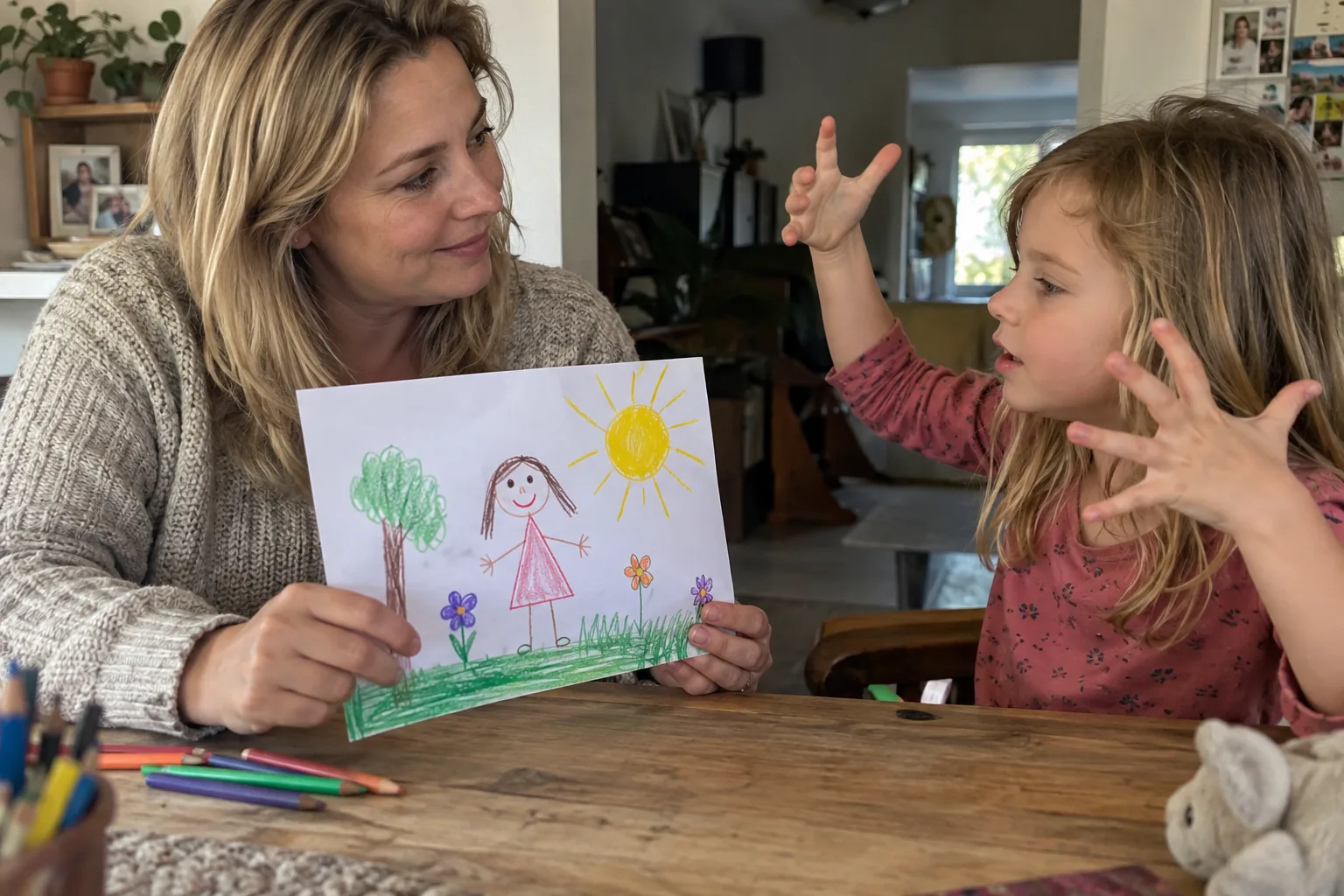
"What is it?" often upsets children, especially if they think it is obvious. Try "Tell me about your drawing" instead, or describe what you see: "You used a lot of blue," "That line goes up really high." You show interest without judging, and your child will want to share more.
Generic praise ("It's gorgeous!") is quickly forgotten. A specific observation is much more rewarding: "I love the big arms on your stick figure—it looks like it's giving a hug."
Don't correct, don't do it for them
A green sun, a cat bigger than a house, a person with no neck: these are not errors, but how children represent the world at their age. Avoid correcting them or drawing in their place: they might compare their drawing to yours and feel discouraged. If your child asks you to show them how to draw something, do it simply on another sheet of paper, then let them try in their own way.
Varying tools and formats
Preschool guidelines encourage drawing with varied tools—charcoal, oil pastels, markers—and on large scale surfaces, sometimes vertically, starting with broad movements. At home, switch things up: big sheets on the floor or taped to the wall, sidewalk chalk, finger paint, or colored pencils for details. Changing tools often reignites the desire to draw. Our creative activities without complex materials offer extra ideas.

Keep a record
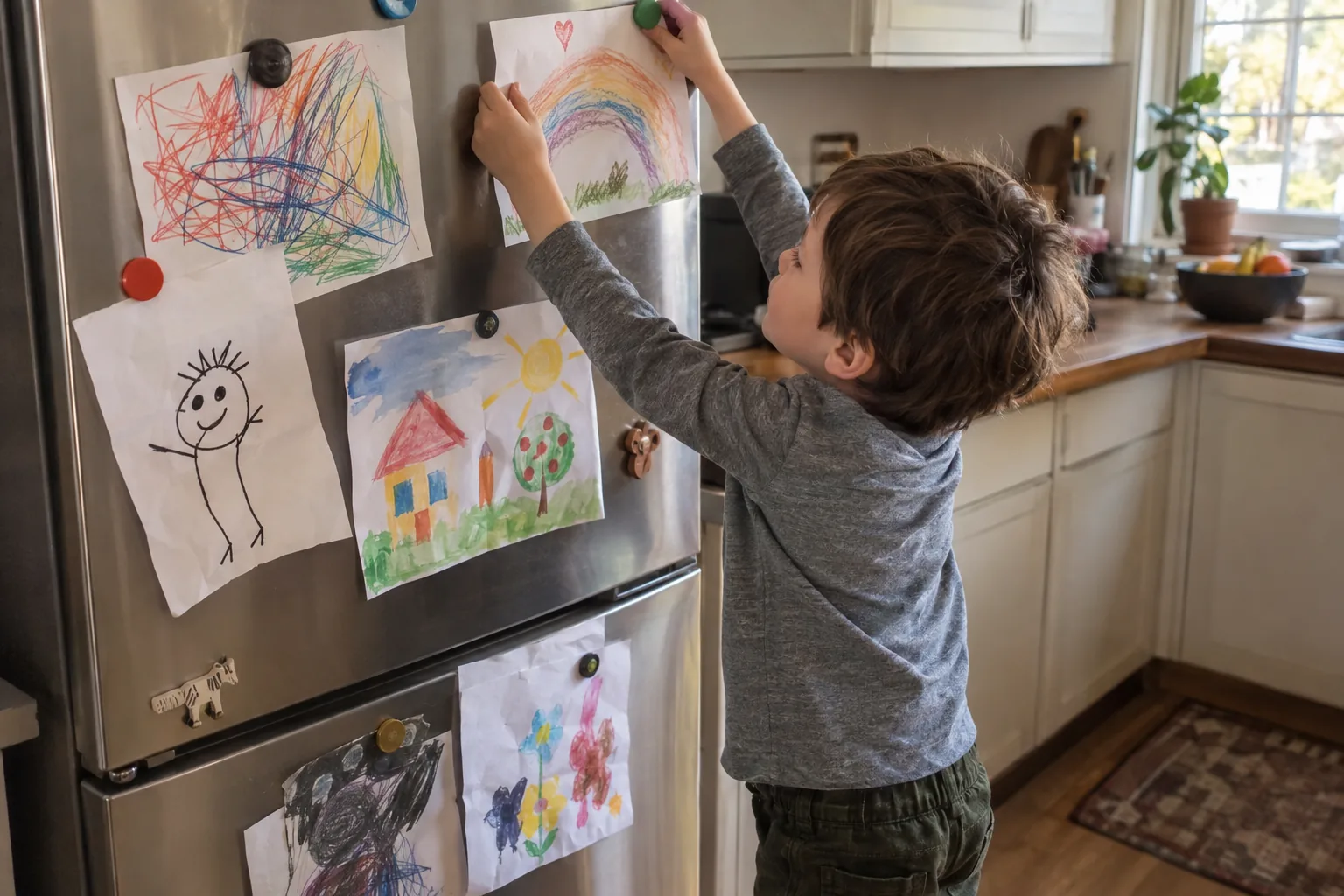
Date the drawings, write on the back what your child says about them: preschool curriculums actually recommend dating and annotating artwork to track progress over time. A binder, a treasure box, or an art display wall updated each month—looking back at old drawings is a huge source of pride for a child.
What about interpreting drawings?
You sometimes hear that a drawing reveals a child's secrets. It is best to be cautious: dark colors, a missing person, or a house with no windows often have very simple explanations, like choosing the closest pencil or a fleeting whim. Professionals who analyze drawings do so within a strict context, never based on a single artwork. If your child's behavior concerns you, listen to them directly rather than reading into their drawings.
To inspect a line without judging the drawing, ask whether its ends meet. The open and closed line activities keep that question separate from drawing skill.
Frequently asked questions
At what age does a child draw a person?
The tadpole figure usually appears around 3–4 years old. A person with a full body, correctly placed arms, and legs develops gradually between ages 4 and 6.
My 4-year-old only scribbles, should I worry?
Not necessarily: every child develops at their own pace, and some draw less because they prefer other activities. Regularly offer varied materials with low pressure. If you are concerned about other developmental delays, speak with your pediatrician.
My child always draws in black, is that a sign of sadness?
Not necessarily. Black is often picked because it stands out clearly or is simply within reach. Focus more on observing their daily mood and talk with them about their drawings.
My 9-year-old doesn't want to draw anymore, what should I do?
Around this age, many kids become critical of their art. Offer lower-pressure forms of expression, like comics, collages, or guided observational drawing, and focus on the fun rather than the result.
To go further
Preview before choosing
Les Petits Explorateurs · Ages 4–6
For preschool and early elementary children discovering shapes, numbers, and the fun of drawing lines. An adult reads the instructions.