
Table of Contents
"Where is the other apple? I'm sure it was right here!" Memory games are among kids' absolute favorites, and they often beat adults at matching games. Memory isn't a single container: remembering instructions, recalling a vacation, knowing the days of the week, and riding a bike all use different types of memory. They can all be trained through play. Here are the main memory systems explained simply, an interactive matching game, nine other equipment-free games, and the tips that truly help with retention.
Multiple types of memory, not just one
Inserm (the French National Institute of Health) describes several memory systems working together. Working memory is the memory of the present: it keeps and processes information during a task, such as remembering a direction or an intermediate math result. Episodic memory stores personal life experiences linked to time and place. Semantic memory holds general knowledge about the world and word meanings. Procedural memory handles automatic skills: riding a bike, tying shoelaces. Added to these is perceptual memory, which relies on our senses.
The games in this guide primarily focus on working memory and visual memory, both highly useful at school: following multi-step directions, remembering spelling, or holding a number in mind during mental math.
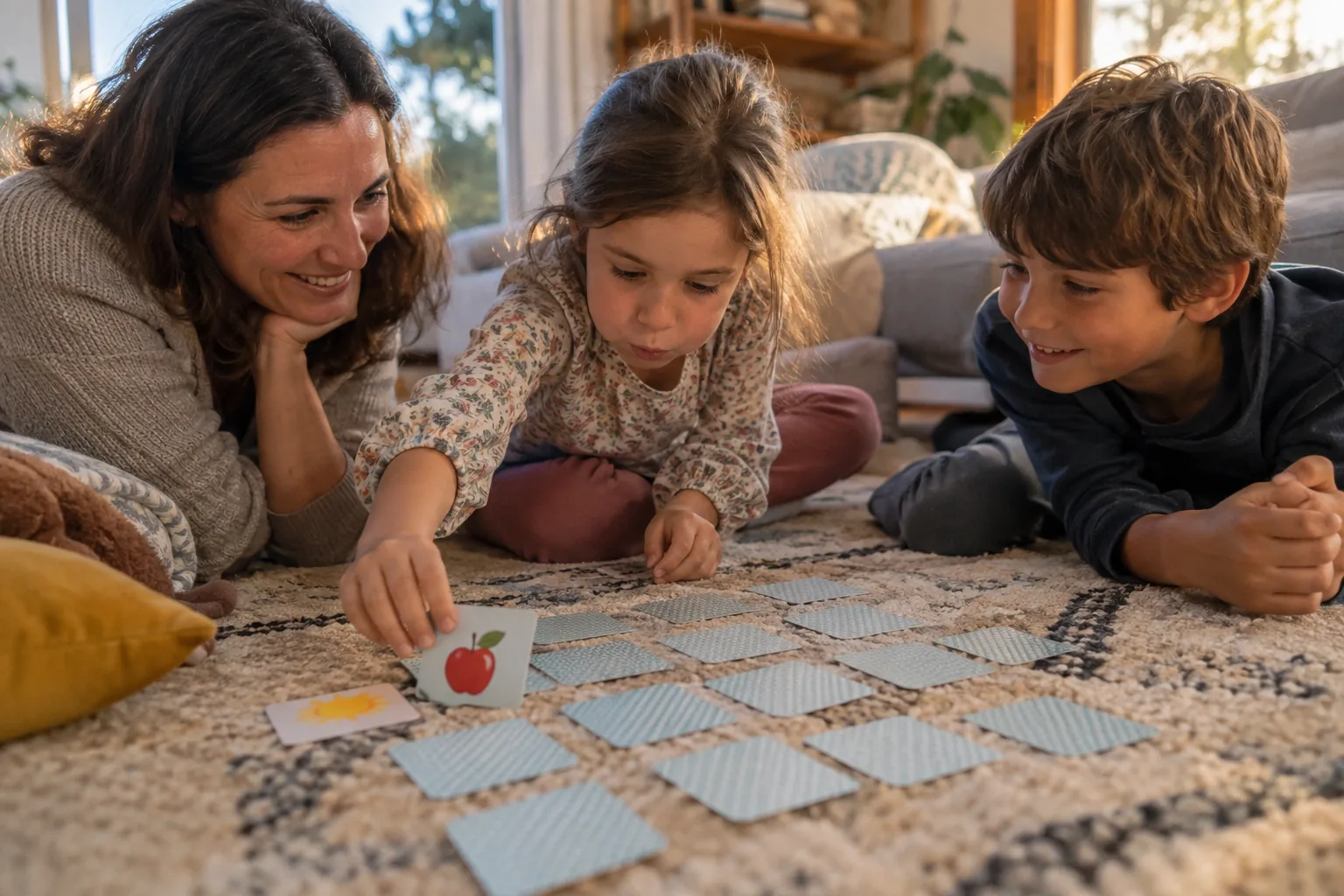
Milo's matching game
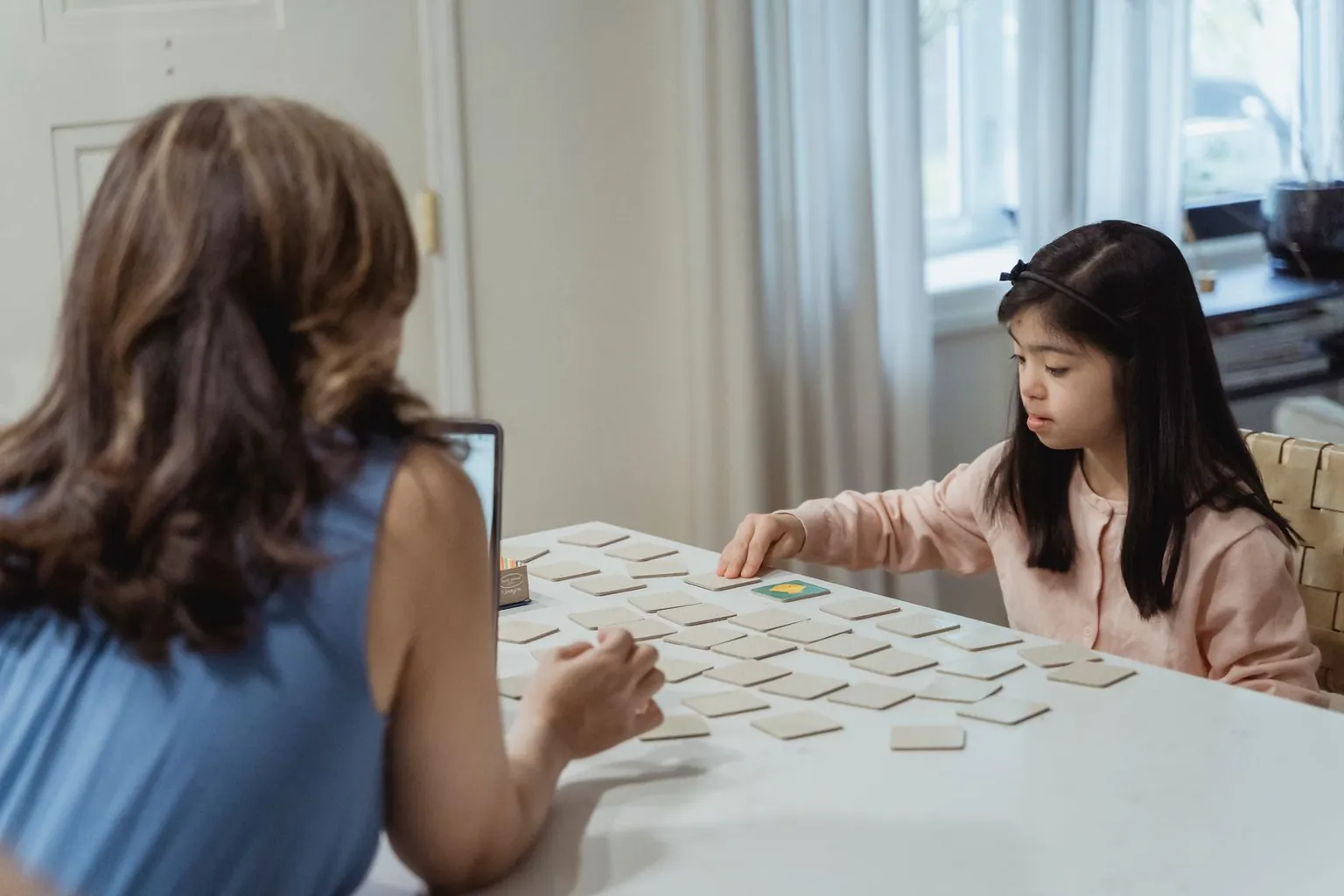
This is the classic game: face-down cards where you flip two each turn and keep the matching pairs you find. To succeed, players must remember the location of previously revealed pictures. Start with fewer pairs for younger children and increase as they improve.
At home, a matching game can be made in a few minutes: two copies of each picture, glued onto matching pieces of cardboard. Children love drawing their own cards.
Nine other memory games
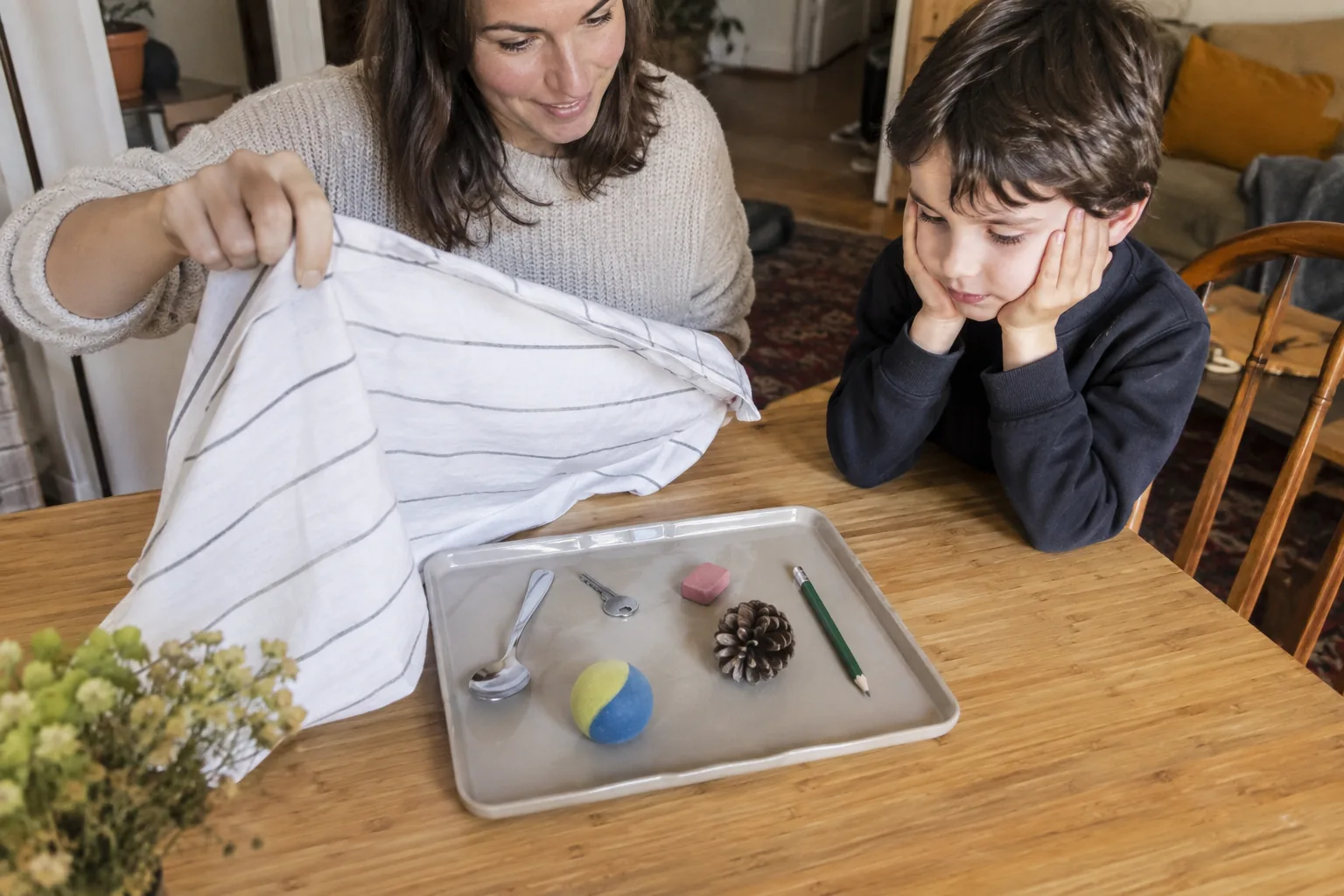
Kim's game
Place six to ten small objects on a tray, let your child observe them for one minute, then cover them with a dish towel. How many can they name? Variation: secretly remove one object and ask which one is missing.
I'm going on a trip and I'm bringing...
Each player repeats the list of items already named and adds a new one. Who can keep going the longest? A perfect game for car rides.
What changed?
Your child observes a room and steps out; you move one item, and when they return, they have to spot the difference.
The conductor
Clap a rhythm with your hands; your child repeats it. Then extend it by one beat. Rhythms train auditory memory.
Multi-step directions
"Go get a book, set it on the couch, and jump back over here." Start with two steps and add one more with every success.
Simon says, sequence edition
Chain together several movements that the child must repeat in exact order: raise arms, spin around, sit down.
Recounting the day backward
In the evening, tell the story of the day starting from the end. A fun challenge for episodic memory.
Nursery rhymes and poems
Learning a short rhyme or poem trains memory for words and rhythm. Preschool and kindergarten classrooms dedicate a lot of time to this.
Memory portrait
Look at a picture for a few seconds, then hide it and describe it: colors, characters, fine details.
Tips that truly help you remember
Beyond practice, memory capacity expands greatly when kids discover useful strategies. Show them a few while playing:
- Group items: to remember "apple, car, banana, truck," group the fruits together and the vehicles together.
- Create a visual mental image: imagine a banana driving a big truck. The sillier the mental image, the better it sticks.
- Repeat out loud: working memory retains information much better when we repeat it to ourselves.
- Tell a story: connecting items through a short narrative makes them much easier to recall.
These techniques come in handy everywhere: for spelling lists, multiplication tables, or learning poems. Our articles on multiplication tables and mental math games build on these exact principles.
Sleep, memory's greatest ally
Inserm researchers remind us: sleep significantly boosts memory performance, whereas sleep deprivation disrupts recall and learning. During the night, the brain consolidates what it learned during the day. Reviewing a poem right before bed, and again the next morning, is a highly effective trick. To check if your child gets enough rest, our article on how many hours of sleep a child needs offers guidelines and a calculator.
Frequently asked questions
At what age can kids start playing matching memory games?
Starting as early as age 3 with four to six pairs of distinct images. You can then increase the card count and choose images that look more alike as the child progresses.
My child always forgets directions, what can I do?
Give one short instruction at a time, making sure they are looking at you. Ask them to repeat it back in their own words. Games with multi-step directions actively train this skill.
Are memory game apps useful?
They can be fun, but their benefits often stay limited to the app itself. Family memory games—combining conversation, physical movement, and shared joy—remain far more enriching.
Can a child have a better memory than their parents in a matching game?
Yes, it happens often, and kids take great pride in it! Take the opportunity to highlight their strategies: "How did you remember where the apple was?"
To go further
Preview before choosing
Les Petits Explorateurs · Ages 4–6
For preschool and early elementary children discovering shapes, numbers, and the fun of drawing lines. An adult reads the instructions.