
Table of Contents
- What rule should you explain first?
- What materials do you need for a short round?
- How do you remove one object without changing the scene?
- How is this different from a matching-pairs game?
- What if your child cannot name the missing object?
- How do you use the sheets and finish a round?
- Frequently asked questions
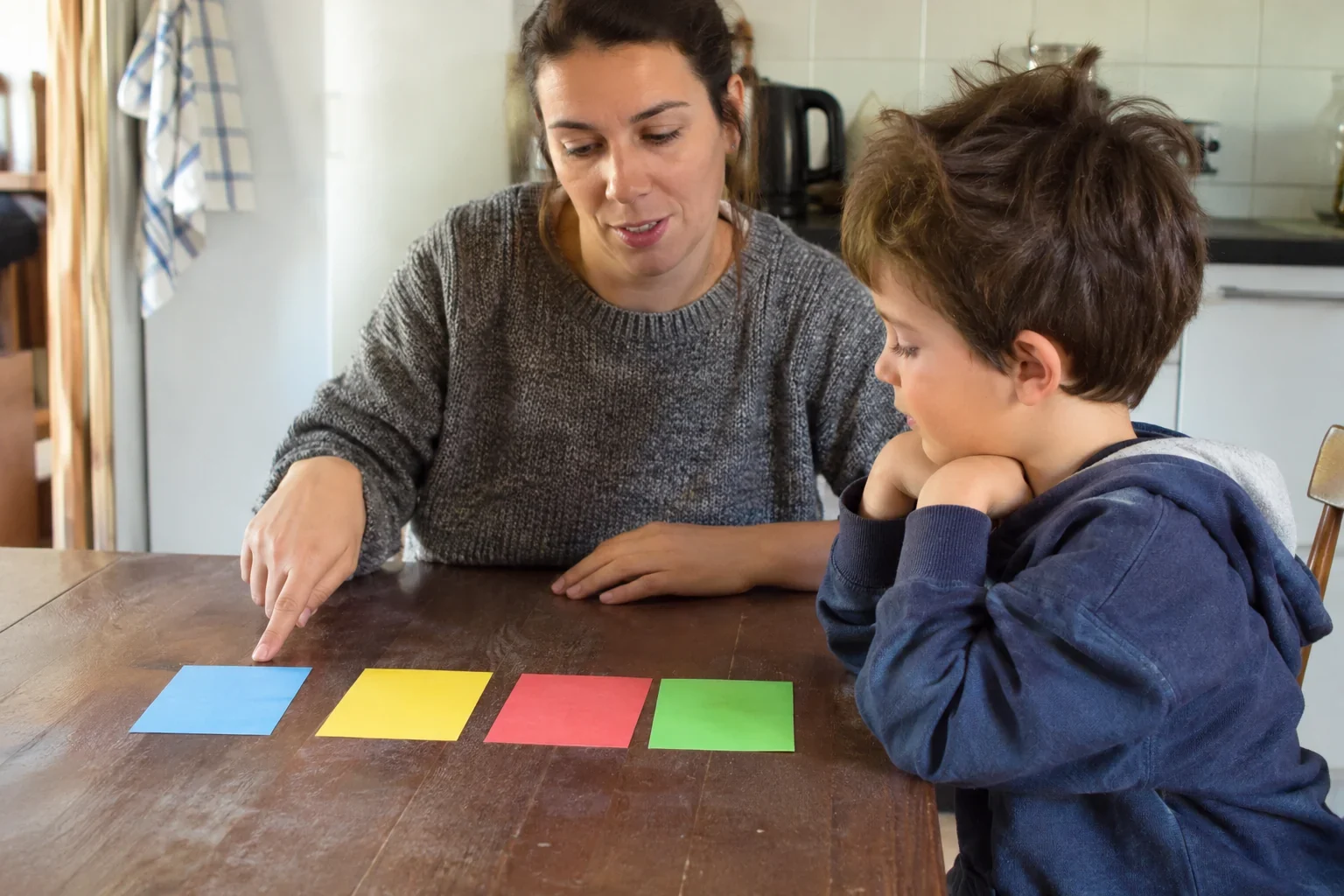
To play Kim’s game, show a few familiar objects and let your child observe them before covering the tray. Remove just one object, then uncover the tray. Your child identifies what is missing, and you check against the starting arrangement. Start simply, without a timer or required score.
What rule should you explain first?
Ask one question: “Which object was removed?” This version does not ask for every object to be named or for their order to be reconstructed. Those are other possible games, but changing the task during a round makes the answer harder to interpret.
French education resources describe several versions of visual Kim’s game, including removed or added cards. This activity keeps one change at a time. It is neither a memory test nor a program that guarantees school progress. For another format, explore our memory games guide.
What materials do you need for a short round?
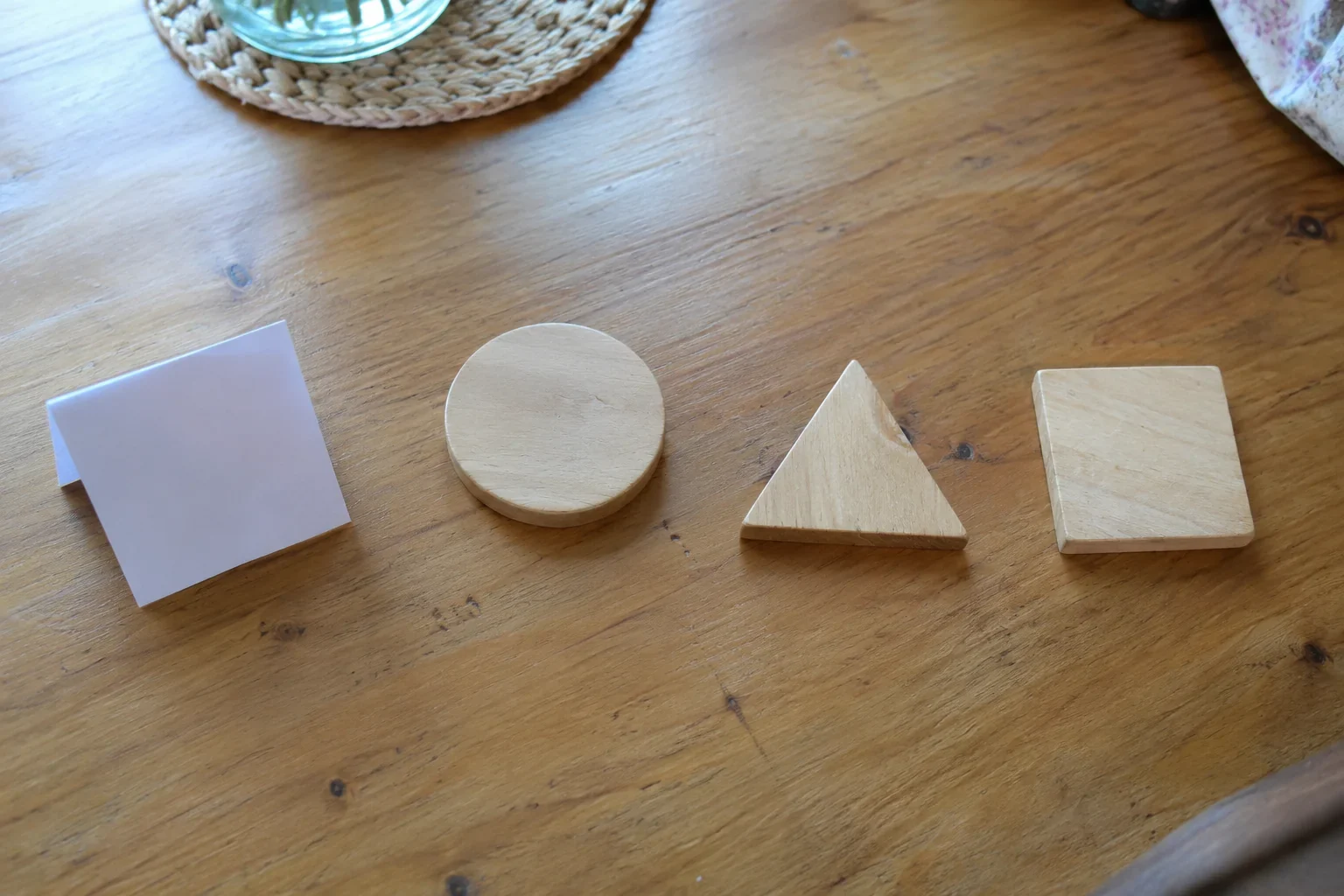
Choose large cards or child-appropriate objects that are easy to tell apart and name. Avoid small parts that could be swallowed. An opaque cloth and a clear surface are enough; an adult supervises handling and keeps the objects out of view while removing one.
The age bands suggest variations, not milestones to pass. Adjust the number of objects and the vocabulary first. Photographs illustrate possible materials; the activities and worksheets define the exact shapes and answers used here.
| Suggested option | Materials | Reference | Adjustment |
|---|---|---|---|
| Ages 4–6 | 3 large cards | Familiar names | Point before naming |
| Ages 7–10 | 3 or 5 cards | One item removed | Choose support together |
How do you remove one object without changing the scene?
Name the objects together before covering them. Allow time to look without imposing a universal duration. Cover the tray, remove one item, and leave the rest in place. Uncover it and ask which object is missing. Do not also change colors, the number removed, and the order within the same attempt.
The first activity offers three or five shapes. After observing, remove one and choose the missing shape. Changing the set size or observing again clears the previous result. You can always reveal the starting arrangement; that button is support, not a penalty.
Which item was removed?
Observe the names and shapes. Then remove one shape, choose an answer, and check. Revealing the scene or changing the set size clears the result.
Without JavaScript, use the sheets or three large cards. Name them, cover them, remove one, and uncover. Compare with the starting scene after answering.
That is the item removed in this round.
That shape is still present. Reveal the scene and try again if you wish.
How is this different from a matching-pairs game?
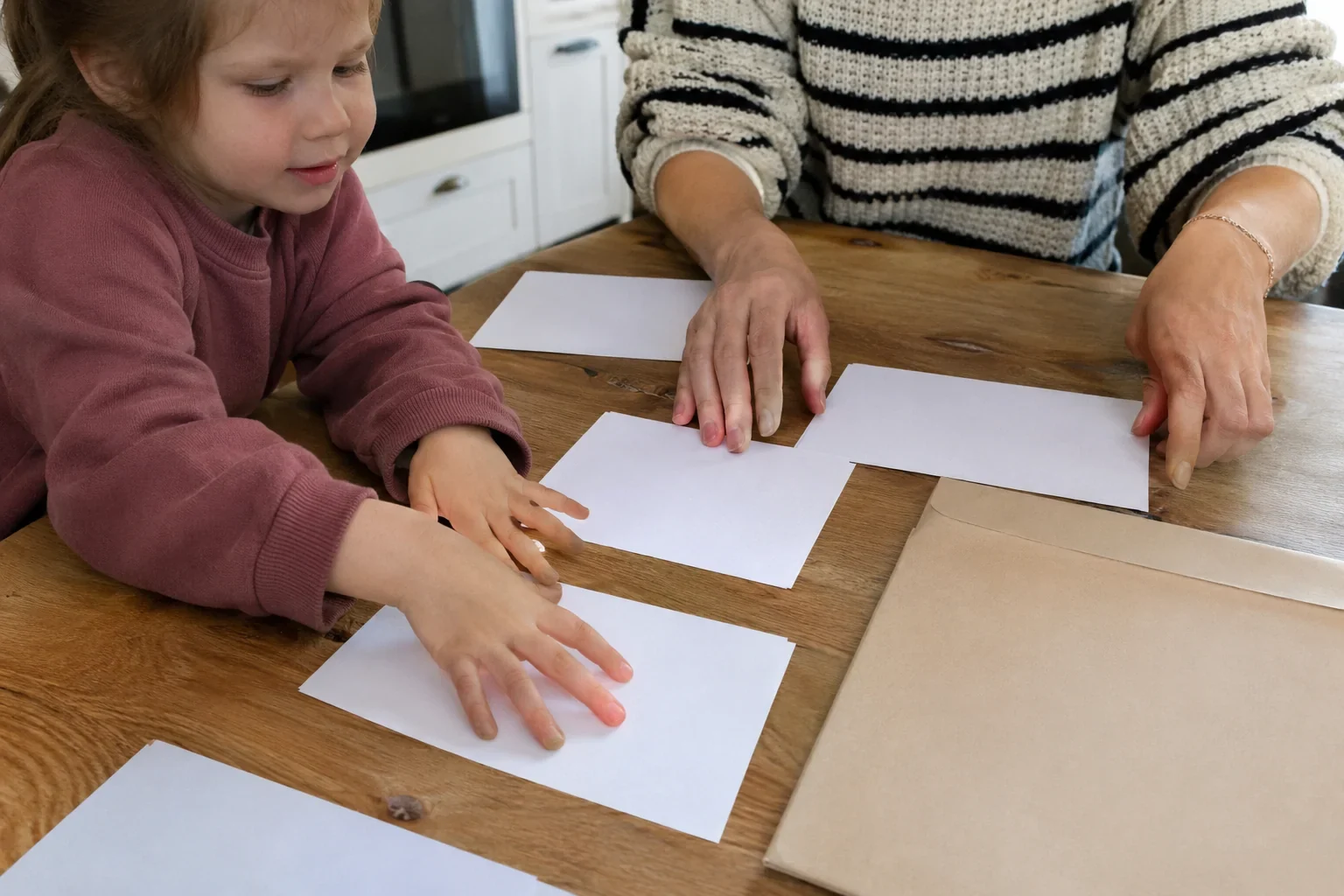
In a matching-pairs game, players look for two cards that belong together among face-down cards. In this version of Kim’s game, one item is missing from a set already observed. Explain the difference before comparing rounds: they do not ask for the same answer.
The French-language video demonstrates Kim’s game. The English and Spanish resources demonstrate matching pairs so you can compare the two rules; they are not answers to our tray activity. The quiz below revisits the distinction without assigning your child an ability level.
Choose the right rule
What if your child cannot name the missing object?
Show the starting scene again and let your child point before speaking. Check that the object names are familiar. Reduce the set or keep a starting picture for comparison after answering. This changes the available support; it does not measure a general ability.
If your child counts empty spaces instead of naming an item, clarify whether you want a number or an object. Our everyday counting guide addresses quantity. Here, an answer identifies a particular shape rather than just noticing that one fewer item remains.
How do you use the sheets and finish a round?
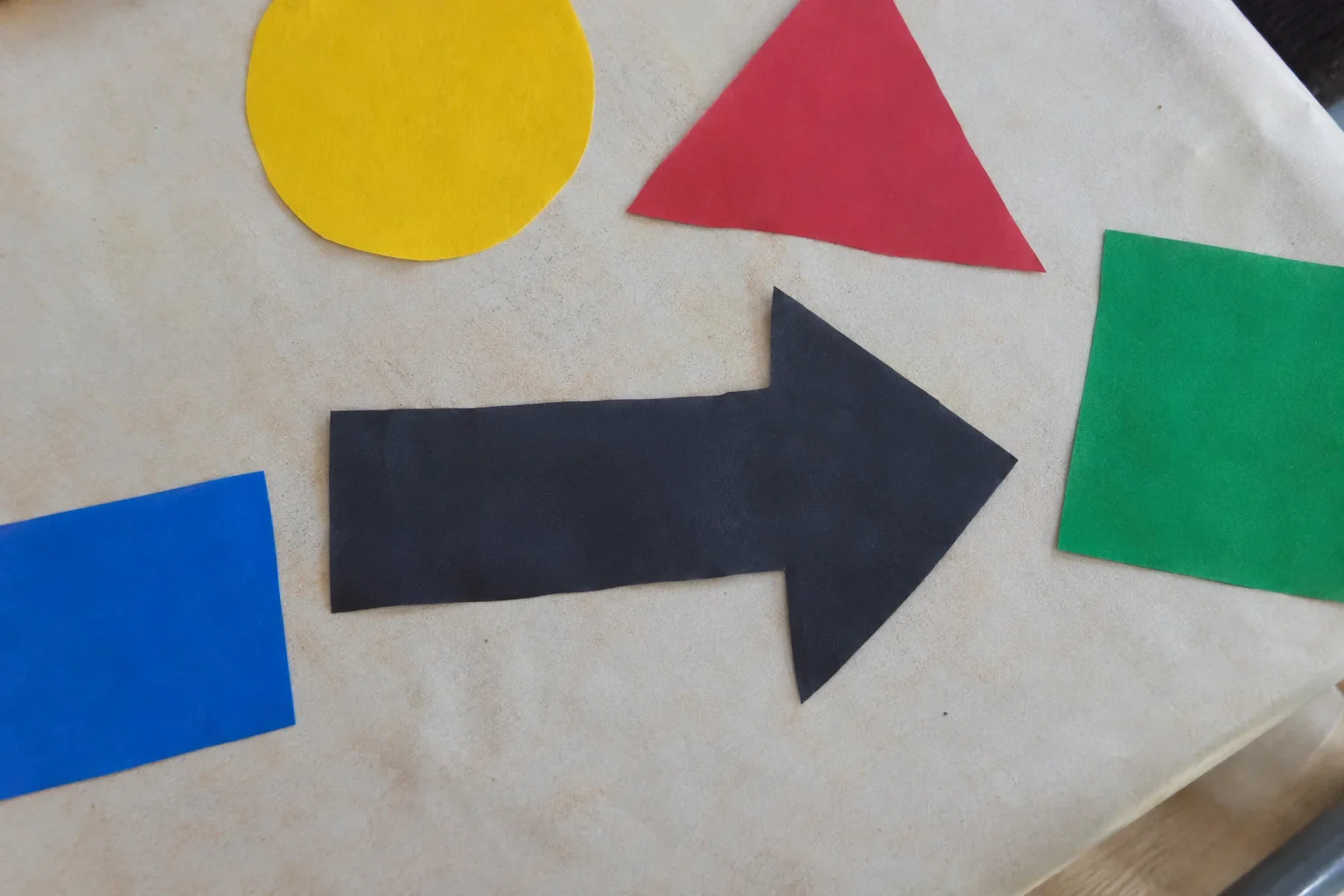
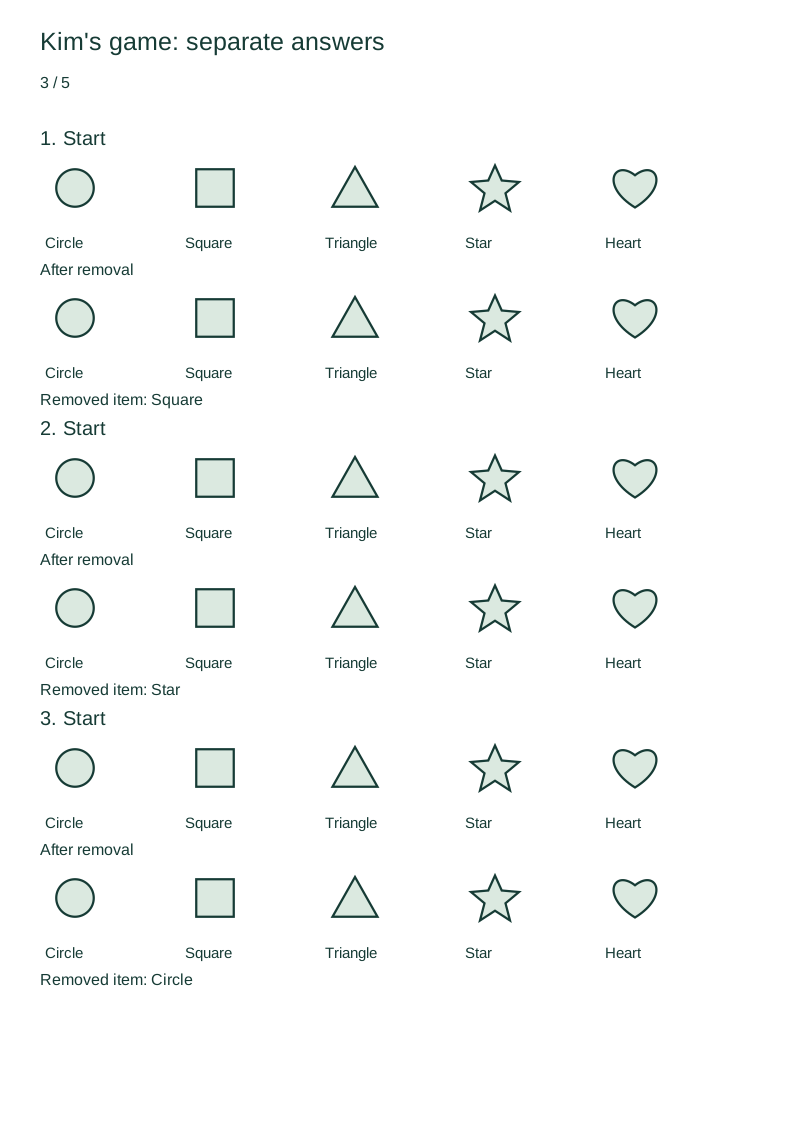
Open the sheet in your chosen language. It shows a starting scene and a scene after removal. Cover the second scene with paper first, then cover the first while identifying the missing item. Keep the answer sheet separate until checking. Without a screen, draw large shapes and follow the same steps.
You can stop after one attempt. For a different activity without adding a memory demand, a simple maze keeps its route visible. Hepaly PDFs are commercial 64-page French workbooks to download and print; this article’s free sheets are available in all three languages.
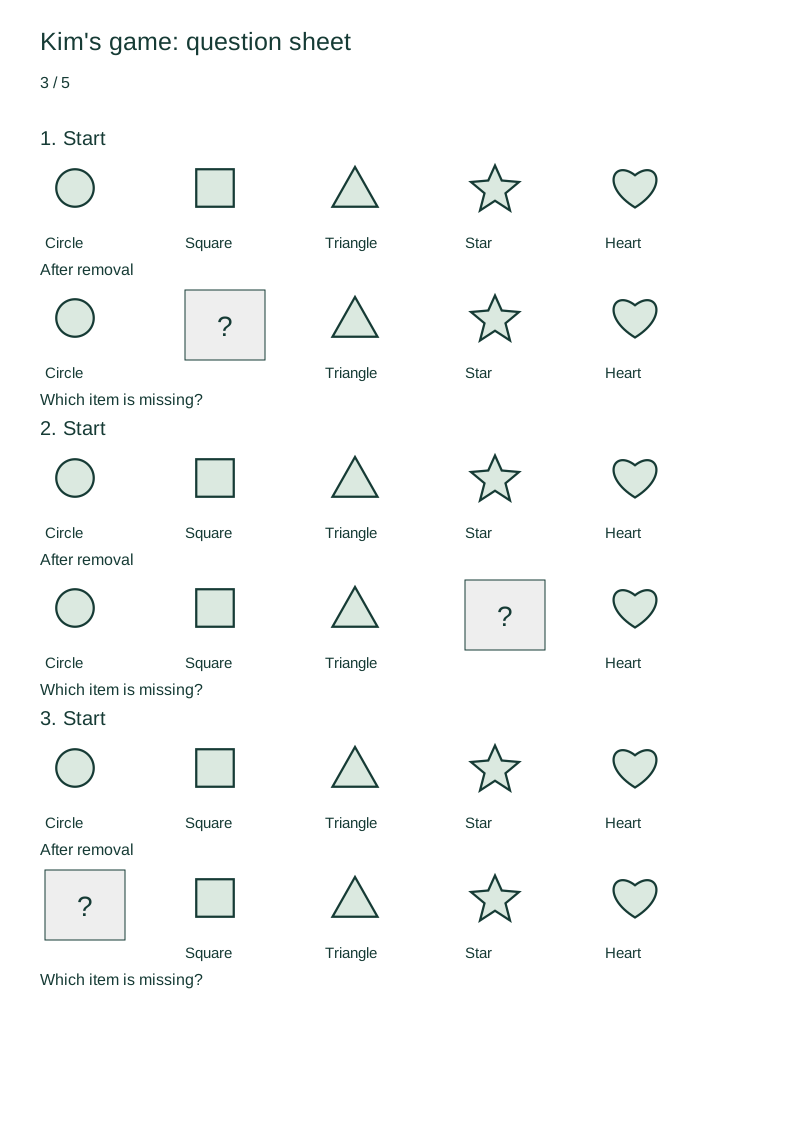
Open the separate answer sheet
Prepare a simple round
Preparation is checked. This does not measure a memory level.
Frequently asked questions
How many objects should I use?
Start with a few familiar items and adjust the support. Three or five shapes are activity options, not age standards.
Do I need a timer?
No. Allow observation time that suits the round. This rule requires no universal time limit.
Can my child point instead of naming?
Yes. Name the shape together afterward so vocabulary and recalling the item are not confused.
Should I move the other items?
Not in this activity: remove one item and keep the rest in place. Swapping follows another rule.
Does the result show a memory level?
No. It describes one response with these materials and this support. It provides no diagnosis or comparison between children.
Can we play without printing?
Yes: use large cards or suitable objects, an opaque cloth, and a starting arrangement the adult can restore.