
Table of Contents
A quick experiment starts with a question
An experiment at home can start with a question that catches your child's interest: will this cork float, can a shadow change size, or what happens when you mix two colors? You do not need to explain the answer before trying. Ask what your child imagines, then observe the result together and compare it to the prediction.
For ages 4–6, a single question and minimal materials help keep track of what is happening. An older child can draw their predictions or change one variable at a time. There is no need to give a full lecture: describing what you see and asking why is enough to build on the discovery.
Three simple experiments with an adult nearby
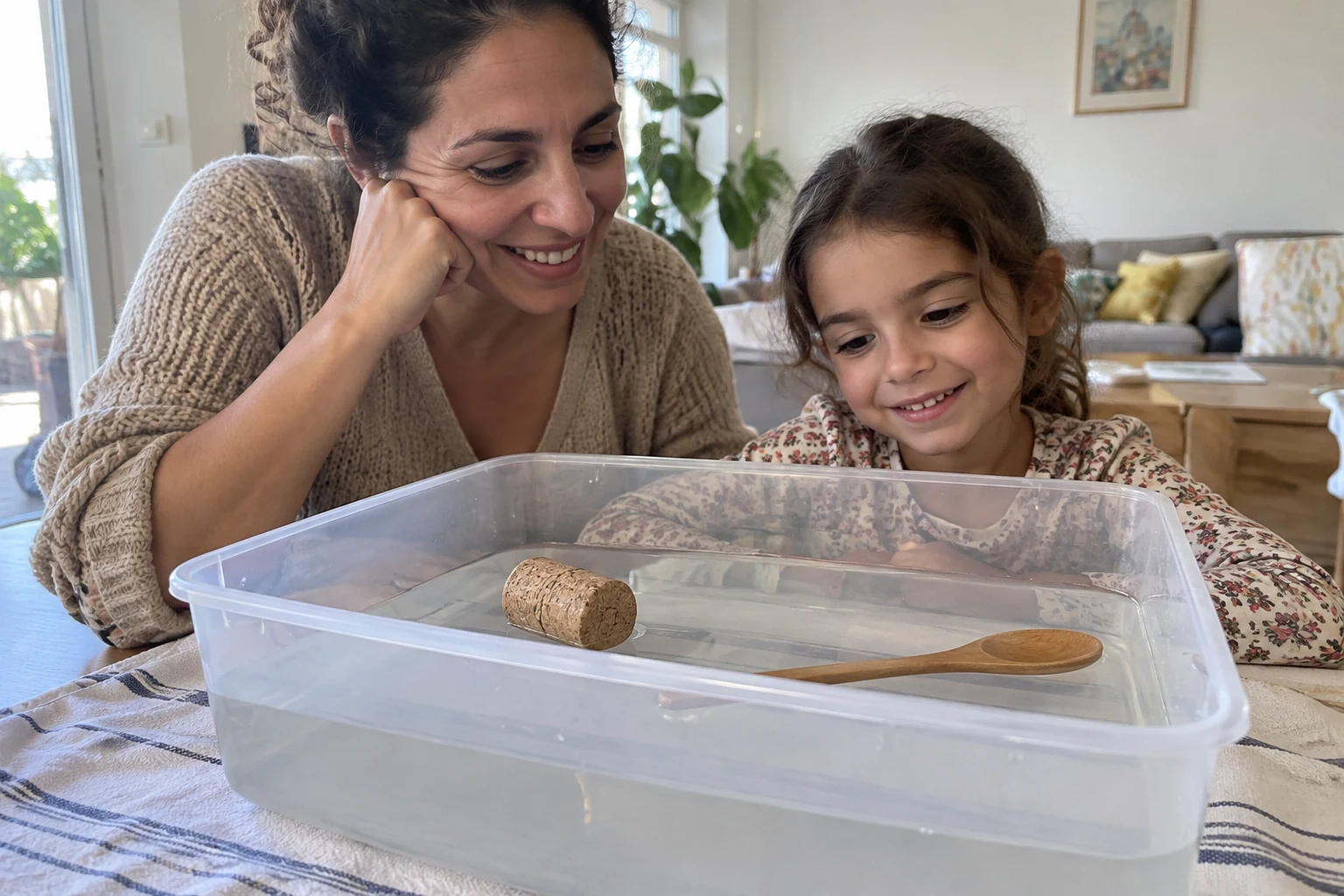
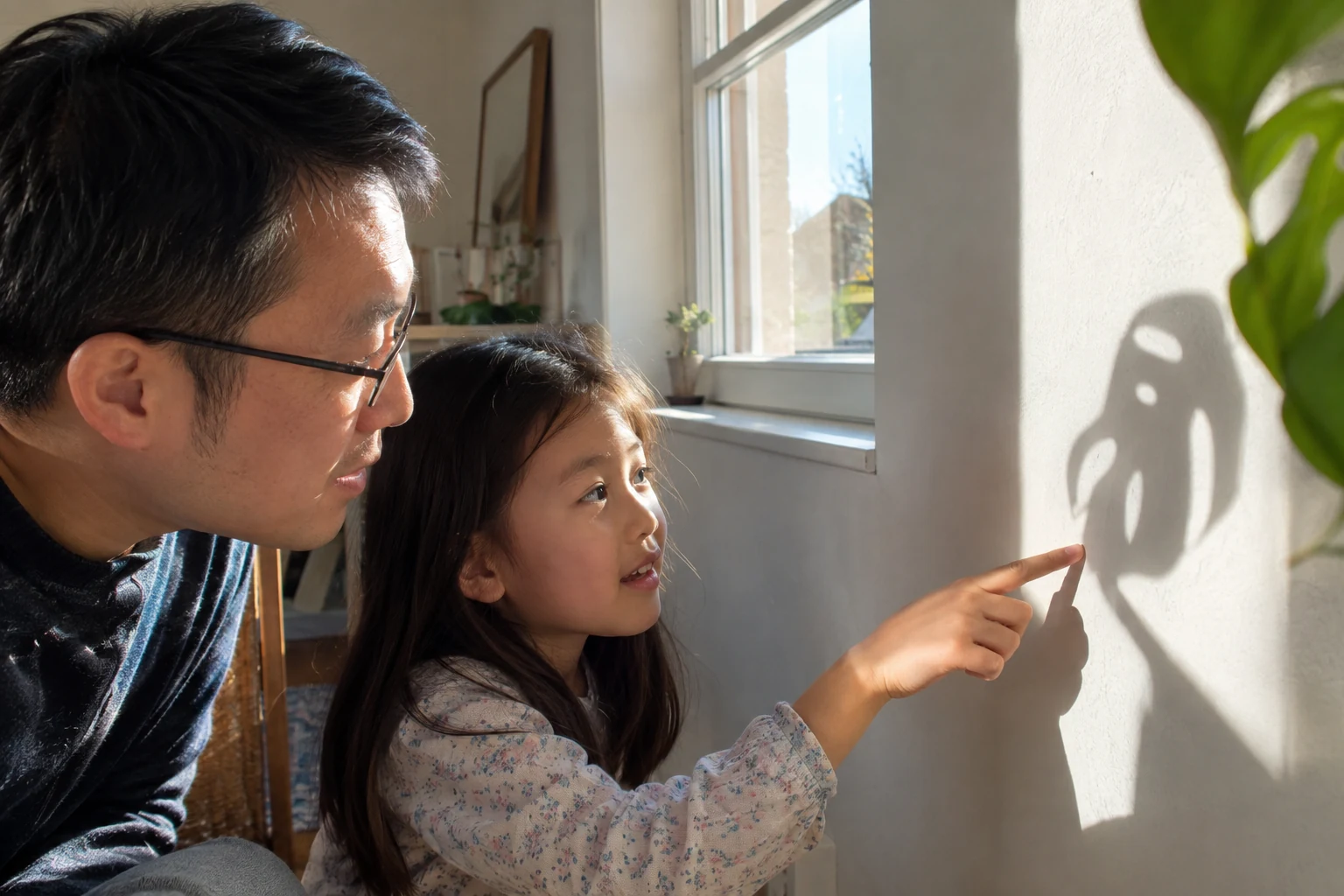
Sink or float: fill a shallow bin with water and pick a few safe, large objects, like a cork, a spoon, and a wooden block. Ask what your child expects to see, then test one object at a time. Shadows: near a window, observe how your silhouette changes as you get closer to the wall. Colors: mix small amounts of washable tempera paint on a sheet of paper using a suitable paintbrush.
The adult prepares and monitors the materials throughout the experiment. Keep water away from electrical outlets and appliances, use items that are too large to be swallowed, and wipe up spills promptly. With paint, protect the table and avoid contact with eyes or mouth. Never leave a young child unattended with a container of water, even a shallow one.
Help the child observe rather than guess
After testing, ask what changed and what stayed the same. For the floating activity, compare the items one by one; for colors, observe the resulting shade. Try not to correct a personal explanation too quickly. You can rephrase what your child notices and then introduce a new word if it helps describe the result.
If the outcome is not what your child expected, the discovery remains valuable. Try the test again using a different shape or another safe object. Ask what they would like to try next. For older children, you can alter just one thing at a time and keep a drawn record to compare tests.
To explore further: Nature walk with children: turning a walk into an observation game.
Tailor the experiment to the child's age and timing
A child who wants to handle items directly may need a wide tub, a small volume of water, and straightforward steps. A child who prefers to watch can offer thoughts from a dry spot. Older children can handle part of the setup once an adult has checked the materials. Always adapt the activity to what your child can do safely, not to an age tag seen online.
Stop if your child puts objects in their mouth, moves around recklessly near the setup, or loses interest. Promptly put away small items, supplies, and liquids. Experiments must never involve household cleaners, open flames, electrical outlets, or heat sources without adult control. Curiosity can pick back up another day with a simpler activity.
The question notebook
Keep a sheet of paper where your child can draw a question and the outcome of an experiment. For 4–6 year olds, a drawing is enough; older children can add a sentence or a very basic chart. There are no grades or expected formats. The notebook serves mainly to remember an observation and pick the next question to explore.
Before a water experiment, separate the question “which is heavier?” with a balance comparison. Floating and having less mass are different observations.
To go further
Preview before choosing
Les Grands Curieux · Ages 7–10
For children who are beginning to read instructions on their own and enjoy playing with words, numbers, and riddles. An adult can help with reading.