
Table of Contents
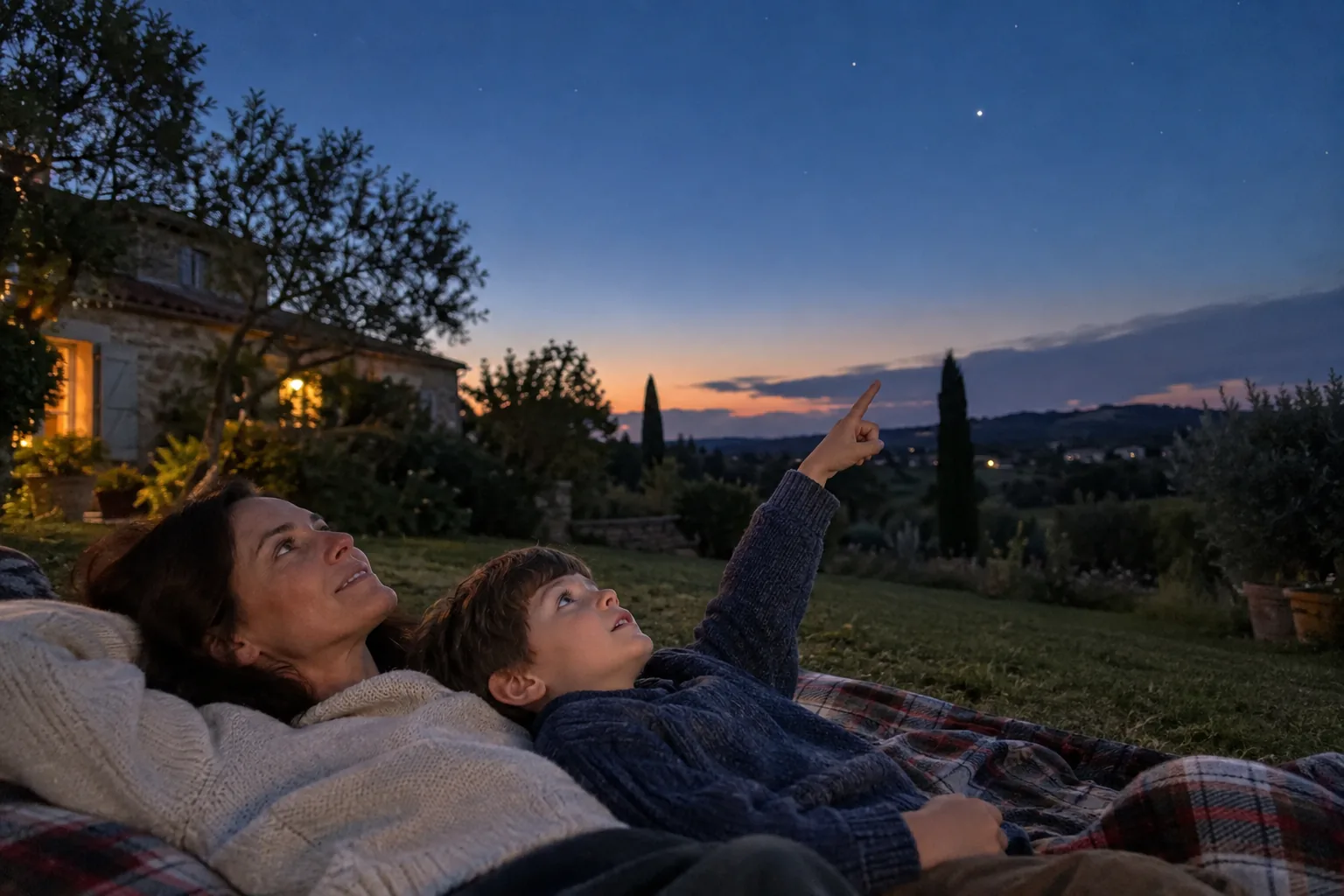
Sometimes all it takes is a blanket in the garden, on a balcony, or along a path to share an unforgettable moment: watching stars appear one by one, recognizing a constellation, or tracking the Moon's path. Astronomy is a wonderful doorway to science, and it requires almost no equipment. Here is how to prepare for a first stargazing evening with your child, find the North Star using an interactive sky map, and turn every clear night into a tiny expedition.
Choosing the right night
Three factors matter above all else. First, the weather: a clear sky, of course, and ideally a night following a windy day, when the air is clearer. Next, the Moon: a full moon brightens the sky so much that it washes out fainter stars. Nights around the new moon are best for seeing stars, while a beautiful crescent moon is a sight in itself. Finally, lighting: move away from streetlights and turn off outdoor lights at home.
Fall and winter offer a huge advantage for children: darkness falls early. After switching back to standard time in late October, the sky becomes dark well before bedtime. In summer, by contrast, you have to wait until late at night, which keeps stargazing mostly for vacations.
Packing your observer's bag
A successful night of stargazing is one where no one gets cold. Even in September, the ground cools down quickly and sitting still makes you chillier. Pack the bag together; your child can check items off the list as you go.
A red flashlight is the astronomer's secret: white light from a phone or regular flashlight dazzles night vision and forces night adaptation to start over, whereas red light causes much less disruption.
Letting eyes adjust to the dark
When stepping out from a lit room, you only notice a few stars at first. Then, as minutes pass, the sky fills up: our eyes gradually adjust to the dark, taking about twenty minutes to become truly sensitive. Turn it into a game: count the visible stars in one spot of the sky as soon as you step outside, then count again twenty minutes later. The difference is always impressive.
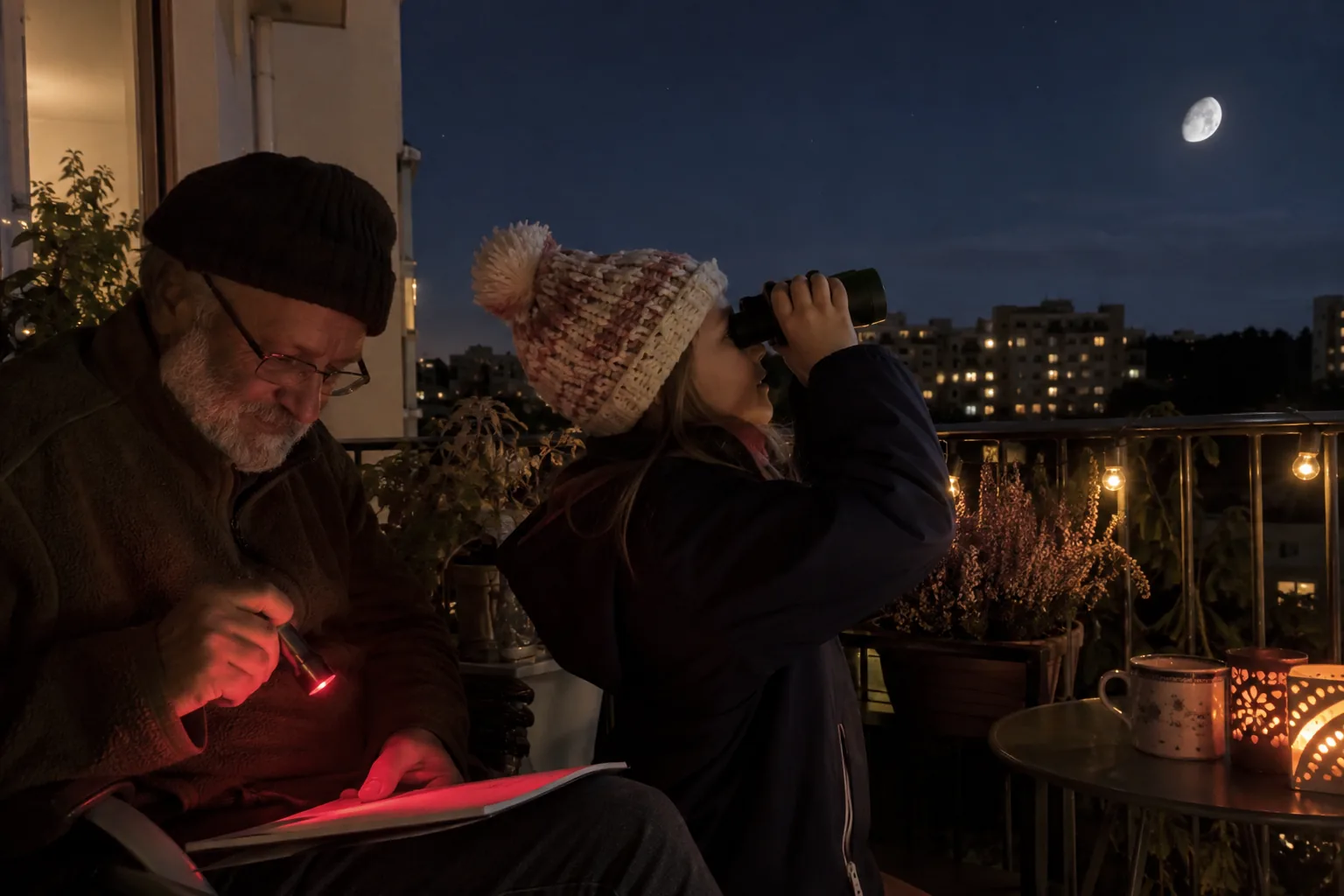
During those twenty minutes, talk, listen to night sounds, and spot the first stars. Put phones away: a single glance at a bright screen resets part of your eyes' adaptation.
Finding the North Star in three steps
Contrary to popular belief, the North Star is not the brightest star in the sky. Its special feature lies elsewhere: it sits almost directly above the Earth's North Pole. While other stars slowly rotate through the night, the North Star stays virtually still and points north.
To find it, use the Big Dipper, that ladle shape made of seven bright stars. Step one: spot the ladle. Step two: take the two stars forming the outer edge of the ladle opposite the handle, Merak and Dubhe. Step three: extend a line through them upward about five times their distance apart. You will land on an isolated, moderately bright star: that's Polaris, the North Star, located at the end of the Little Dipper's handle.
In early fall evenings, the Big Dipper sits quite low in the northwest, while Cassiopeia, shaped like a W, shines high in the northeast. Over the hours and seasons, this whole backdrop rotates around the North Star, but the alignment remains identical.
Tracking the Moon night after night
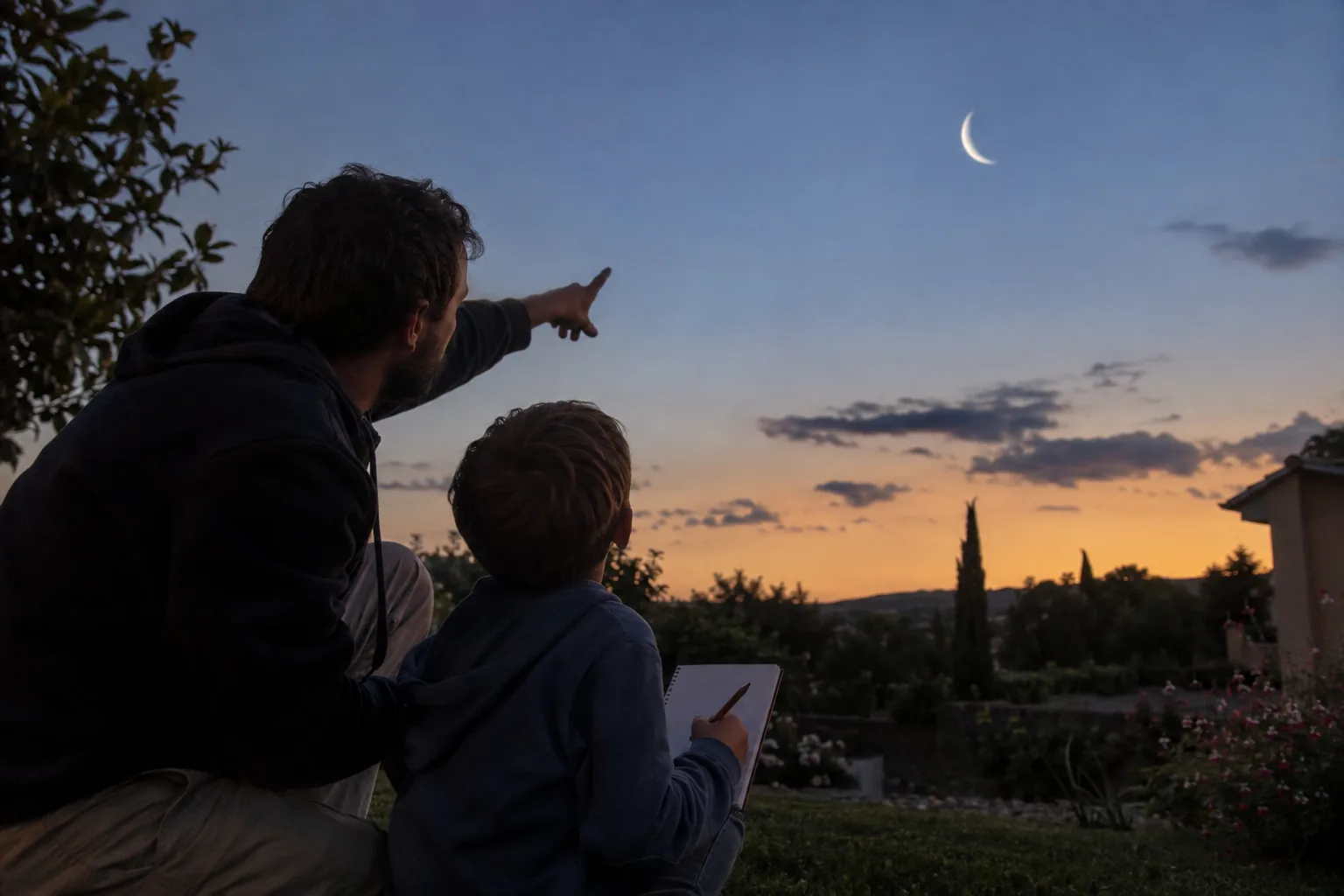
The Moon is the perfect celestial body for younger children: it's visible even in the city, and its appearance changes almost every night. It doesn't generate its own light; it reflects light from the Sun, and depending on its position, we see a larger or smaller portion illuminated. A full cycle from one new moon to the next lasts about twenty-nine and a half days.
Invite your child to draw the Moon every evening at the same time for two weeks. They will discover for themselves that it grows, then shrinks. The tool below calculates tonight's approximate phase and lets you scroll through the entire cycle.
Stars, planets, satellites: which is which?
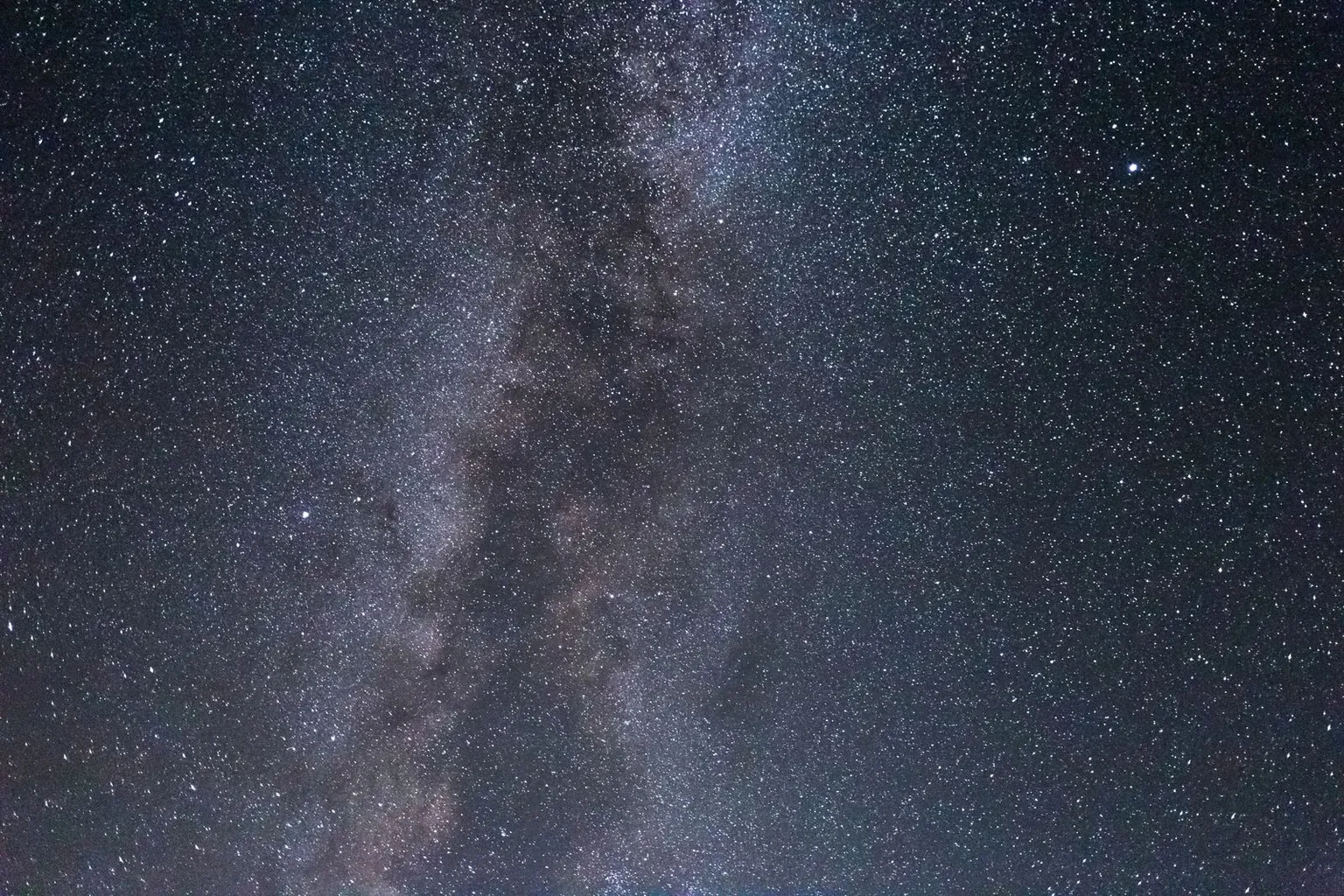
Some points of light are not stars. The most visible planets, like Venus or Jupiter, often shine brighter than stars and twinkle less. A light moving steadily without blinking might be a satellite or even the International Space Station. A blinking red and white light is almost always an airplane. Learning to tell them apart turns the evening into a detective game.
Major celestial highlights
Every year, two meteor showers are especially easy to watch: the Perseids, which peak around August 12, and the Geminids, around December 13 or 14. In summer, the Nuits des étoiles organized by the French Astronomy Association offer public stargazing events for families all over France. Local astronomy clubs also organize observation nights: a fantastic opportunity to look through a real telescope.
Keeping a sky journal
A simple notebook creates lasting memories of these nights: the date, time, weather, a drawing of the Moon or a constellation, and a question to look up the next day. Over the months, your child will watch the sky change with the seasons. To keep the curiosity going during the day, our easy science experiments at home and ideas for nature walks and observation games take over.
Frequently asked questions
At what age can children start stargazing?
From ages 3 to 4 to look at the Moon and a few bright stars, especially in winter when it gets dark early. Around ages 7 to 8 (grades 2–3), children can learn to identify constellations and keep a sky observation journal.
Do you need a telescope to get started?
No. The naked eye is plenty for constellations, the Moon, and shooting stars. A pair of binoculars will already show lunar craters and many more stars. A telescope can come later, ideally after trying one out at a local club.
Why do we see so few stars in the city?
Public streetlights illuminate the sky and drown out fainter stars. Sometimes moving just a few miles away or picking a dark park is enough to see far more stars.
What if the sky is cloudy on the planned night?
Do not hesitate to postpone: clear nights come back quickly. In the meantime, you can prepare for the outing with the interactive star chart, make a red light flashlight, or draw the phases of the Moon.
To go further
Preview before choosing
Les Grands Curieux · Ages 7–10
For children who are beginning to read instructions on their own and enjoy playing with words, numbers, and riddles. An adult can help with reading.