
Table of Contents
For a scare-free Halloween, the simplest activities are crafting ghosts and bats, carving pumpkins with the kids, trick-or-treating, and a costume parade. Smiling pumpkins, white sheet ghosts, paper bats: Halloween is a holiday that many kids love... and that scares others. The goal is balance: a little thrill, lots of laughs, and never real terror. Here is how to adapt the holiday to your child's age, make safe costumes, carve a pumpkin without danger, along with twelve family Halloween activities to enjoy at home or around the neighborhood.
Adjusting the scare factor by age
Young children still struggle to separate real life from pretend. A monster mask, even worn by dad, can genuinely terrify them. Set the scare level based on each child's age and personality.
For ages 3–5, focus on smiling pumpkins, friendly ghosts, and costumes that leave the face visible. Between ages 6 and 8, slightly mysterious flashlight stories are a hit, as long as they end well. Around 9–10, kids enjoy being scared… a little bit. In all cases, respect a "no": a child who turns down a decorated house or a movie doesn't need to be pushed into it.
Safe, homemade costumes
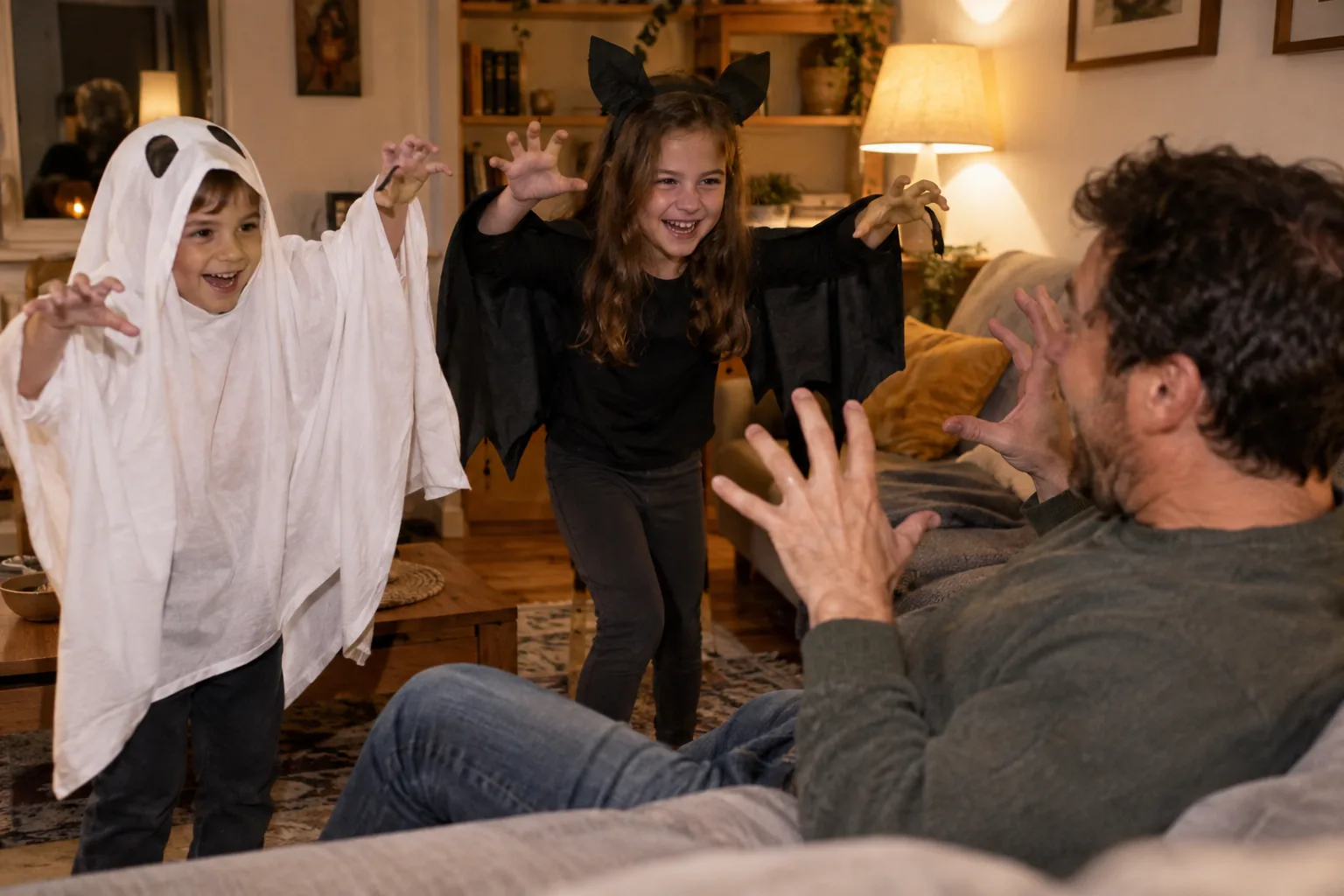
A great costume doesn't need to be bought store-made: an old sheet becomes a ghost, a black T-shirt and fabric wings turn into a bat, a cardboard hat makes a witch. If you buy a costume, check that it bears the CE mark: like toys, children's costumes must meet European safety standards, which regulate flammability (EN 71-2 standard). Safety agencies also recommend reading warnings on the packaging.
A few simple rules:
- Keep away from flames: no open candles near capes, veils, or wigs.
- See and breathe clearly: choose makeup over masks, which impair vision.
- Test makeup: apply a small spot on the inner arm the day before to check for skin sensitivity.
- Walk without tripping: hem clothes shorter and stick to everyday shoes.
Hazards-free pumpkin carving
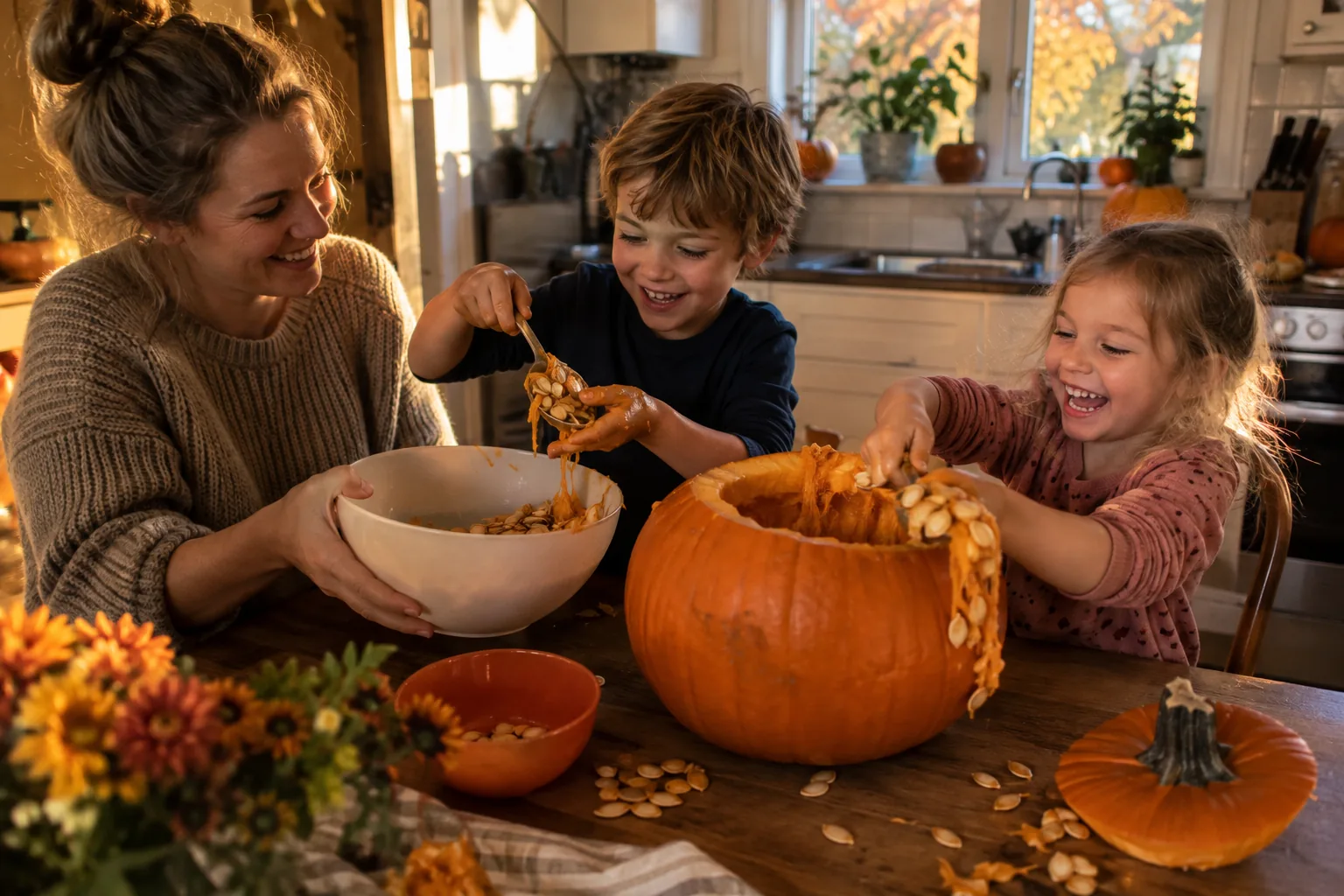
Carving a pumpkin is one of the highlights of Halloween. Share the roles: the adult cuts off the top lid and, later, carves the face; the children scoop out the pumpkin with a large spoon, sort the seeds, and draw the face features with a marker. The seeds can then be washed and roasted in the oven, and the flesh used to make soup.
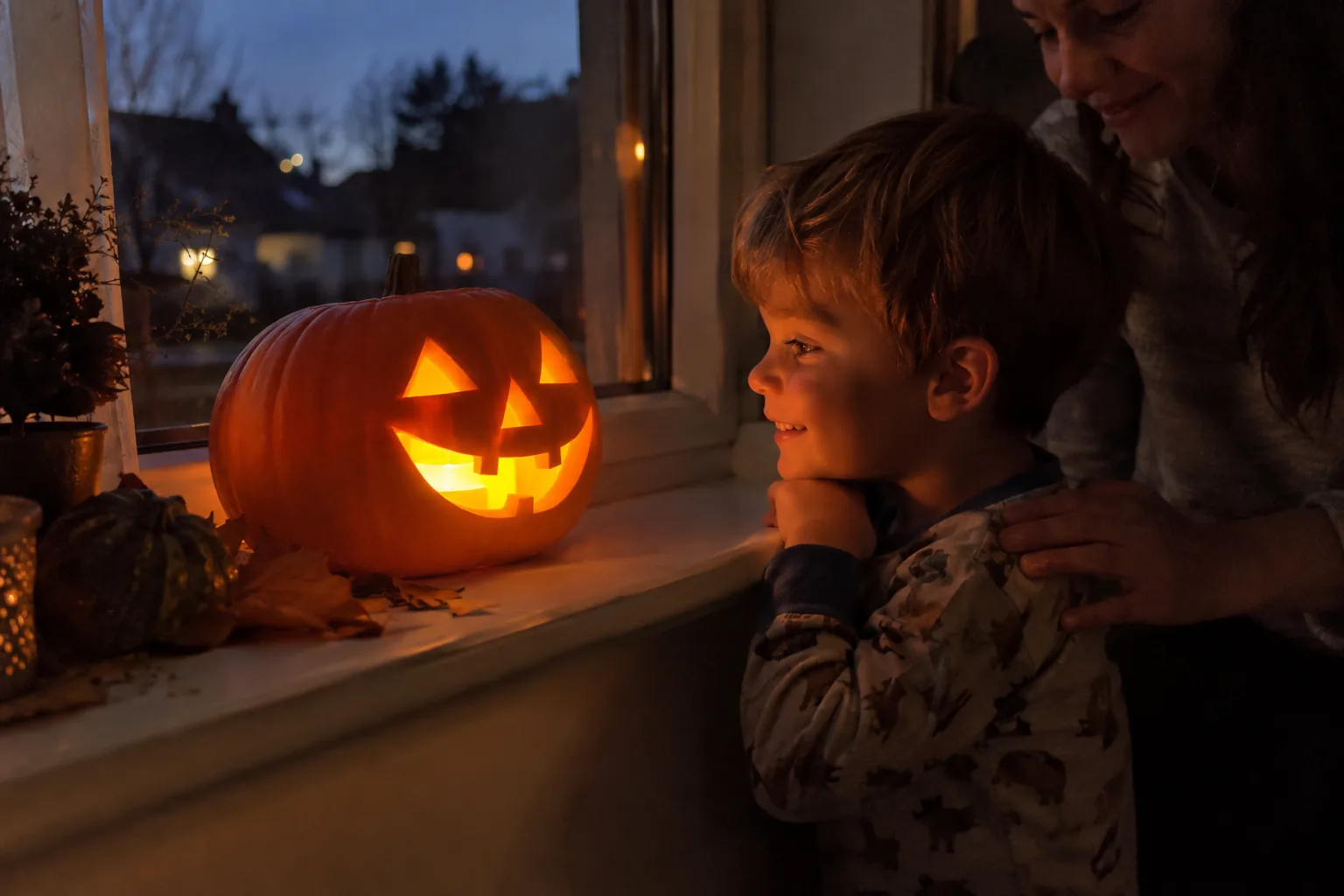
To illuminate it, an LED candle is much safer than a real flame, especially around costumes and curious little hands. While waiting for the big night, here is a pumpkin that lights up with a single click.
Decorating the house without scaring little ones
A decorated house sets the mood without realistic monsters. Children can cut out a pumpkin and bat garland from orange or black paper, hang paper ghosts above the doorway, or stretch a web of cotton string across a window. For younger children, stick to bright, smiling decorations and avoid silhouettes that pop up in the hallway or brightly flashing lights. In the little ones' bedroom, keep the usual nightlight on and leave the bed undecorated: decor should remain just decor, with no surprises in the dark. To occupy calmer kids while others decorate, a maze for children helps pass the time.
Twelve Halloween activities to do as a family
Gauze ghosts
A ball of newspaper, a square of gauze or compress soaked in diluted glue, and a ghost that stands up on its own as it dries.
Cardboard roll bats
A toilet paper roll painted black, paper wings, drawn eyes: ready to hang from the ceiling.
Ghost bowling
Ten cardboard rolls decorated as ghosts, a ball, and you're ready to play. Great for practice counting the fallen pins.
The mystery box
Inside closed boxes, cooked spaghetti ("witch's hair"), peeled grapes ("monster eyes"): touch without looking and guess what it is.
Mason jar lanterns
A glass jar painted orange or covered with tissue paper, with an LED tealight candle inside.
The three-part monster
A sheet of paper folded in three: everyone draws a section of the monster without seeing the rest, then unfolds it. Guaranteed giggles.
The candy hunt
Candies hidden around the house and clues to follow: it's a mini treasure hunt.
The witch's riddles
Riddles and word puzzles themed around the holiday, to solve to win a surprise. Our riddles for children provide plenty of ideas. A coded message can also be part of the mission: our secret codes for kids give you the tools.
Flashlight stories
Inside a pillow fort, everyone tells a mysterious story… that ends well for the little ones.
Pumpkin soup
Washing, stirring, tasting: kids help with everything except the chopping.
Monster cookies
Sugar cookies decorated with candy eyes and chocolate funny faces: decorating is the best part.
The costume parade
Put on some music, dim the lights slightly, and let everyone show off their costume. For shy children, it's great practice before trick-or-treating.
Safe trick-or-treating
If you go around the neighborhood, a few simple safety guidelines make for a stress-free evening. Children must always be accompanied by an adult and never enter a stranger's house. As night falls, make them visible: bright clothing, reflective strips on the costume, flashlight. And set a good example in the street: cross at crosswalks, looking both ways, even when everyone is eager to get to the next door. Once home, sort the treats before eating them: discard open wrappers, and double-check labels in case of food allergies.
Finally, respect houses that are not taking part: a house without decorations doesn't want visitors ringing the bell.
What about the candies?
It's best to set a clear rule beforehand: a few candies on the night itself, then one or two per day, chosen by your child. This helps them learn to manage their sweet stash… and avoids the huge pile eaten in a single evening.
Halloween arrives in the heart of autumn: for other seasonal ideas, check out our fall activities with kids.
Frequently asked questions
At what age can kids start celebrating Halloween?
From age 3, in a gentle version: smiling pumpkins, funny costumes, simple crafts. Scarier elements, like masks or spooky stories, are best kept for older kids, depending on each child's sensitivity.
My child is afraid of costumes, what should I do?
Don't force them. Show them costumes in bright light, let them touch the fabrics and see the faces behind the makeup. Offer them a funny costume that they choose themselves.
How to celebrate Halloween without trick-or-treating?
Organize a small party at home: candy hunt, mystery box, ghost bowling, and pumpkin soup. Inviting one or two costumed friends is enough to set the mood.
How many candies should I let my child eat?
Set the rule before the evening, such as a few candies that night and then one or two per day. Letting the child choose which ones helps them accept the limit.
What is the date of Halloween?
Halloween is celebrated on the night of October 31st, the eve of All Saints' Day. Trick-or-treating usually happens at dusk, leaving time to prepare costumes in the afternoon. If October 31st falls on a school day, you can bring the home party forward to the nearest weekend: a candy hunt, ghost bowling, and pumpkin soup work wonderfully on a Saturday.
What Halloween craft works best for a 4-year-old?
At 4 years old, choose simple crafts: stick orange stickers on a cardboard pumpkin, decorate a paper bag with drawn ghosts, or glue black paper scraps onto a pre-cut bat. The gauze ghost, with its diluted glue, suits older kids better, as they know how to wait for the glue to dry. Keep each step within reach of your child: the adult prepares, the child glues and decorates.
To go further
Preview before choosing
Les Petits Explorateurs · Ages 4–6
For preschool and early elementary children discovering shapes, numbers, and the fun of drawing lines. An adult reads the instructions.