
Table of Contents
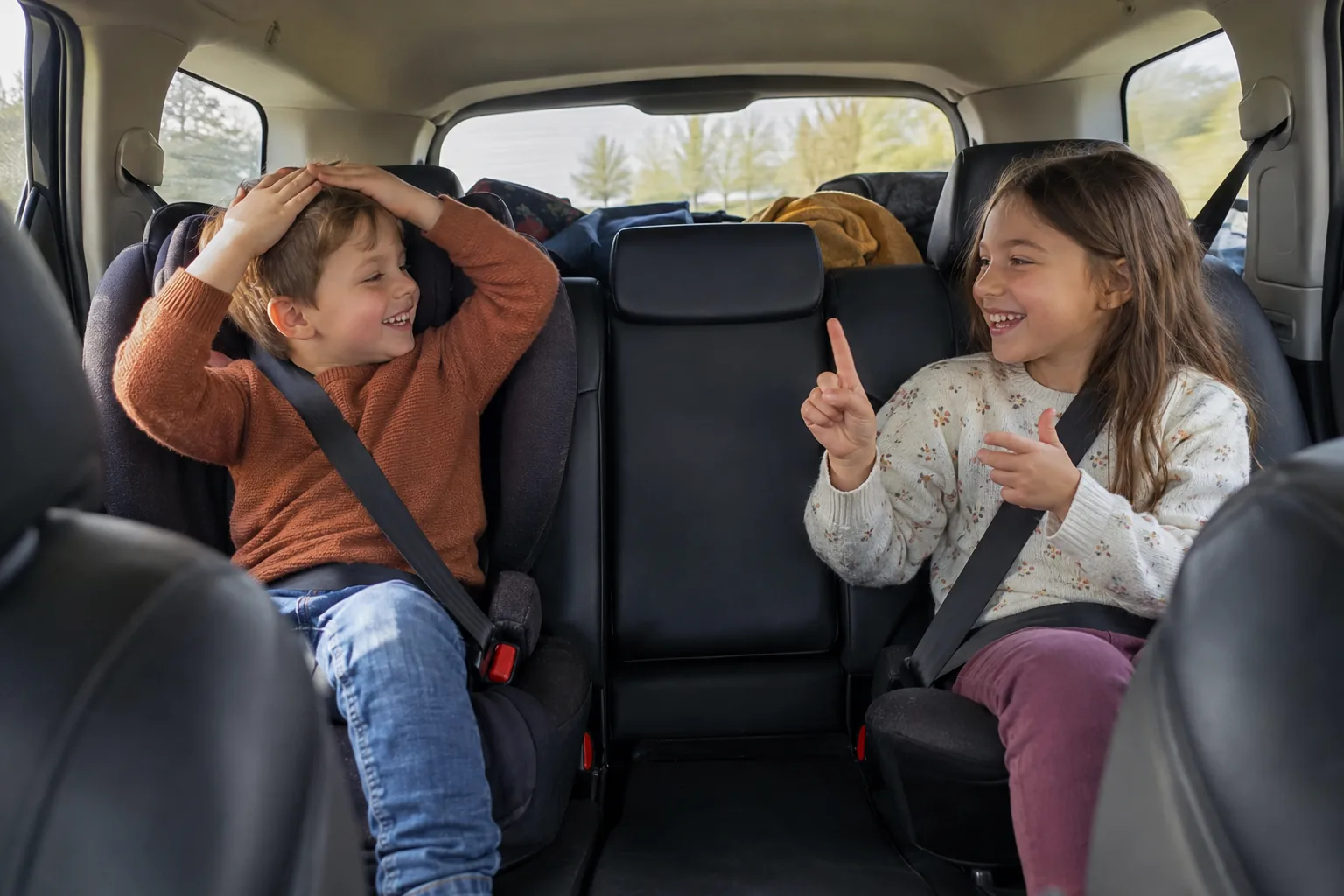
"Are we there yet?" Five hours on the road with kids in the backseat requires some planning. Between restlessness, the need to move around, and occasional car sickness, a long drive can quickly become exhausting for the whole family. With a few well-timed stops, a bag packed in advance, and a stash of games, it can also become quality time shared together. Here is our advice for planning your route, twenty game ideas with or without supplies, a road trip bingo to play or print, and helpful tips against motion sickness.
Plan the route and rest stops
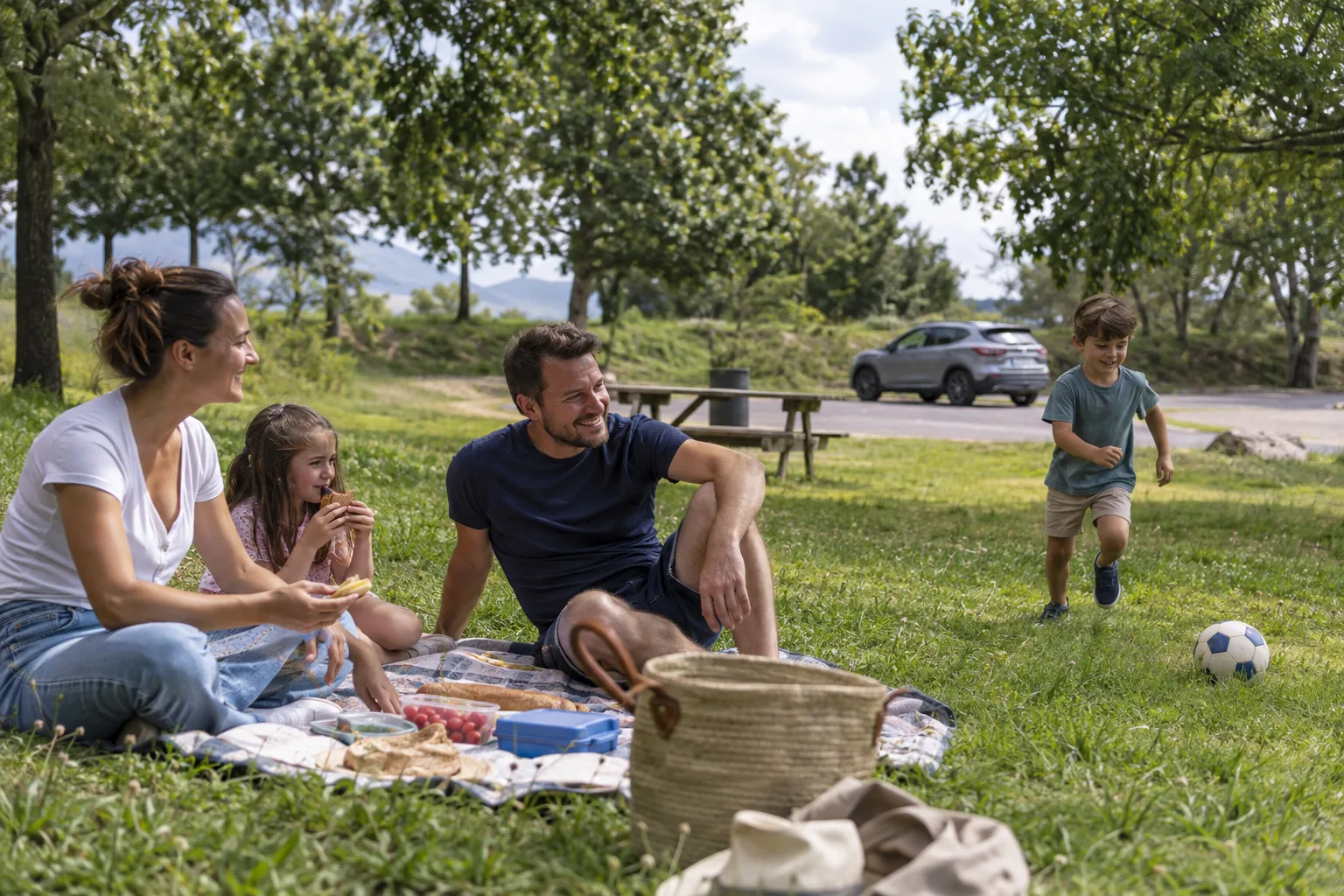
Road safety authorities recommend stopping for at least fifteen minutes every two hours, even when feeling fully awake. With children, these breaks serve a double purpose: they stretch their legs, use the restroom, grab a snack, and come back much calmer. Factor these breaks directly into your total driving time from the start, rather than seeing them as delays.
Source: road safety recommendation (at least a 15-minute break every two hours)
View chart data
| Step | Start | End |
|---|---|---|
| 2 hrs driving | 0 hr | 2 hrs |
| Break | 2 hrs | 2.25 hrs |
| 2 hrs driving | 2.25 hrs | 4.25 hrs |
| Picnic stop | 4.25 hrs | 5 hrs |
| 2 hrs driving | 5 hrs | 7 hrs |
Departure time matters too: many families leave early in the morning or during young children's nap time to enjoy a few peaceful hours. Choose whatever works best for your family, while prioritizing driver alertness above all else.
The co-pilot bag
Pack a bag the night before to keep within easy reach, under the seat or in a seatback pocket. Your child can check off the items themselves before heading out.
Avoid capless markers, playdough that sticks to car seats, and noisy toys. Keep a few small wrapped surprises to hand out along the trip: a fresh little notebook, stickers, or a new book.
Ten games with no supplies needed
- I spy with my little eye…: "I spy something green that starts with B." An absolute classic.
- Car colors: everyone picks a color and counts cars of that color for ten minutes.
- License plate games: add up digits on a license plate or spell a word using its letters. Our mental math games offer fun variations.
- Twenty Questions: one player thinks of an animal, and the others ask yes-or-no questions to guess it.
- Chain storytelling: everyone adds one sentence to the story. Kids love silly plot twists.
- I'm going on a trip and I'm packing…: the list grows longer with every turn, making it a great memory game. Check out our other memory games.
- Neither yes nor no: answer questions without ever saying "yes" or "no."
- Riddles: pick from our collection of riddles for kids, to be read out loud by the front passenger.
- Sing-along songs: everyone takes turns singing a verse.
- The quiet game: very helpful when exhaustion sets in… and often hilariously entertaining.
Road trip bingo
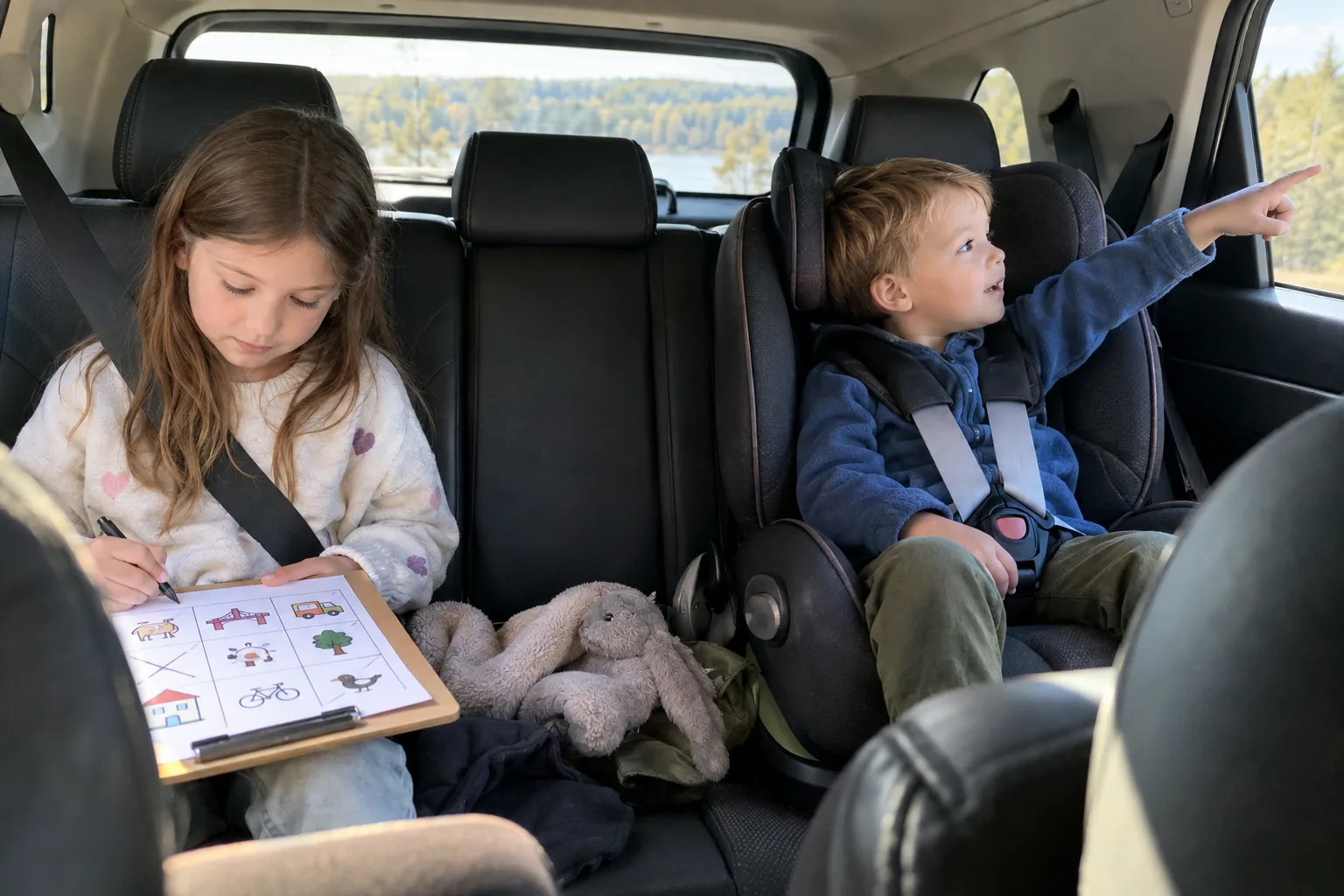
Each player gets a grid of pictures to spot out the window: a cow, a bridge, a tractor, a wind turbine… The first to complete a row wins. The bingo game below can be played on a tablet during a rest stop or printed before leaving to mark off with a pencil.
What about screen time?
On a very long drive, a movie or cartoon can be helpful, especially at the end of the trip when tiredness sets in. However, screens often make motion sickness worse, and they cut off conversation. Audio stories and songs offer a great middle ground: they keep kids busy without forcing them to look down.
Preventing motion sickness
Motion sickness comes from a conflict between what the eyes see and what the inner ear senses. A few simple actions can help limit it: look out into the distance, through the windshield if possible, air out the car regularly, avoid reading or staring at a screen while driving, plan a light meal before leaving, and drive smoothly. At the first signs—pallor, yawning, unusual silence—pull over for a break in the fresh air. If motion sickness is frequent, talk to your doctor before your vacation.
Safety first
Every child must travel in a child restraint system suited to their size and weight, properly buckled in, even for a short drive. Store heavy objects in the trunk: in the event of sudden braking, anything lying around in the passenger compartment becomes dangerous. Choose soft, lightweight toys for the back seat. And never unbuckle a child while driving to hand them something: wait for a rest stop.
Frequently asked questions
How many breaks should you plan on a long drive with children?
Road safety authorities recommend at least a fifteen-minute break every two hours. With young children, slightly more frequent or longer rest stops are often a great idea.
What can you do about a child's motion sickness?
Have them look off into the distance, air out the car, avoid reading and screens while driving, and serve a light meal before setting off. Stop at the very first signs. If the issue occurs frequently, ask your doctor for advice.
Should you drive at night so the children sleep?
Some families do, but driving at night causes more fatigue for the driver. Keeping the driver alert remains the priority: a daytime trip with rest stops is better than an exhausting night drive.
What games are good for a 3 to 4-year-old in the car?
Very simple observation games (spotting a cow or a truck), songs, action rhymes, and a small board book are ideal. Switch activities often: their attention span is short.
To go further
Preview before choosing
Les Grands Curieux · Ages 7–10
For children who are beginning to read instructions on their own and enjoy playing with words, numbers, and riddles. An adult can help with reading.